Identification
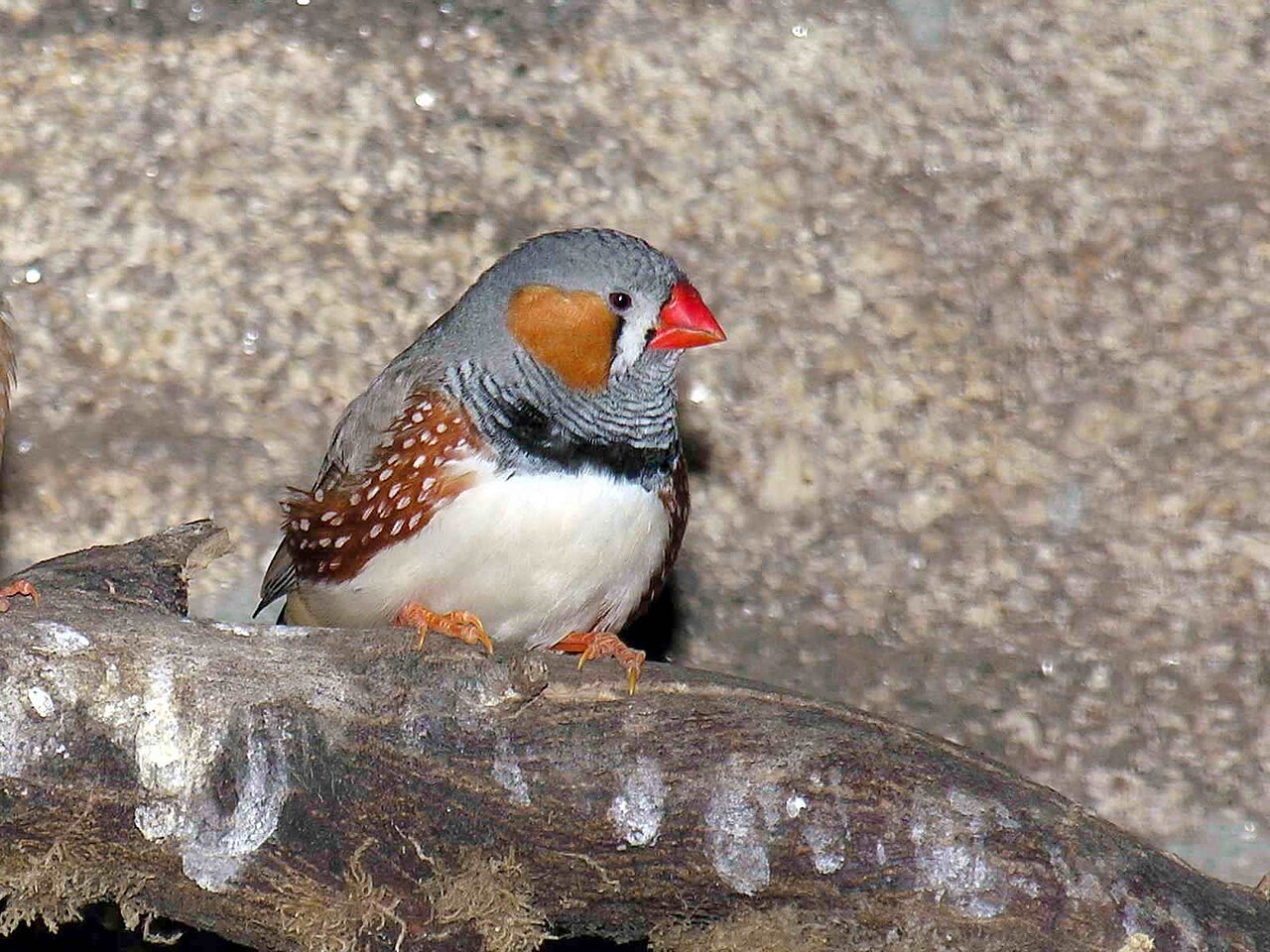
This guide covers Australian Zebra Finch, Taeniopygia castanotis; older references combine it under Taeniopygia guttata. Normal adult males have orange cheeks, a barred throat and spotted chestnut flanks. Colour mutations can obscure the normal pattern.
Male & female
Normal hens lack the male cheek patches and flank markings. Juveniles have dark bills and can resemble hens, while some mutations weaken visual clues. Use age, mutation history, male song and validated evidence together when identifying a breeding pair.
Nature & behaviour
A highly social Australian finch of dry open country, responsive to changing food conditions. Early biological maturity is not permission for uninterrupted breeding; plan rest and recovery as well as nesting.
Cages & aviaries
Provide horizontal exercise space, secure perches and multiple feeding points. Nest materials and crowded boxes can encourage conflict even in a familiar colony. Separate a pair where parentage, bullying or chick access becomes difficult to assess.
Diet & feeding
Grass seeds dominate natural feeding, with other foods including insects. Offer a varied appropriate ration and an accepted rearing food; check intake and condition rather than assuming that the species’ easy-breeding reputation makes any seed-only diet complete.
Breeding
Both adults care for eggs and young in a domed nest. Zoo and museum timing figures are approximate reference observations. Youngsters may leave before they feed reliably, so continue monitoring parent support and independent intake.
Compatibility
A confident, prolific pair can disrupt quieter waxbills or compete for nesting materials. Keep breeding compatible with the smallest and least assertive occupant, and retain a separate enclosure for any bird that is persistently chased.
Breeding timeline
Follow the bird, not just the calendar. Published ranges are observation windows; actual parental care and feeding decide the next step.
Clutch size
4–5 Eggseggs; reference onlyIncubation
14–16 daysdays after sustained incubation; reference onlyFledging
14 daysdays after hatch; reference onlyIndependent feeding
Not establishedNo universal separation age is established. Confirm repeated independent eating and drinking and stable condition while monitoring parental support.
Reference observations are not captive guarantees. Record actual hatch and feeding; never separate a chick solely because a date has arrived.
Sources & image credits