Identification
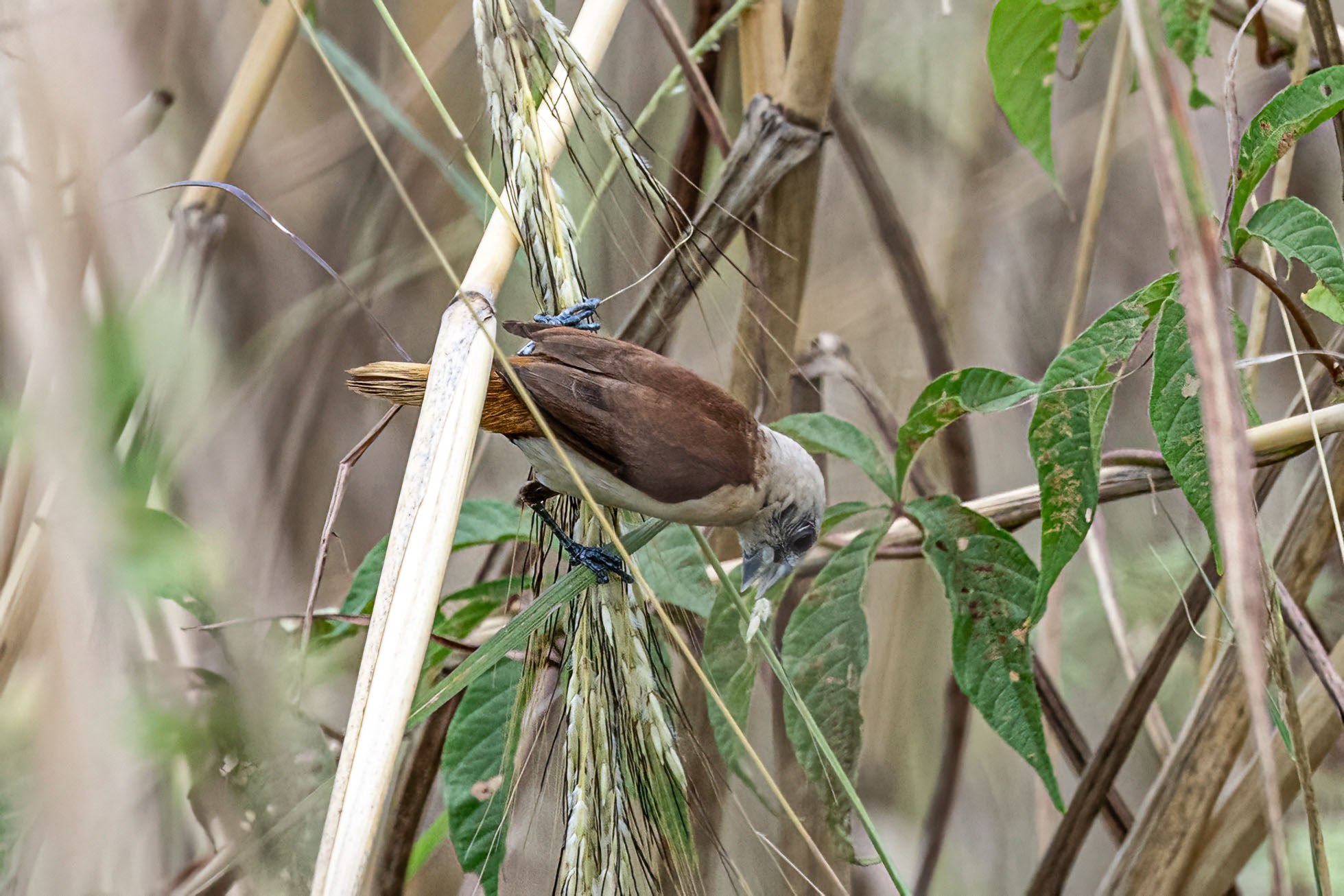
A pale greyish-headed, brown-backed mannikin with a yellow-brown rump and sturdy pale bill. It is Lonchura flaviprymna, a separate species from Chestnut-breasted Mannikin. Intermediate-looking birds require ancestry checks, not a new colour-form label.
Male & female
ABSA describes the sexes as very similar; claimed differences in crown silver and belly shade are weak evidence alone. Juveniles are browner with a dark bill and less developed rump colour, so retain age and sex confidence separately.
Nature & behaviour
Native to the eastern Kimberley and north-west Northern Territory of Australia, associated with grassy, wetland and agricultural habitats. Natural movement and mixed flocks reflect changing resources, not unlimited tolerance within a cage.
Cages & aviaries
Provide generous flight space, grass-stem foraging and sheltered cover, while keeping seed trays dry and accessible. Check live plants and nest supports because mannikins may remove material during breeding; replace damaged cover without blocking flight routes.
Diet & feeding
Build an appropriate varied seed and rearing-food plan, observing which grains and soft foods are genuinely eaten. Fresh seeding grasses can provide foraging opportunities; multiple fortified supplements are not a substitute for documenting the entire ration.
Breeding
Both sexes incubate according to ABSA. No dependable clutch or developmental timing was verified from the reviewed direct sources, so the calendar stays blank rather than borrowing Chestnut-breasted figures. Record actual egg and chick events.
Compatibility
Avoid breeding alongside Chestnut-breasted Mannikins and other Lonchura. BirdLife discusses hybridisation concerns; species identity and parentage should remain explicit even where birds associate together peacefully outside breeding.
Breeding timeline
Follow the bird, not just the calendar. Published ranges are observation windows; actual parental care and feeding decide the next step.
Clutch size
Not establishedNo dependable species-specific number was verified in the sources reviewed. Observe the birds and obtain an experienced breeder or avian veterinarian’s assessment before intervening.
Incubation
Not establishedNo dependable species-specific number was verified in the sources reviewed. Observe the birds and obtain an experienced breeder or avian veterinarian’s assessment before intervening.
Fledging
Not establishedNo dependable species-specific number was verified in the sources reviewed. Observe the birds and obtain an experienced breeder or avian veterinarian’s assessment before intervening.
Independent feeding
Not establishedNo universal separation age is established. Confirm repeated independent eating and drinking and stable condition while monitoring parental support.
Reference observations are not captive guarantees. Record actual hatch and feeding; never separate a chick solely because a date has arrived.
Sources & image credits