Identification
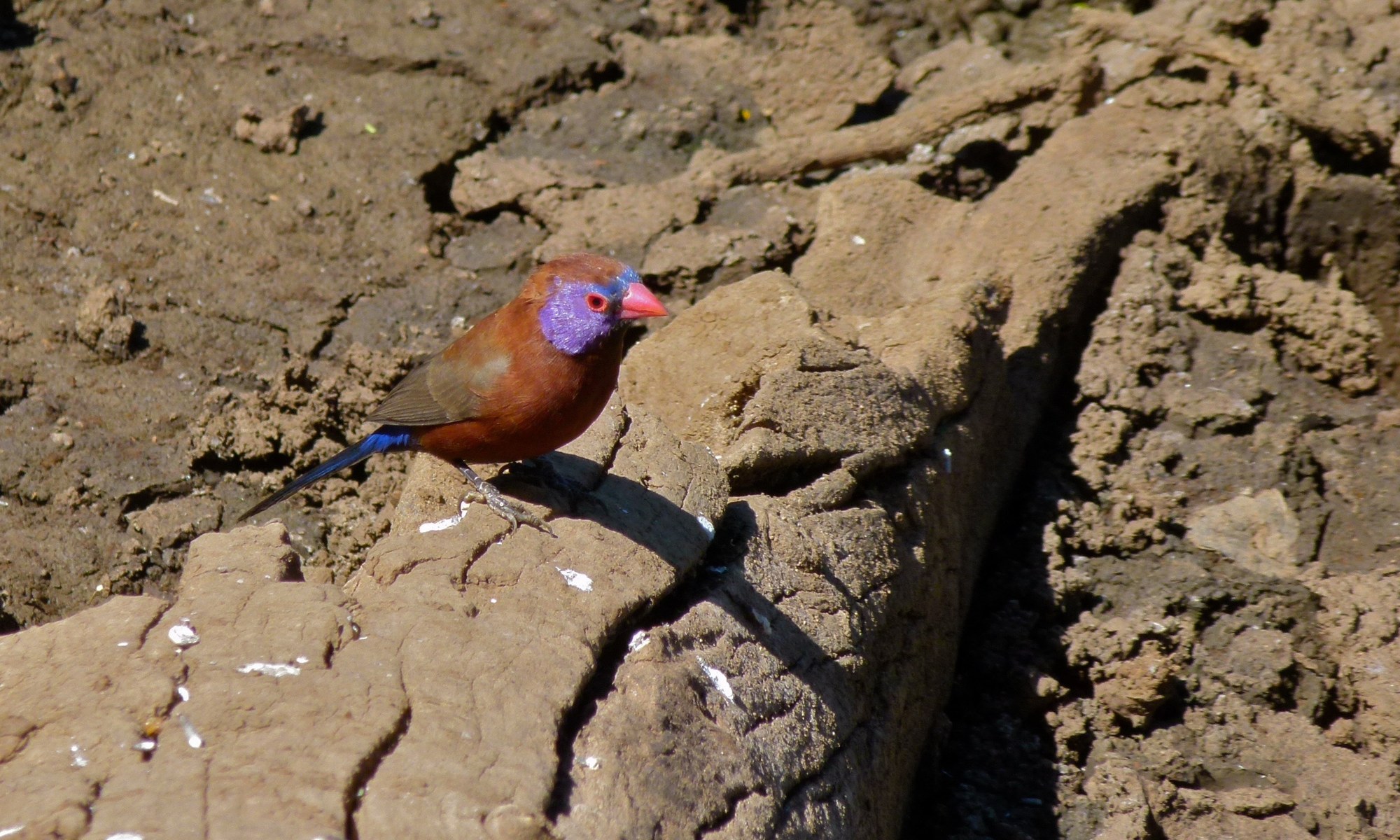
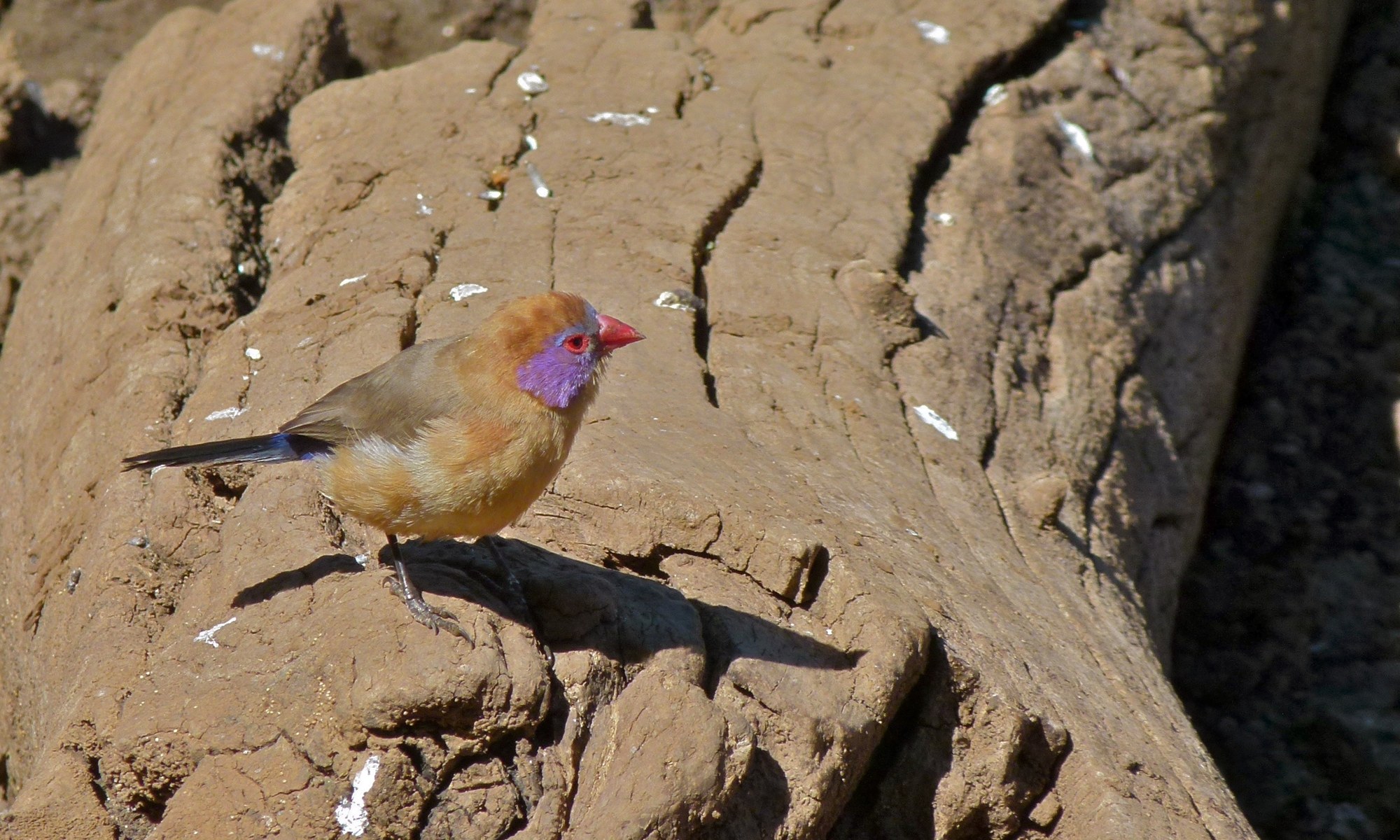
An adult male has chestnut-brown plumage, violet-blue cheeks, a blue forehead and rump, a black throat and a red bill. The female is much paler. This is Granatina granatina, also published as Uraeginthus granatinus or U. granatina; it is a different species from the Purple Grenadier, Granatina ianthinogaster.
Male & female
Mature males have stronger cheek, forehead and throat colours; hens show paler cheeks and much less black on the throat. Young birds can resemble dull females, so do not assign sex from a single juvenile photograph. Record the evidence and uncertainty alongside the bird's age.
Nature & behaviour
A southern African bird of dry scrub and thorny woodland. Pairs forage for seeds and small insects. Its natural rainfall-linked breeding pattern does not prescribe breeding months for an indoor room in Jerusalem; plan breeding, moult and rest from the birds' condition and your records.
Cages & aviaries
Plan a sheltered flight for one compatible pair with screening, varied natural perches, clean low feeding places and open flight space. NFSS specifically recommends one pair per flight or aviary. Your 60 × 40 × 35 cm cage dimensions and room reading of 24°C do not by themselves establish suitable long-term breeding accommodation. Check conditions at perch level, avoid the AC stream and preserve a quiet night; no species-specific minimum temperature is established here.
Diet & feeding
Offer a varied small-seed ration with clean seeding grasses, accepted greens and a suitable rearing food. Establish dependable supplies of appropriately sized, hygienically cultured insects before encouraging breeding; specialist accounts stress their importance for rearing. Confirm what the pair actually eats rather than assuming egg food or supplements replace insects. Change drinking water daily, clean drinkers and remove moist food before it spoils. Product doses belong to the current label and an avian veterinary plan.
Breeding
Observe mutual acceptance before offering nest sites. Provide discreet support and suitable clean grasses for a covered nest with a side entrance; the pair builds and cares for its young. Record first egg, sustained incubation and actual hatch separately. Fledging reports differ between natural-history and captive accounts. Keep parent feeding under observation after nest departure; do not separate by date. Parent-rearing is the first planning route; Society Finches must not be assumed to meet this species' feeding needs. Any foster transfer needs a species-informed plan and verified chick feeding.
Compatibility
Use a dedicated pair flight as the default. Territorial behaviour and intolerance of its own or closely related species make a shared breeding enclosure a poor assumption, especially with your other waxbills. Introduce potential partners under close observation with a safe way to separate them. Stop an introduction if there is persistent chasing, blocked food access or injury.
Breeding timeline
Follow the bird, not just the calendar. Published ranges are observation windows; actual parental care and feeding decide the next step.
Clutch size
2–5 Eggseggs; captive referenceIncubation
12–14 daysdays after sustained incubationFledging
16–21 daysdays after hatch; accounts differIndependent feeding
Not establishedNo reliable universal separation age is established here. Confirm repeated independent eating and drinking and stable condition while watching continued parental care.
Reference windows are not deadlines. Biodiversity Explorer reports nest departure around days 16–18; NFSS describes about three weeks. Neither observation authorizes early nest disturbance or separation.
Sources & image credits