Identification
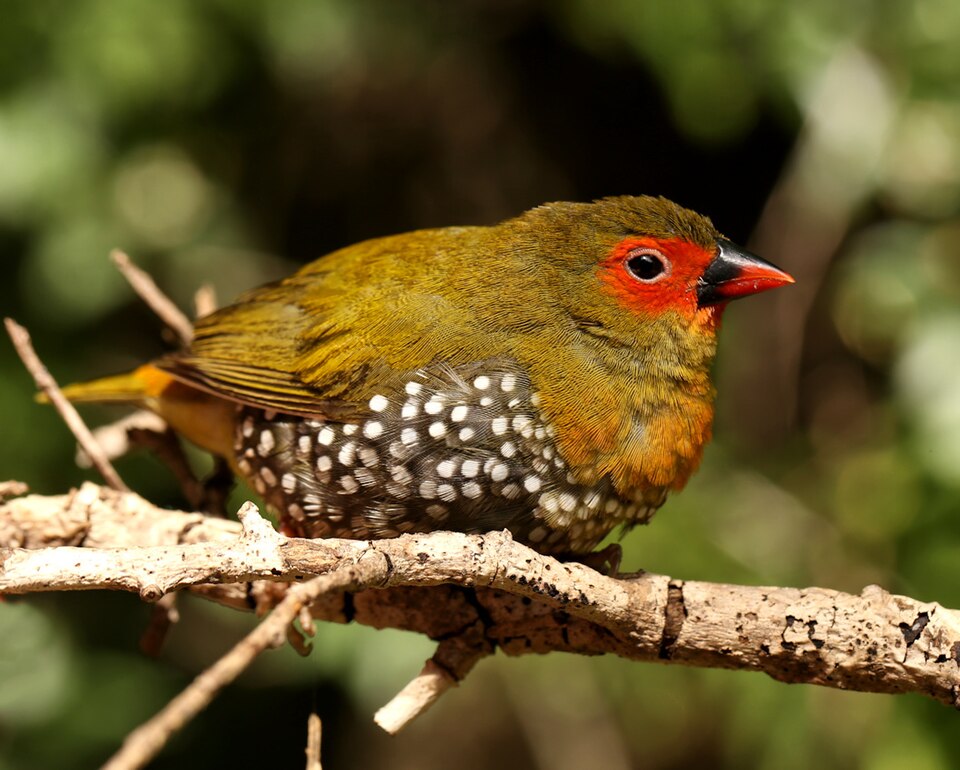
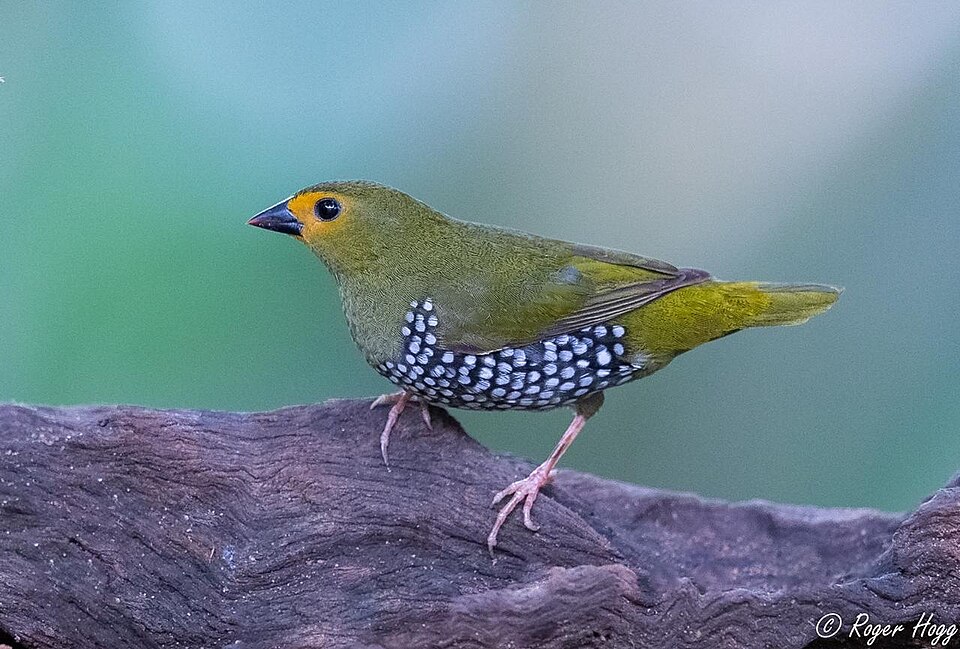
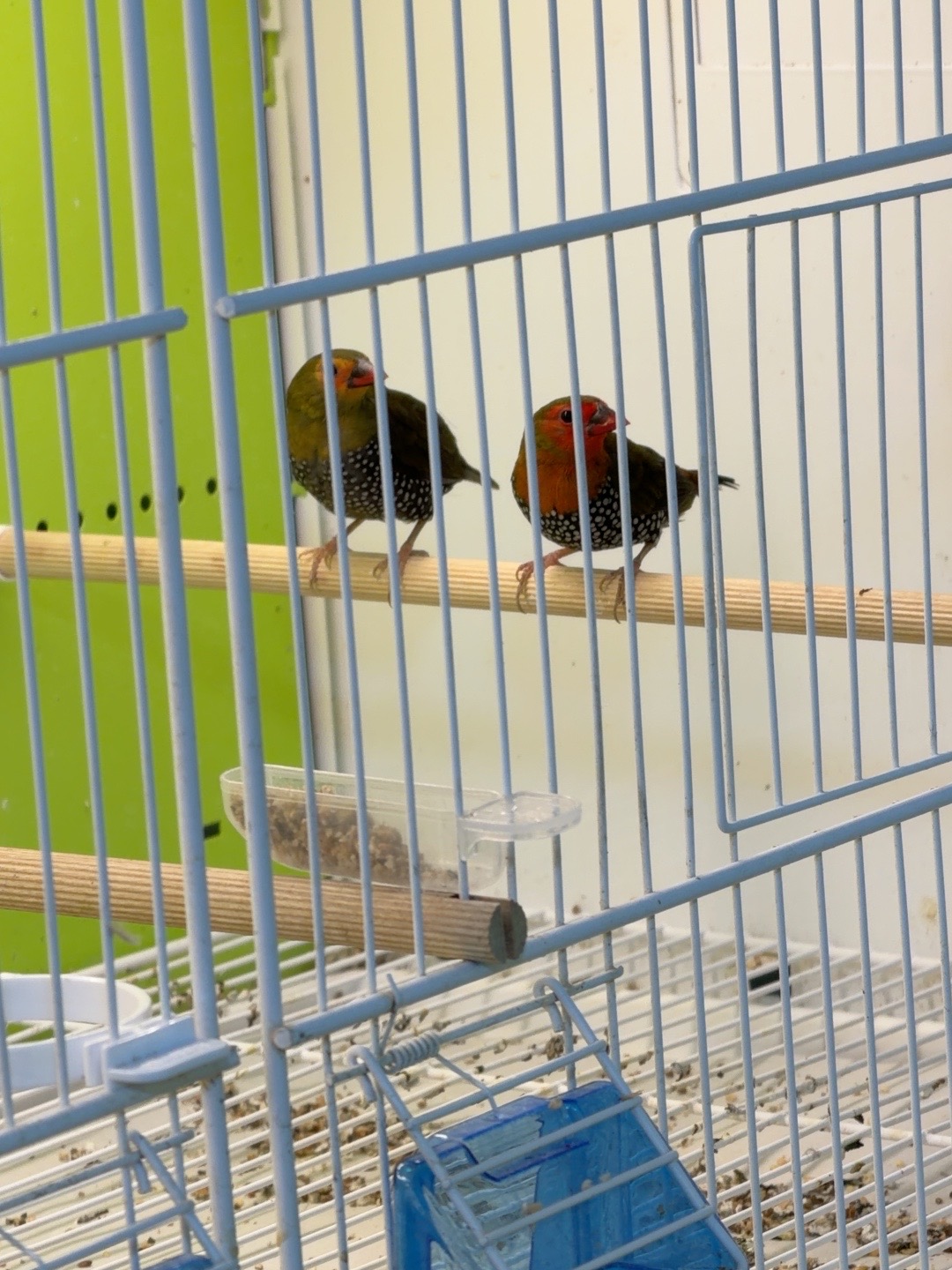
Green upperparts and a black belly with conspicuous pale spots distinguish this bird from Star and Painted Finches. The supplied clearer pair image shows the red/orange-faced male on the left and less red-faced female on the right. Orange breast colour may indicate the Schlegel's form, but a photograph cannot certify ancestry.
Male & female
Adult males show stronger red facial colour; females are less red-faced. Use age, form and behaviour as supporting context. Retain a confidence field rather than promoting a tentative photo assessment into certainty.
Nature & behaviour
African forest-edge finches associated with cover. Offer a calm retreat and secure low foraging opportunities without placing food in droppings or damp litter.
Cages & aviaries
A sheltered, generously planted or screened flight is a useful planning direction. Keep cover, feeding points and clear flight routes together. A 60 cm cage is not endorsed here as permanent breeding housing for this specialist species.
Diet & feeding
NFSS stresses small millets, wild grass seeds and a variety of small insects. Secure and test appropriate cultured insects before encouraging breeding. Egg-food acceptance alone does not demonstrate a reliable replacement for the pair's insect intake.
Breeding
Both sexes participate in nest building and incubation. Keep the nest supported and discreetly accessible for essential welfare checks. Fledging accounts differ; watch the bird and its parents rather than removing a youngster on an assumed calendar date.
Compatibility
A quiet dedicated pair flight simplifies privacy, nutrition and monitoring. Other finches using their food or nest cover may disrupt a pair even without obvious fighting.
Breeding timeline
Follow the bird, not just the calendar. Published ranges are observation windows; actual parental care and feeding decide the next step.
Clutch size
4–6 EggseggsIncubation
12–14 daysdays after sustained incubationFledging
17–21 daysdays after hatch; accounts varyIndependent feeding
Not establishedNatural-history accounts describe independence soon after fledging. Confirm sustained feeding and drinking and stable condition over repeated observations before separation.
Sources & image credits