Identification
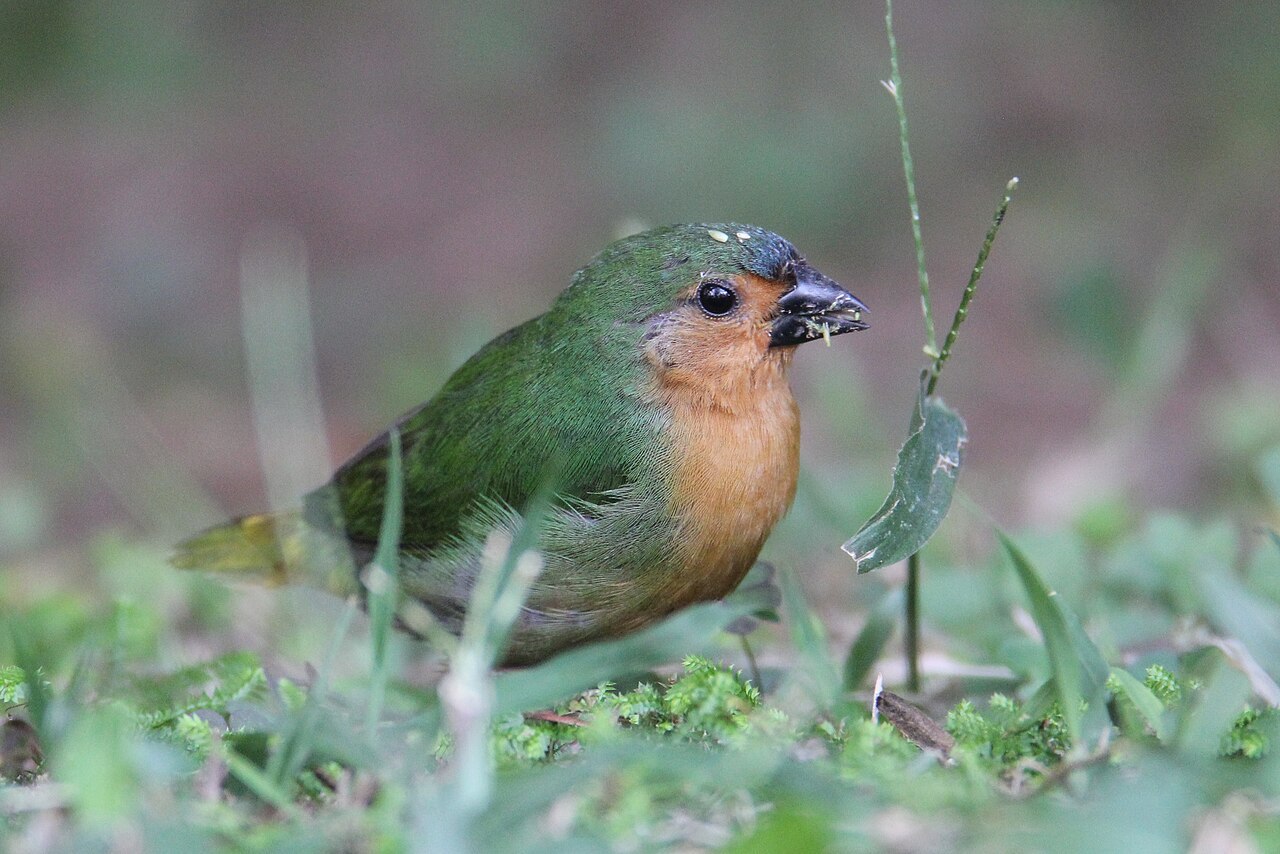
A green parrotfinch with tawny underparts and a blue facial area; geographical forms differ. Erythrura hyperythra is not a brown juvenile of the Blue-faced Parrotfinch.
Male & female
Treat subtle colour or size assessments as provisional. The consulted primary biological paper does not establish a reliable single-photo captive sexing test.
Nature & behaviour
Occurs in parts of Southeast Asia, including Indonesian islands, Malaysia and the Philippines. Primary field notes emphasise secretive behaviour and limited knowledge; bamboo and montane habitats are important in some regions.
Cages & aviaries
This is a specialist reference entry, not an endorsement for a standard small breeding cage. Establish documented husbandry with experienced holders before designing a flight or encouraging reproduction.
Diet & feeding
Seed availability and habitat-specific foraging need attention. The consulted field account does not establish a complete captive ration; do not copy an insect schedule, fruit ration or supplement dose from another Erythrura.
Breeding
Reliable captive clutch, incubation, fledging and independence figures were not established here. Leave estimates unset and record direct observations rather than inventing a protocol for a rarely documented bird.
Compatibility
Use a separate monitored pair arrangement if supported by specialist advice. Shared green plumage and a common genus do not establish safety with the existing parrotfinch collection.
Breeding timeline
Follow the bird, not just the calendar. Published ranges are observation windows; actual parental care and feeding decide the next step.
Clutch size
Not establishedIncubation
Not establishedFledging
Not establishedIndependent feeding
Not establishedNo automatic separation age is established. Confirm repeated independent eating and drinking, stable condition and continued parental care.
Reference figures describe the cited observations, not guaranteed captive deadlines. Unverified stages are deliberately left unset; use the care library and a species-informed breeding plan.
Sources & image credits