Identification
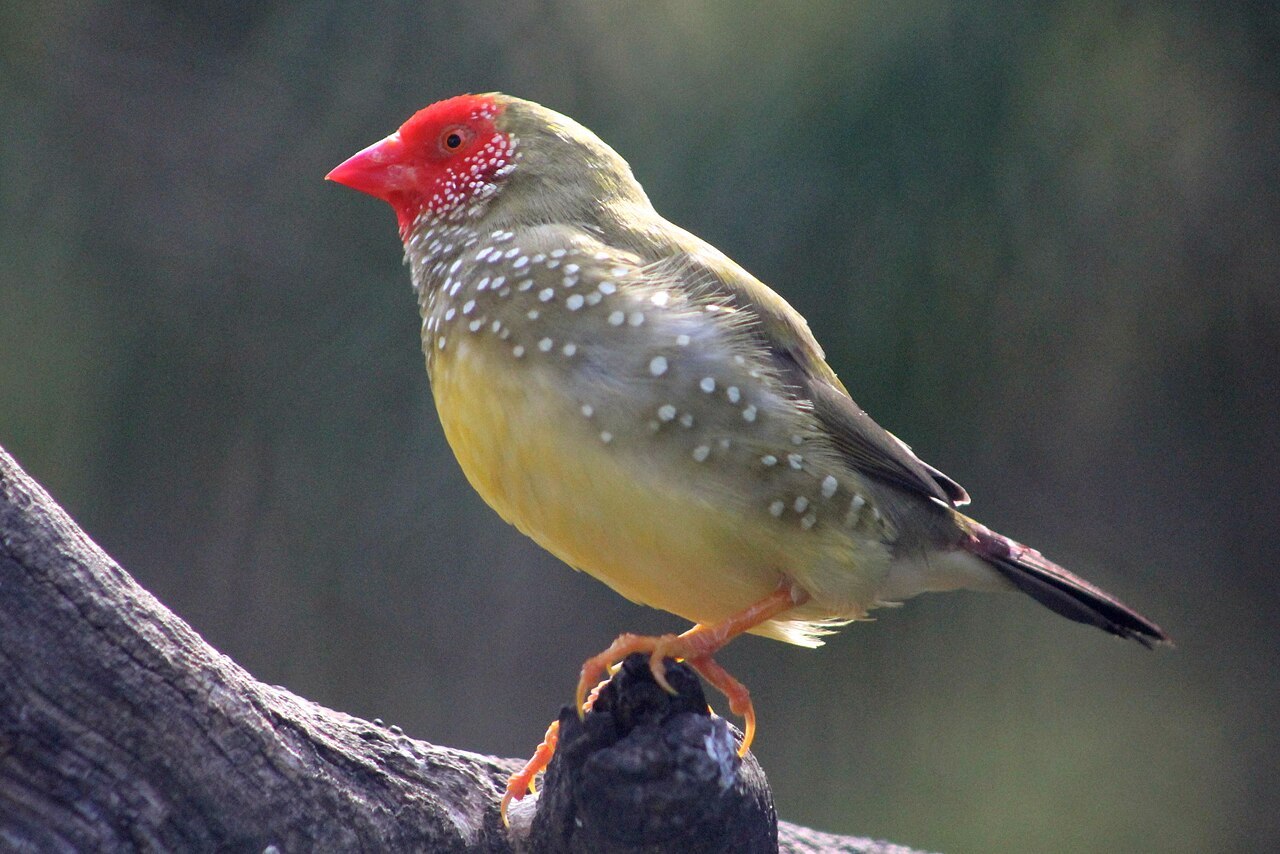
An olive finch with a red face and bill, pale spotted face and breast, and yellowish lower underparts. Star Finch is Bathilda ruficauda, also published as Neochmia ruficauda. It is distinct from Painted Finch and both twinspots in this library.
Male & female
Normal adult males usually have more extensive bright facial red; hens are less vividly marked. Young birds and yellow-faced or other captive mutations complicate comparison. Females can display too, so courtship posture alone does not establish male sex.
Nature & behaviour
A northern Australian finch of tall grasses and reeds near surface water. It forages among seed-bearing vegetation; retain a balance of cover and open movement rather than filling every cage surface with perches.
Cages & aviaries
Offer a protected flight with clean grass-stem foraging supports and a quieter screened area. The water-associated natural habitat does not justify wet litter. Check both birds can reach food and drinking water without entering another pair’s territory.
Diet & feeding
NFSS recommends mixed suitable millets and canary seed, green food and seeding grasses, with sprouted seed, egg food and live food during breeding. Establish acceptance before hatch and maintain hygiene for every moist-food component.
Breeding
Pairs use a covered grass nest and may remain bonded after breeding. Natural-history accounts give smaller clutches with occasional larger ones. A captive breeder reports thirteen to fourteen days’ incubation and fledging near three weeks; separation still depends on observed independent feeding.
Compatibility
Do not assume a shy Star Finch can compete with Crimson Finches, Zebra Finches or territorial waxbills. A dedicated breeding pair flight simplifies access and monitoring; any mixed arrangement needs continuing observation, not one successful introduction.
Breeding timeline
Follow the bird, not just the calendar. Published ranges are observation windows; actual parental care and feeding decide the next step.
Clutch size
3–7 Eggseggs; reference onlyIncubation
13–14 daysdays after sustained incubation; reference onlyFledging
21 daysdays after hatch; reference onlyIndependent feeding
Not establishedNo universal separation age is established. Confirm repeated independent eating and drinking and stable condition while monitoring parental support.
Reference observations are not captive guarantees. Record actual hatch and feeding; never separate a chick solely because a date has arrived.
Sources & image credits