Identification
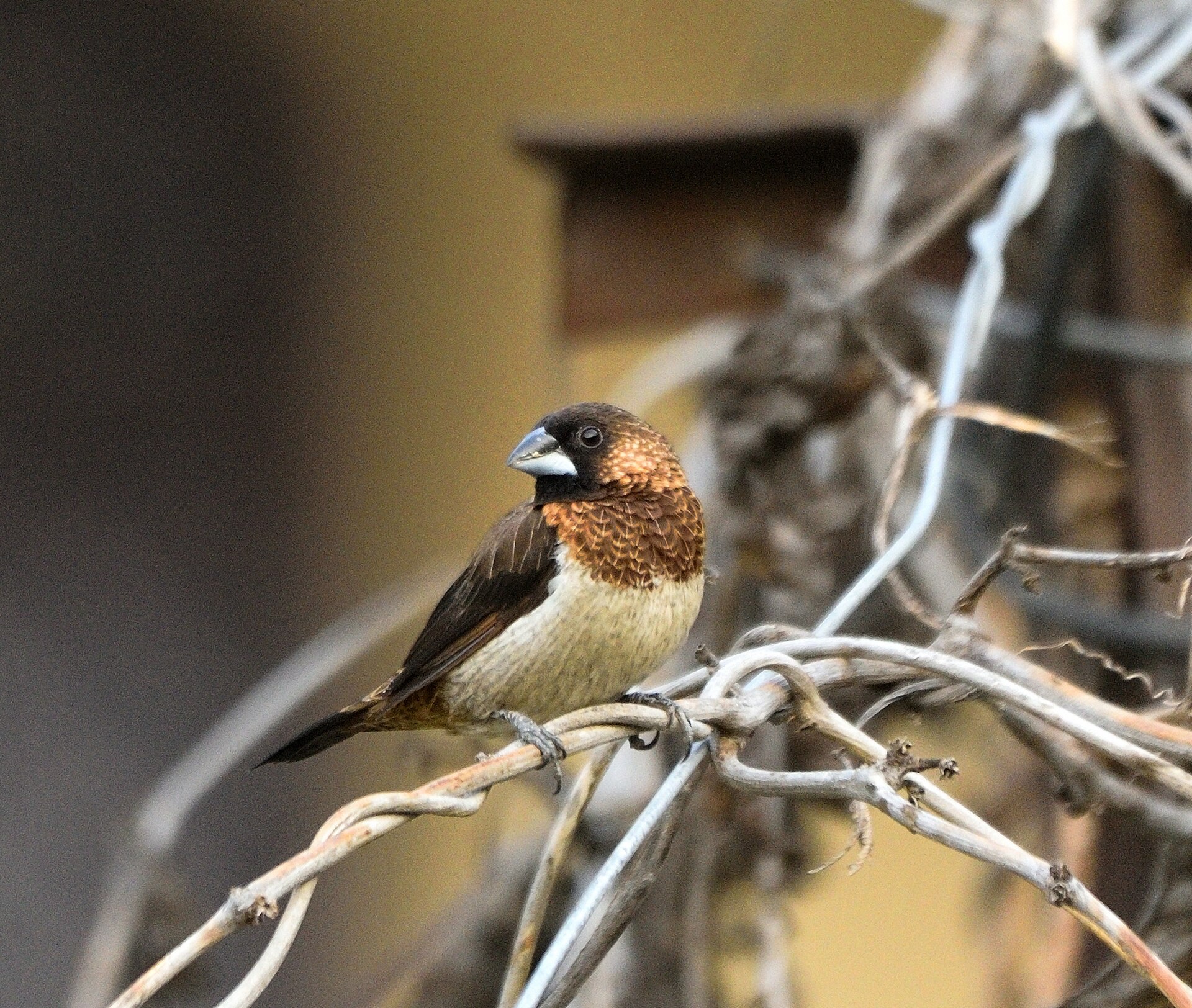
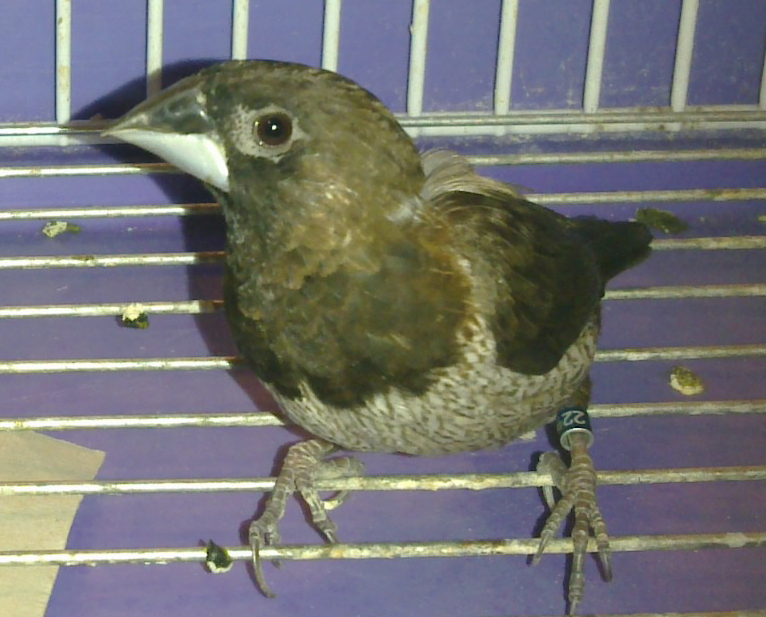
Domestic finches with variable brown, fawn, white and pied plumage. Colour alone is not a dependable male/female test. Store each foster's identity separately from the donor species and genetic parents.
Male & female
Male song is useful evidence. For a foster team, document observed sitting and feeding history as well as sex; an assumed pair is not proof that both birds will brood or feed the intended chick species.
Nature & behaviour
Domesticated social finches widely used in aviculture as foster parents. An individual's successful history with one species does not establish suitability for every waxbill or parrotfinch.
Cages & aviaries
Keep foster teams and clutches individually identifiable, with privacy, reliable drinking stations and sufficient food access. Prepare alternative care before transferring eggs. Do not continually increase clutch size simply because foster birds remain in the nest.
Diet & feeding
Foster parents must already accept the rearing foods required by the donor chicks. Monitor actual feeding after hatch; a foster eating its own usual seed ration is not evidence of a nutritionally adequate response to another species' chicks.
Breeding
This collection uses Societies for fostering. Record genetic pair, donor egg dates, transfer date, foster identity, incubation progress and chick outcomes. Society Finch incubation figures must not replace the donor species' development window. When health or care fails, seek professional help rather than repeatedly moving chicks between nests.
Compatibility
The central issue is biological and nutritional compatibility with the donor chicks, not whether the adults appear peaceful. Veterinary literature documents asymptomatic Cochlosoma carriage in Society Finches and illness in susceptible fostered finches. Establish a veterinary screening plan; this is not a blanket preventive drug schedule.
Breeding timeline
Follow the bird, not just the calendar. Published ranges are observation windows; actual parental care and feeding decide the next step.
Clutch size
Not establishedIncubation
Not establishedFledging
Not establishedIndependent feeding
Not establishedFor fostering, use the donor species' recorded incubation and development windows. Track the foster team's actual sitting and feeding history.
Sources & image credits