Identification
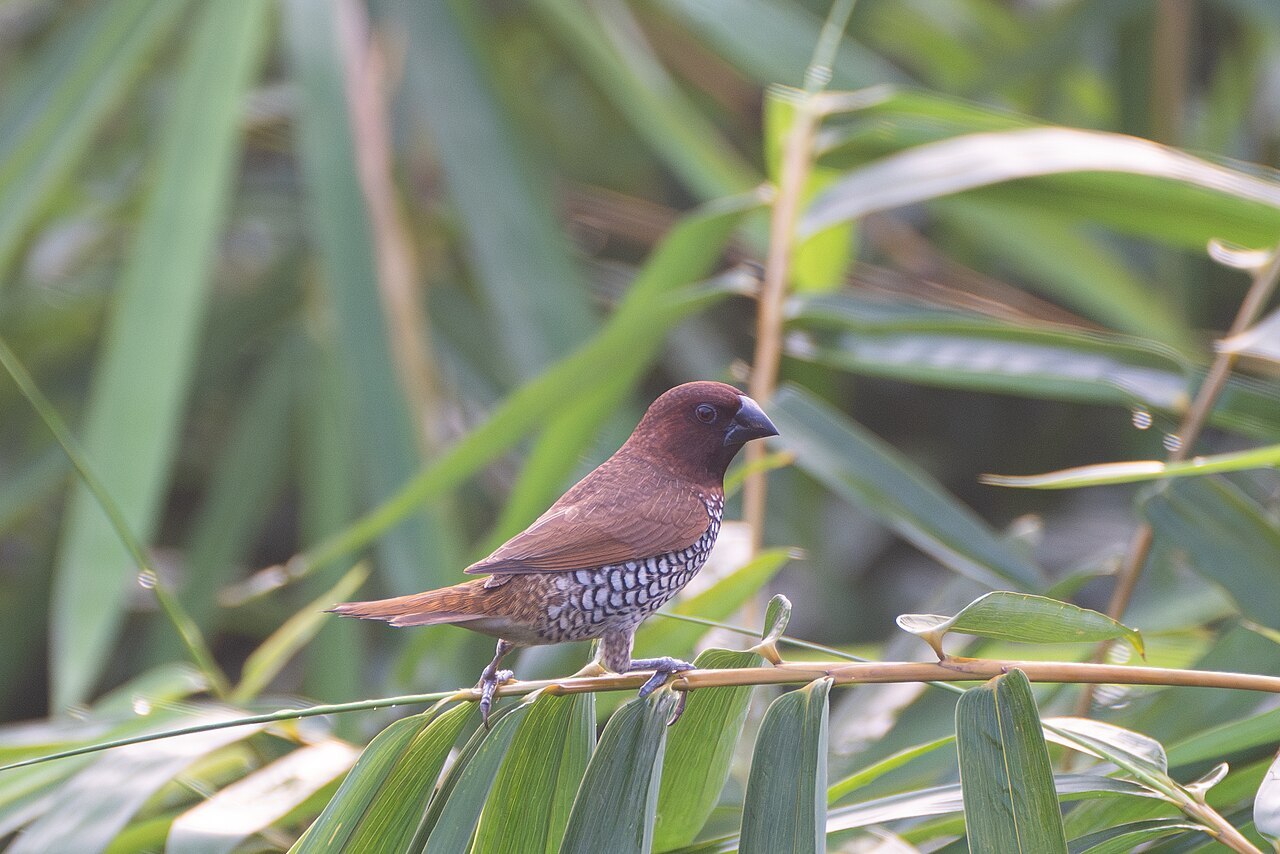
Brown head and upperparts, a heavy dark bill and black-edged pale belly feathers produce the adult scaly pattern. Spice Finch and Scaly-breasted Munia are the same species; juveniles are plainer brown.
Male & female
The sexes look similar. Plumage alone is a weak test; use repeated behaviour and validated sexing when a breeding decision needs certainty.
Nature & behaviour
Native to southern Asia, with introduced populations elsewhere. Flocks forage on grasses and near the ground, often around dense cover and water.
Cages & aviaries
Offer clear flight space, sheltered vegetation and clean low foraging areas. Social birds still require enough feeding positions and escape routes to prevent quieter individuals losing access.
Diet & feeding
Seeds dominate the natural diet, with some berries and insects. Provide varied small seeds and clean seeding grasses; assess actual rearing-food acceptance and hygiene rather than judging the ration by packet names.
Breeding
Both parents incubate and feed. Audubon gives 3–5 eggs, about 14 days incubation and nest departure around day 18; these are reference observations, not compulsory captive milestones.
Compatibility
Separate breeding pairs make parentage and intake easier to monitor. Avoid breeding together with other munias where hybridisation would confuse species records.
Breeding timeline
Follow the bird, not just the calendar. Published ranges are observation windows; actual parental care and feeding decide the next step.
Clutch size
3–5 Eggseggs; reference onlyIncubation
14 daysdays from sustained incubation; reference onlyFledging
18 daysdays after hatch; reference onlyIndependent feeding
Not establishedNo automatic separation age is established. Confirm repeated independent eating and drinking, stable condition and continued parental care.
Reference figures describe the cited observations, not guaranteed captive deadlines. Unverified stages are deliberately left unset; use the care library and a species-informed breeding plan.
Sources & image credits