Identification
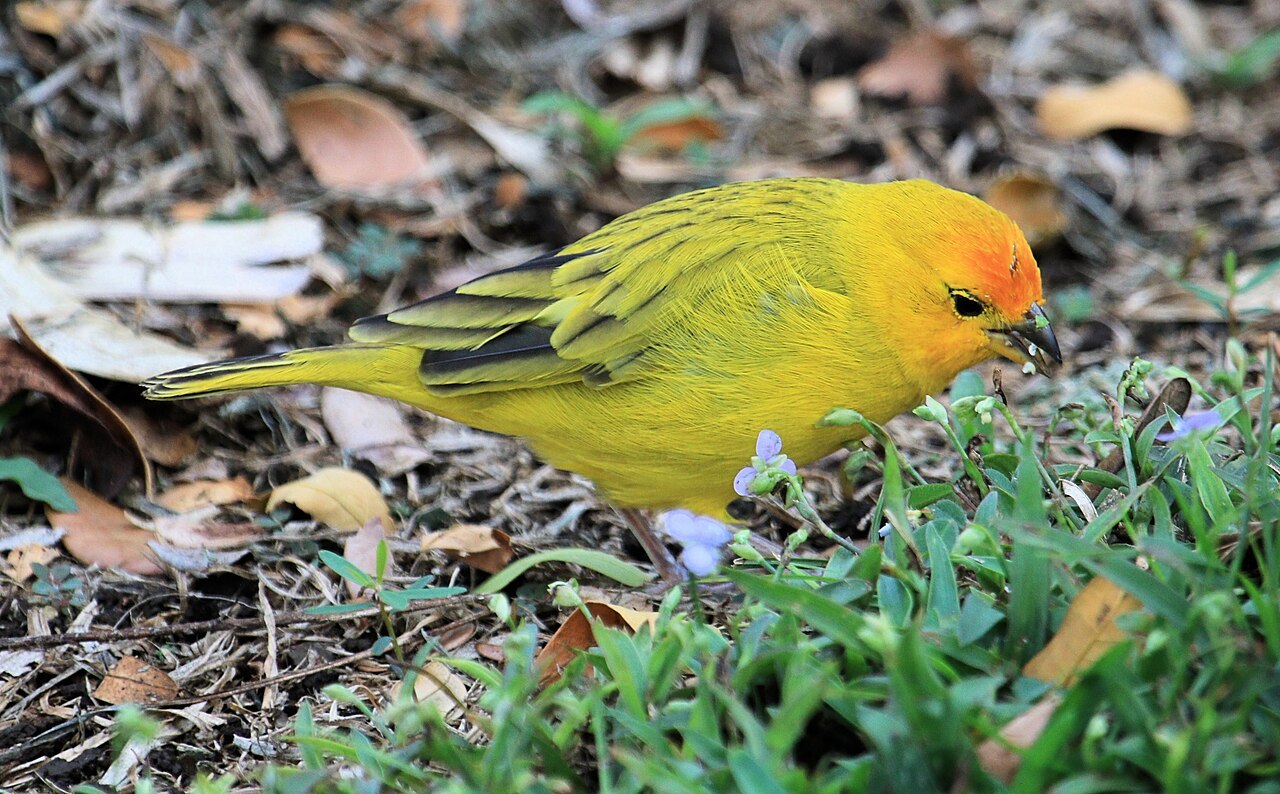
A yellow South American tanager with an orange forehead in typical adult males; upperparts may be olive and streaked. It is Sicalis flaveola, not a domestic canary or a true Fringillidae finch.
Male & female
Females and younger birds are generally duller; appearance varies with age and form. Record uncertainty rather than sexing every yellow bird as male.
Nature & behaviour
Occurs in open and semi-open South American habitats; populations elsewhere may be introduced. An Australian poster does not establish Australian origin.
Cages & aviaries
Plan a roomy pair flight, screened nesting area and separate feeding resources. A Gouldian breeding cage should not be assumed suitable merely because the birds appear similar in size.
Diet & feeding
Offer a varied seed ration and accepted greens. NFSS specifically stresses varied insects; test an appropriate cultured supply before breeding rather than relying only on fortified egg food.
Breeding
Cavity nesting and use of enclosed nest boxes are reported. NFSS gives a usual clutch of 3–4 eggs, but its printed incubation interval is ambiguous; no countdown is adopted from it.
Compatibility
Breeding males can be territorial. Start with a dedicated pair enclosure and a safe separation plan; monitor pursuit and blocked food access.
Breeding timeline
Follow the bird, not just the calendar. Published ranges are observation windows; actual parental care and feeding decide the next step.
Clutch size
3–4 Eggseggs; reference onlyIncubation
Not establishedFledging
Not establishedIndependent feeding
Not establishedNo automatic separation age is established. Confirm repeated independent eating and drinking, stable condition and continued parental care.
Reference figures describe the cited observations, not guaranteed captive deadlines. Unverified stages are deliberately left unset; use the care library and a species-informed breeding plan.
Sources & image credits