Identification
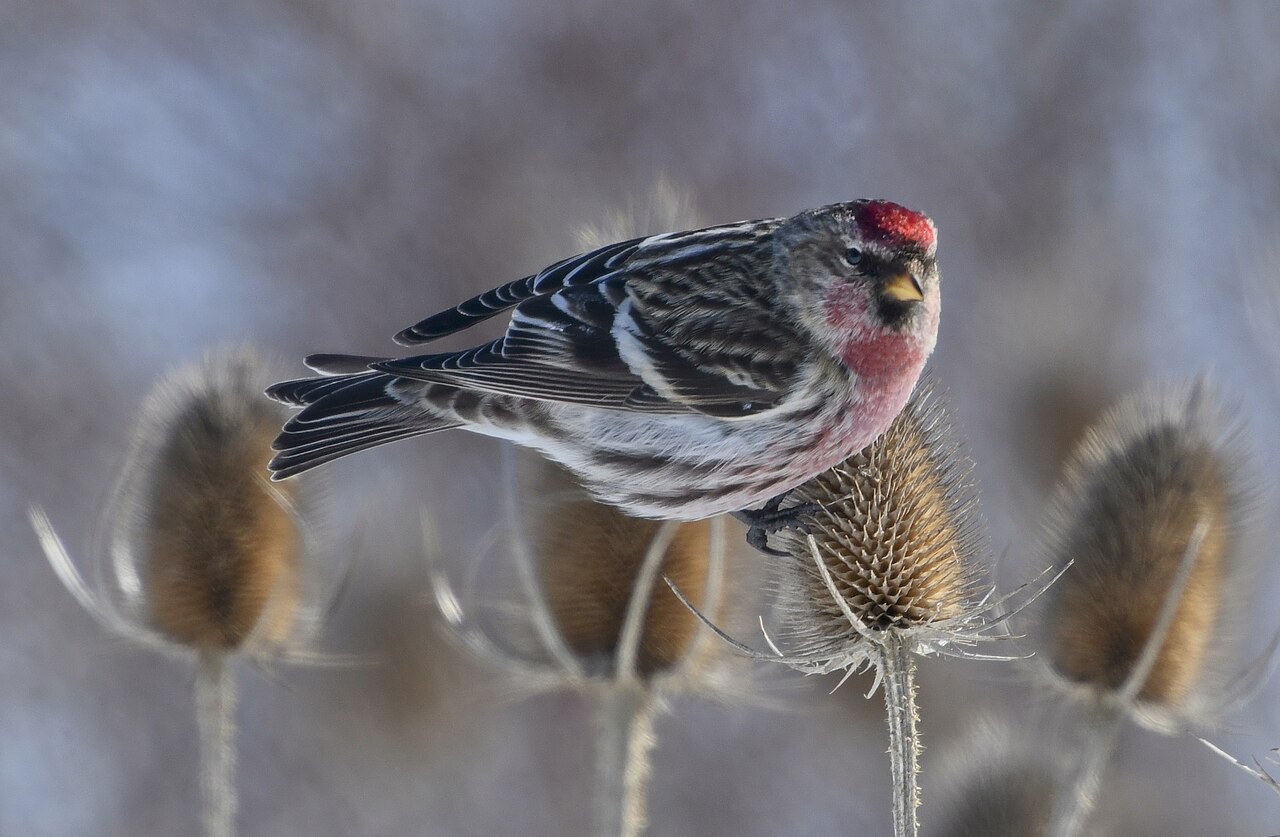
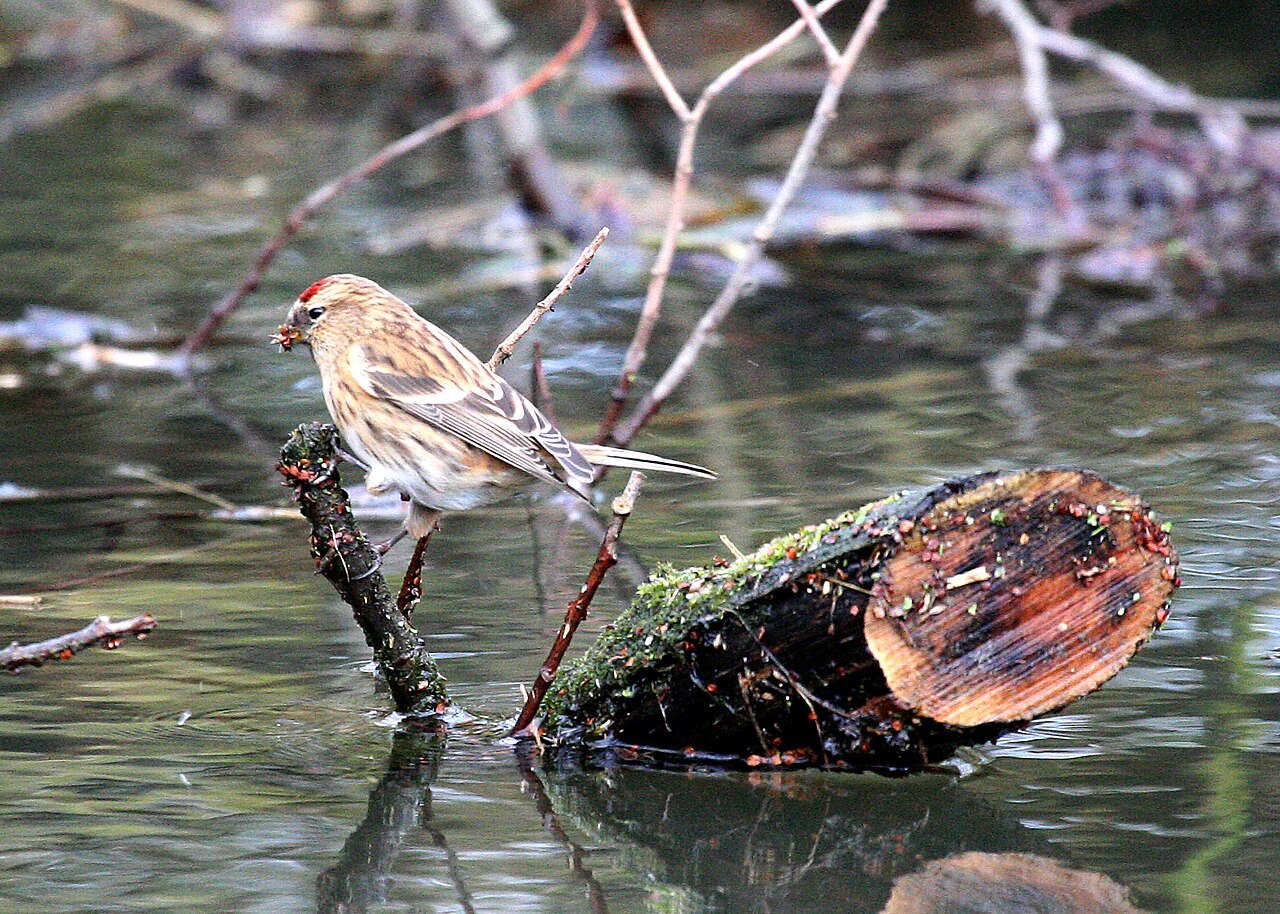
A small streaked true finch with a red crown and dark chin; some adult males show pink on the breast. Common, Hoary and Lesser Redpolls are treated together here as Acanthis flammea following Cornell’s merged treatment.
Male & female
Age, sex and form influence colour. A red cap occurs in both sexes; absence of a pink breast does not prove female sex. Keep form records without inventing separate species entries.
Nature & behaviour
A northern bird of tundra scrub and boreal/open woodland, often feeding in mobile flocks. Cold-region adaptation does not make abrupt temperature changes harmless or establish an indoor climate setting.
Cages & aviaries
Plan active flight room and slender natural perches for climbing and hanging. A warm tropical room needs a specific suitability review rather than automatic inclusion with Gouldians.
Diet & feeding
Small tree and grass seeds are important; Cornell notes insects and spiders in summer. Offer a balanced varied ration with safe seed heads and appropriate rearing foods, verifying intake.
Breeding
Cornell reports 1–7 eggs, 10–12 days incubation and a 9–16 day nestling period. These broad wild ranges must not generate automatic separation dates.
Compatibility
Winter flocking does not establish breeding compatibility. Provide separate pair space, accessible food and a plan to separate persistent aggressors.
Breeding timeline
Follow the bird, not just the calendar. Published ranges are observation windows; actual parental care and feeding decide the next step.
Clutch size
1–7 Eggseggs; reference onlyIncubation
10–12 daysdays from sustained incubation; reference onlyFledging
9–16 daysdays after hatch; reference onlyIndependent feeding
Not establishedNo automatic separation age is established. Confirm repeated independent eating and drinking, stable condition and continued parental care.
Reference figures describe the cited observations, not guaranteed captive deadlines. Unverified stages are deliberately left unset; use the care library and a species-informed breeding plan.
Sources & image credits