Identification
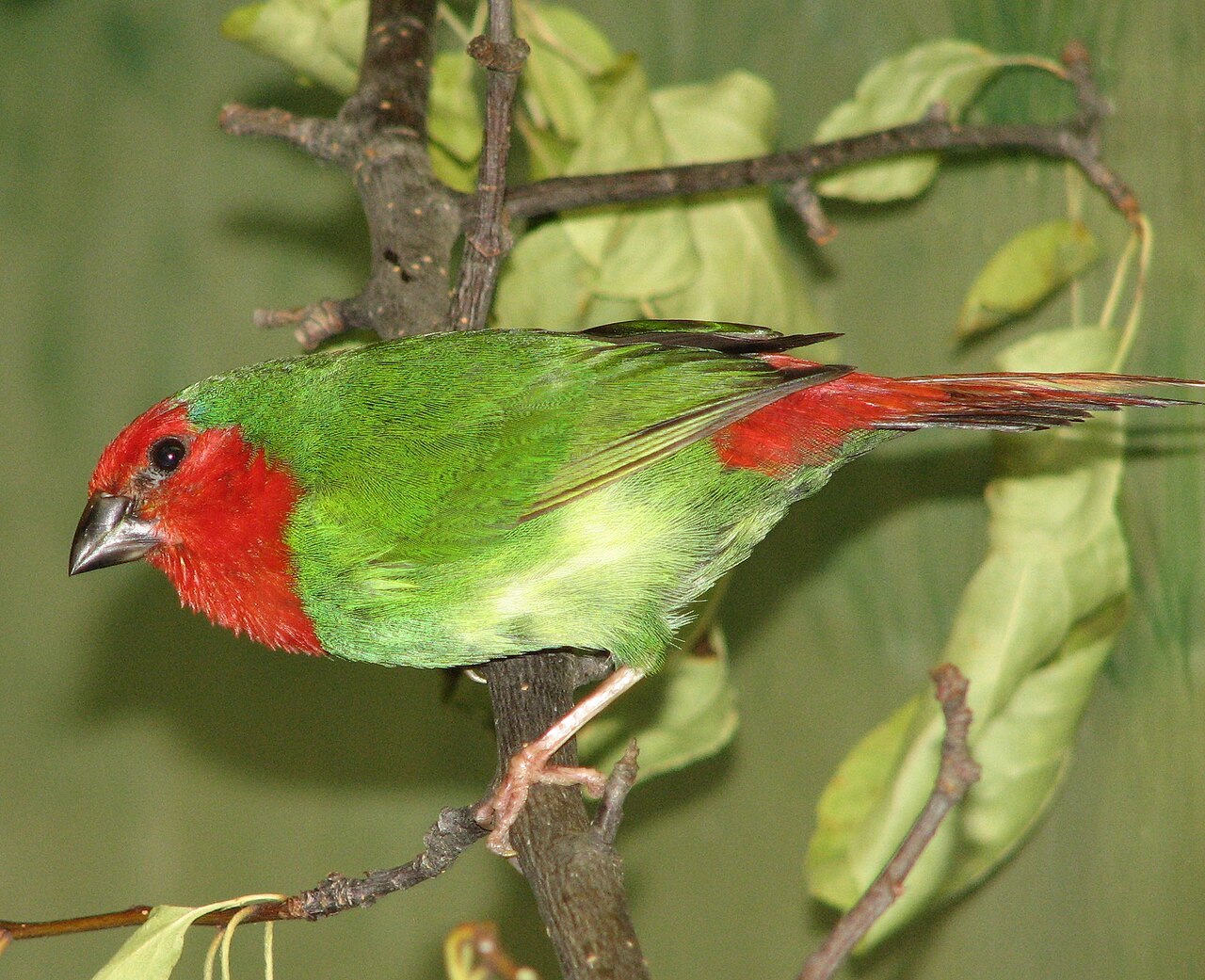
The normal bird is green with a red face/throat and red rump/tail. Erythrura psittacea is often called Red-throated Parrotfinch; NFSS’s older “Red Headed” heading uses this scientific name, not Royal Parrotfinch.
Male & female
Adult sexes can be very similar. The amount of red is supporting context, not a guaranteed photograph-only test; retain uncertainty and verify breeding sex when needed.
Nature & behaviour
Native to New Caledonia. This guide covers normal-coloured birds. The separate sea-green entry is an owner-reported colour variant whose species and mutation still require confirmation; it is not another confirmed species.
Cages & aviaries
Provide an active sheltered flight with screening around nest sites and clean bathing access. Check condition and movement; do not equate willingness to breed in a cage with adequate permanent space.
Diet & feeding
NFSS describes mixed millets, canary and grass seeds, with egg food and insects for chicks. Confirm accepted rearing foods before eggs are laid.
Breeding
NFSS reports established parent-rearing. Kälin’s firsthand account for normal Erythrura psittacea describes 4–6 eggs, 13–14 days incubation and 18–21 days in the nest. Keep welfare checks brief and log actual hatch and feeding; those observations do not establish a universal separation date.
Compatibility
Separate breeding pairs and related Erythrura species for reliable identity, diet monitoring and prevention of interference or unwanted crosses.
Breeding timeline
Follow the bird, not just the calendar. Published ranges are observation windows; actual parental care and feeding decide the next step.
Clutch size
4–6 Eggseggs; reference onlyIncubation
13–14 daysdays from sustained incubation; reference onlyFledging
18–21 daysdays after hatch; reference onlyIndependent feeding
Not establishedNo automatic separation age is established. Confirm repeated independent eating and drinking, stable condition and continued parental care.
Reference figures describe the cited observations, not guaranteed captive deadlines. Unverified stages are deliberately left unset; use the care library and a species-informed breeding plan.
Sources & image credits