Identification
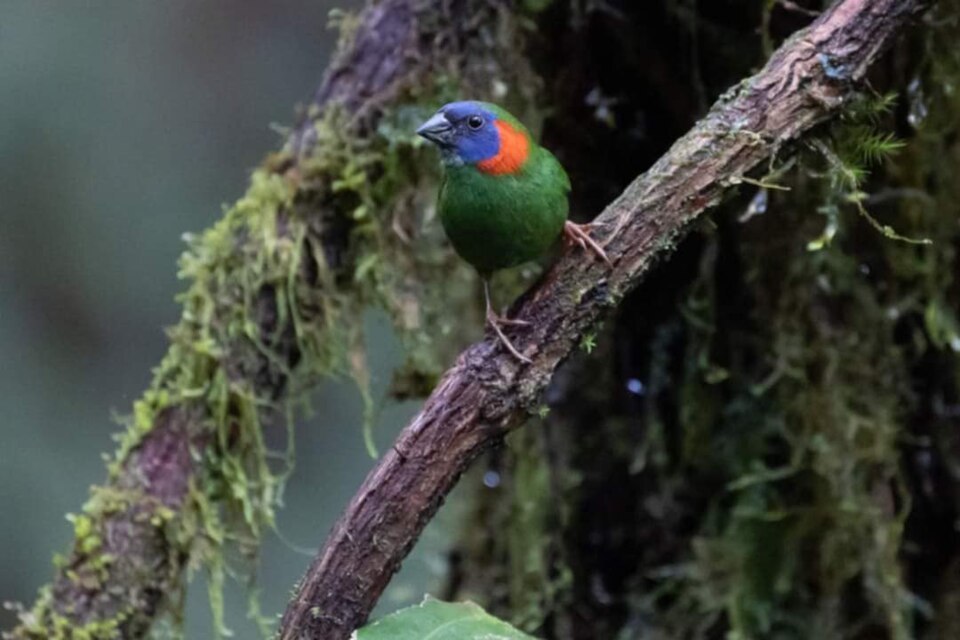
A green parrotfinch with blue on the face and a red patch behind the ear, rather than an entirely red face. Erythrura coloria is also called the Mindanao Parrotfinch.
Male & female
Colour extent can overlap between adults and changes with age. Do not assign a definitive sex from a single photograph; use validated sexing if the decision is important.
Nature & behaviour
A species endemic to Mindanao in the Philippines, associated with upland forest and its edges. It is not an Australian native merely because it appears on the chart.
Cages & aviaries
Plan only with a specialist keeping history: sheltered flight, retreat, clear flight paths and access to clean feeding stations. The natural elevation range does not specify a captive temperature setting.
Diet & feeding
A species-informed seed and rearing-food plan must be established before breeding. The cited conservation source is not a complete captive feeding manual; no universal supplement or live-food dose is inferred.
Breeding
Captive timing figures have not been verified in the consulted primary sources. Keep clutch, hatch and fledging observations separate and do not borrow Forbes’s or Blue-faced schedules.
Compatibility
Start separately from other Erythrura, with individual identity and parentage documented. Monitor pair behaviour and food access instead of assuming congeners are compatible.
Breeding timeline
Follow the bird, not just the calendar. Published ranges are observation windows; actual parental care and feeding decide the next step.
Clutch size
Not establishedIncubation
Not establishedFledging
Not establishedIndependent feeding
Not establishedNo automatic separation age is established. Confirm repeated independent eating and drinking, stable condition and continued parental care.
Reference figures describe the cited observations, not guaranteed captive deadlines. Unverified stages are deliberately left unset; use the care library and a species-informed breeding plan.
Sources & image credits