Identification
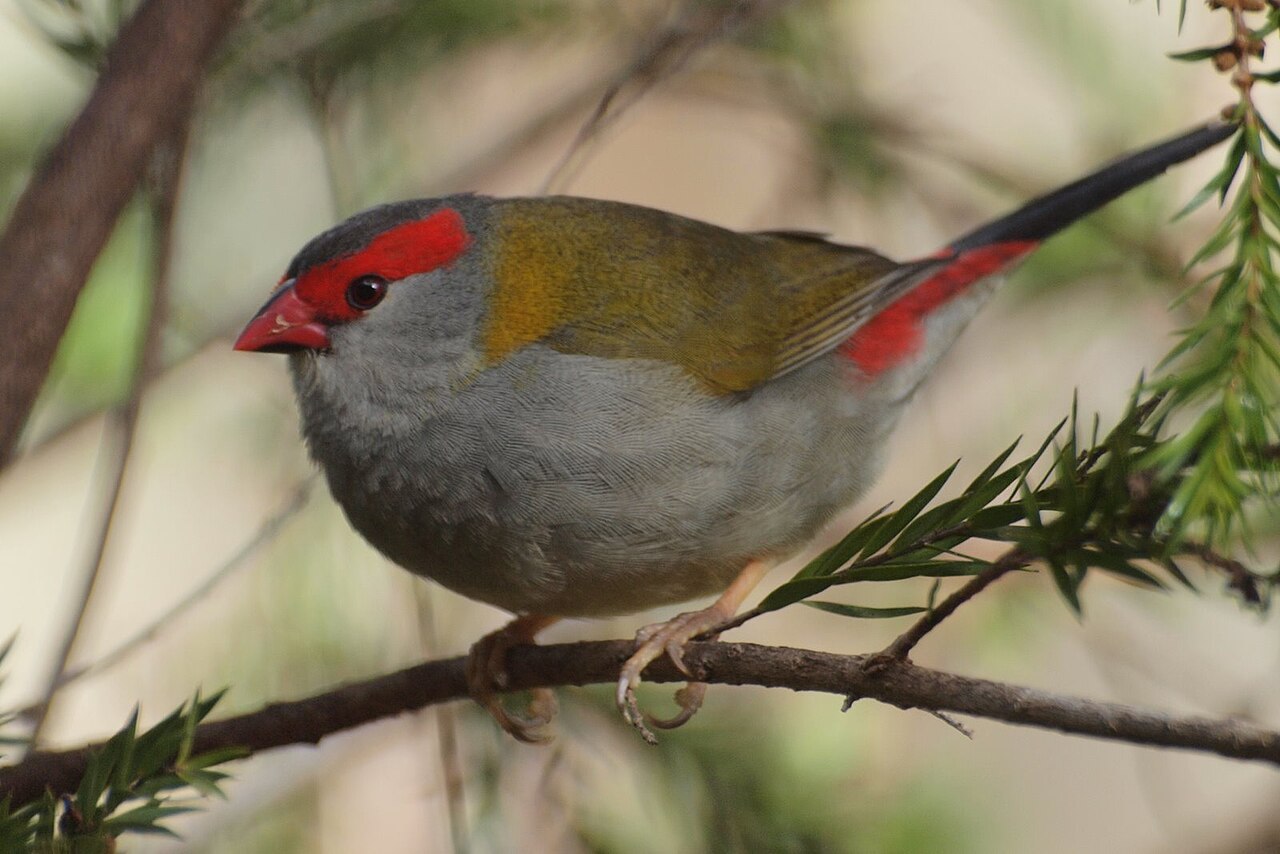
A grey and olive finch with a vivid red eyebrow, bill and rump. The combination separates it from grey-bodied firetails with black facial masks. Juveniles have reduced adult colour and need age-aware identification.
Male & female
Adult sexes are close in appearance; apparent eyebrow size or brightness can change with angle and individual variation. Use documented adult comparisons and behaviour, retaining uncertainty rather than turning an attractive photograph into a sex certificate.
Nature & behaviour
An eastern Australian finch using grassy feeding areas next to thick understorey, often near creeks. Flocks escape rapidly into cover when disturbed, so exposed housing can deny an important part of its behaviour.
Cages & aviaries
Combine an open flight lane with dense, safe retreat cover and small clean feeding stations. Position cover so every bird can leave it without being trapped by a dominant neighbour or by the keeper’s approach.
Diet & feeding
Seeds and small insects are natural foods, taken on the ground and from grass heads. Provide an appropriate varied ration, accepted rearing food and hygienic greens; inspect food dishes for hulls and wet contamination daily.
Breeding
Both parents build a domed nest with a side tunnel in dense vegetation, and share incubation and feeding. Museum clutch and timing figures describe the species in natural-history context; preserve privacy and record real development.
Compatibility
A protected pair flight simplifies breeding supervision. In a mixed flight, ensure larger or more assertive birds do not block the small feeder or cover entrance, and be ready to separate birds promptly.
Breeding timeline
Follow the bird, not just the calendar. Published ranges are observation windows; actual parental care and feeding decide the next step.
Clutch size
4–5 Eggseggs; reference onlyIncubation
14 daysdays after sustained incubation; reference onlyFledging
22 daysdays after hatch; reference onlyIndependent feeding
Not establishedNo universal separation age is established. Confirm repeated independent eating and drinking and stable condition while monitoring parental support.
Reference observations are not captive guarantees. Record actual hatch and feeding; never separate a chick solely because a date has arrived.
Sources & image credits