Identification
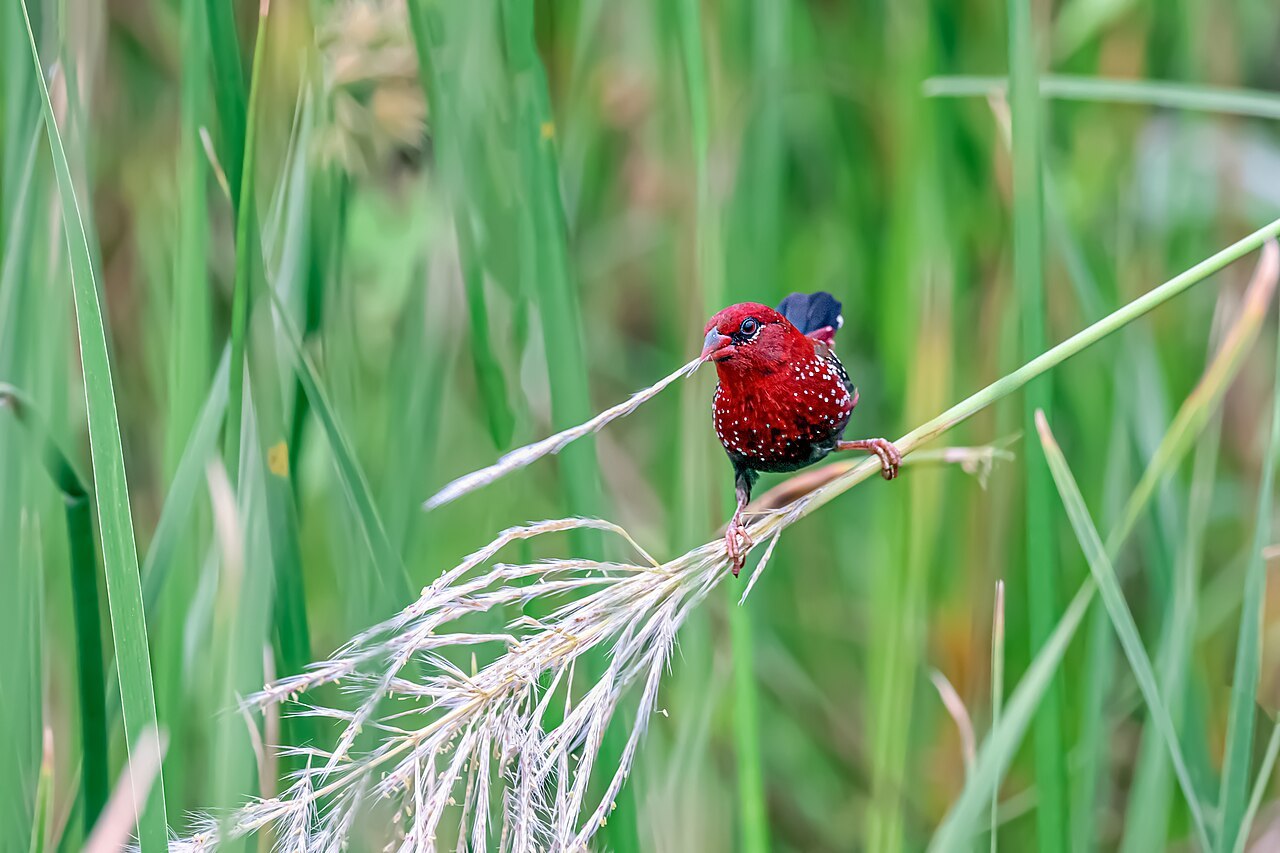
The breeding male is red with white spots and a red bill. Females and males outside breeding plumage are browner, with a red rump; Strawberry Finch is an alternative common name.
Male & female
Account for the male’s seasonal eclipse plumage before deciding sex. A dull bird is not necessarily female; document calls, age and changes over time.
Nature & behaviour
Native across parts of southern and southeastern Asia, favouring tall grasses, marshy edges and cultivated areas. Introduced populations do not change its native origin.
Cages & aviaries
Plan a sheltered flight with dense retreat and low, clean nest cover. Preserve a dry feeding area alongside cover; a marsh association does not justify wet cage litter.
Diet & feeding
Use suitable small seeds and seeding grasses, plus accepted rearing foods. WFS describes insects, soaked seed and egg food during chick feeding; secure hygienic supplies and verify actual use.
Breeding
Both parents build and incubate a covered grass nest. WFS gives 4–6 eggs, 11–12 days incubation and fledging around 20–21 days. Observe continued feeding after nest departure.
Compatibility
Females may become aggressive to other females when a breeding male is present. A dedicated pair flight simplifies monitoring; bowing can be performed by either sex.
Breeding timeline
Follow the bird, not just the calendar. Published ranges are observation windows; actual parental care and feeding decide the next step.
Clutch size
4–6 Eggseggs; reference onlyIncubation
11–12 daysdays from sustained incubation; reference onlyFledging
20–21 daysdays after hatch; reference onlyIndependent feeding
Not establishedNo automatic separation age is established. Confirm repeated independent eating and drinking, stable condition and continued parental care.
Reference figures describe the cited observations, not guaranteed captive deadlines. Unverified stages are deliberately left unset; use the care library and a species-informed breeding plan.
Sources & image credits