Identification
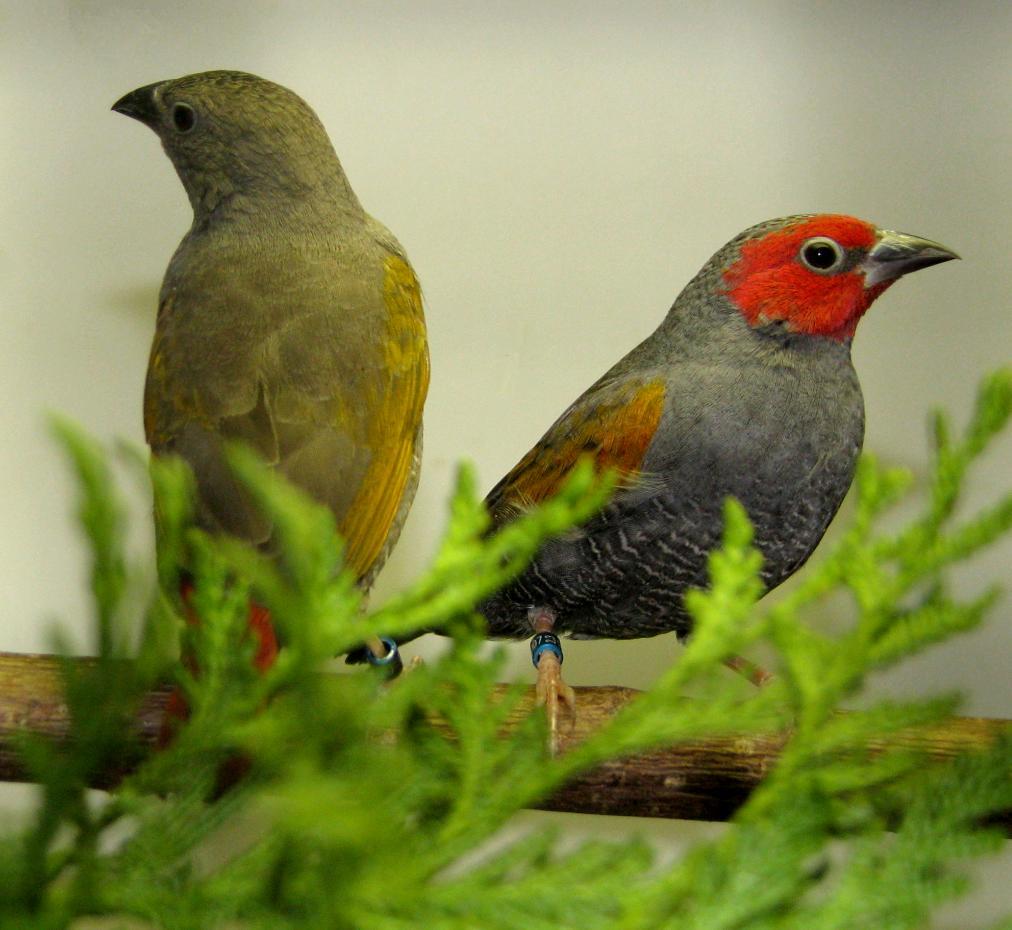
The male combines a grey head and body, red face and rump, yellow wing coverts and a dark bill. The female lacks the male's red face. Do not substitute Orange-winged Pytilia, Pytilia afra, Melba Finch, Pytilia melba, or Red-winged Pytilia, Pytilia phoenicoptera.
Male & female
Use properly labelled adults and the red facial pattern with age and form in mind. The provenance of a female can be particularly important when similar pytilias are kept by the same seller.
Nature & behaviour
A specialist African estrildid. A verified species identity should precede the choice of images, pair combinations and breeding calendar.
Cages & aviaries
Use a calm pair enclosure with vegetation or screened cover and a clear escape route. Avoid overcrowding or combining breeding pytilia pairs merely because they look similar. Track chasing and food exclusion.
Diet & feeding
The WFS species profile emphasizes small seed, wild or seeding grasses and insects, especially during rearing. Secure accepted cultured live food before breeding, with a backup supply. A previous keeper's feeding history is valuable, but one report does not prove a universal insect-free programme.
Breeding
The WFS section for this exact species gives an average clutch of4eggs, approximately two weeks incubation and nestlings remaining up to three weeks. It stresses plentiful live food for successful rearing. Keep clean nesting material and supported cover; assess the actual pair rather than copying another pytilia.
Compatibility
Use separate breeding pairs initially and protect species purity. Scientific names and source records matter when several pytilia species have overlapping common names.
Breeding timeline
Follow the bird, not just the calendar. Published ranges are observation windows; actual parental care and feeding decide the next step.
Clutch size
4 Eggseggs; reported average, not a clutch limitIncubation
14 daysdays after sustained incubation; approximately two weeksFledging
21 daysdays after hatch; reference pointWFS says nestlings can remain up to three weeks;21 is an approximate reference, not an exact fledging date.
Independent feeding
Not establishedThe WFS Yellow-winged Pytilia section specifically reports an average4eggs, approximately2weeks incubation and nestlings remaining up to3weeks. These values are not borrowed from Pytilia afra. Observe feeding before separation.
Sources & image credits