Identification
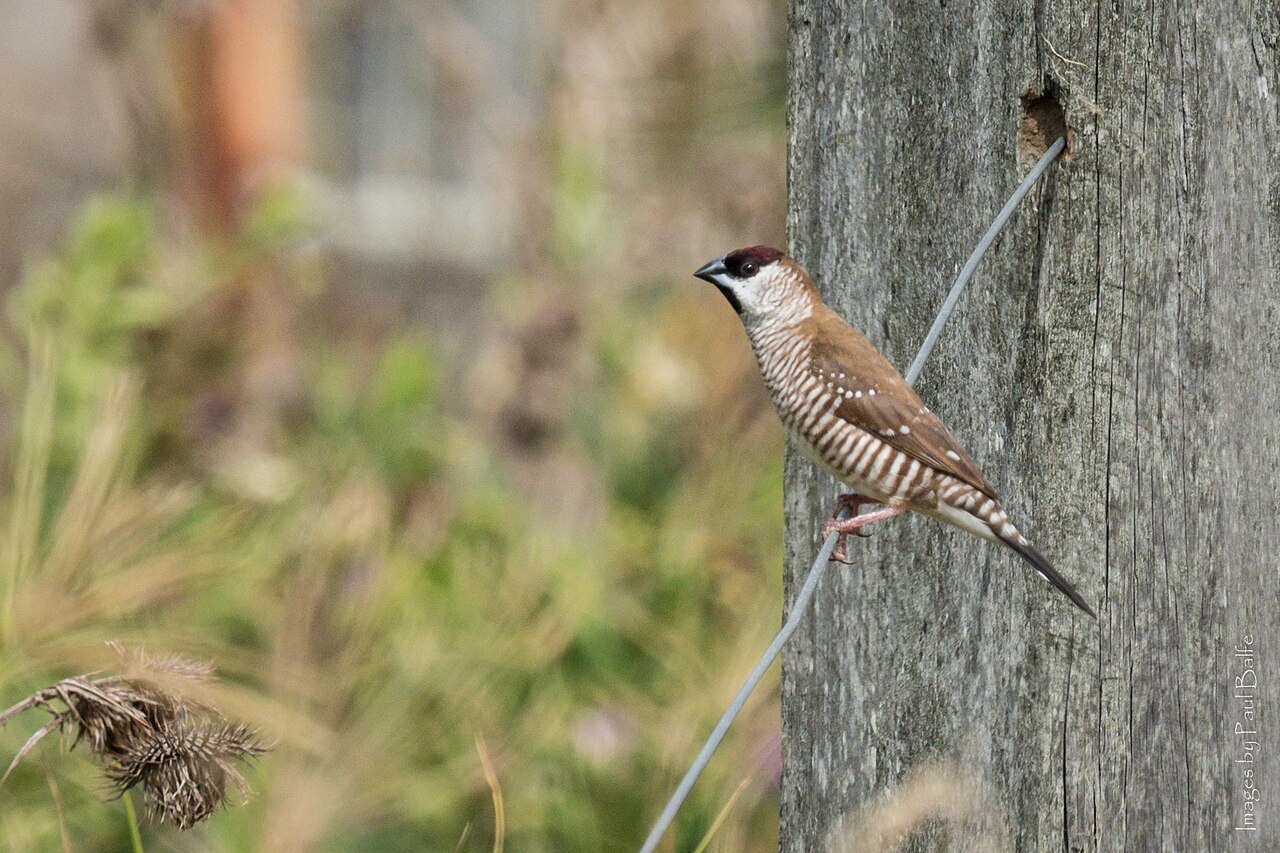
A finely barred brown-and-pale finch with a plum-coloured forehead and, in the male, a darker plum crown and chin. Cherry Finch is an alternative name; older sources also use Neochmia modesta for Aidemosyne modesta.
Male & female
A mature male has a plum chin patch; the hen has a pale chin and a thin pale stripe above and behind the eye. Juvenile head colour is less developed, so apply adult clues only after age-appropriate feathering is present.
Nature & behaviour
An eastern Australian grassfinch. Its relatively gentle captive reputation makes avoidance of bullying particularly important: quiet perching can mean security, but can also conceal restricted food access or displacement from cover.
Cages & aviaries
Offer a protected flight with fine natural perches and small, safe nesting cover. Position food where a shy bird can approach without crossing another pair’s nest area, and leave clear room for movement between all resources.
Diet & feeding
NFSS recommends varied seeds and green food, with egg food and live food when breeding. Confirm this pair’s acceptance before laying, and remove moist food promptly. A suitable rearing ration matters more than adding every available supplement.
Breeding
NFSS describes a normal clutch of four to six white eggs and hatch around fourteen days. Both sexes incubate. Fledging and independence were not verified in the reviewed accounts and are therefore tracked through observations, not an invented deadline.
Compatibility
NFSS calls the species peaceful, but a small timid finch can be the target of a more forceful companion. Use one breeding pair or carefully chosen non-aggressive neighbours, with a practical separation plan.
Breeding timeline
Follow the bird, not just the calendar. Published ranges are observation windows; actual parental care and feeding decide the next step.
Clutch size
4–6 Eggseggs; reference onlyIncubation
14 daysdays after sustained incubation; reference onlyFledging
Not establishedNo dependable species-specific number was verified in the sources reviewed. Observe the birds and obtain an experienced breeder or avian veterinarian’s assessment before intervening.
Independent feeding
Not establishedNo universal separation age is established. Confirm repeated independent eating and drinking and stable condition while monitoring parental support.
Reference observations are not captive guarantees. Record actual hatch and feeding; never separate a chick solely because a date has arrived.
Sources & image credits