Identification
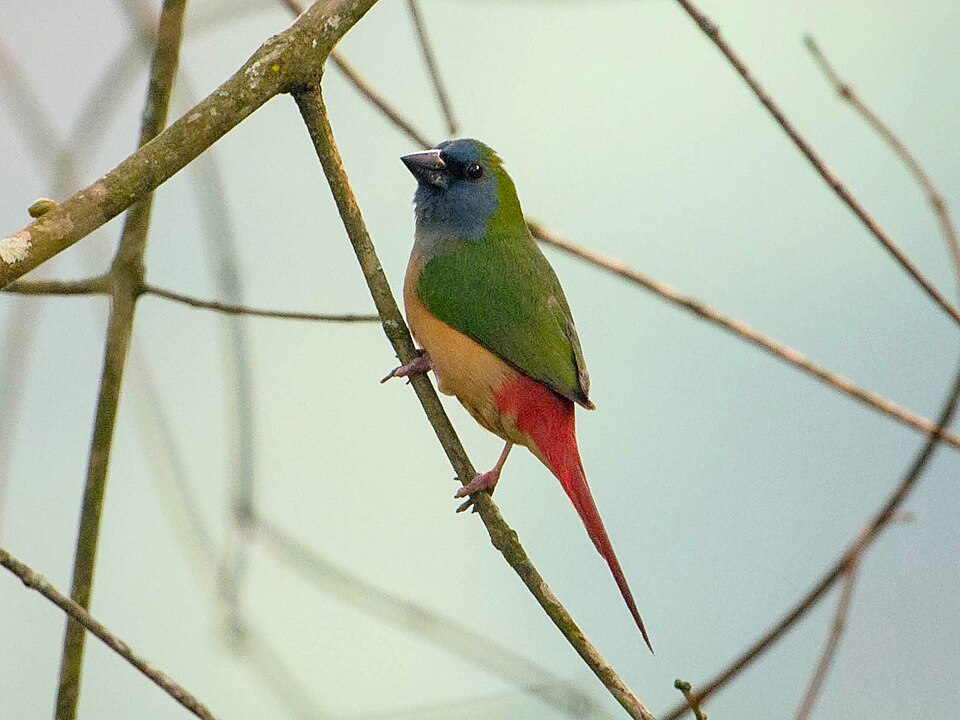
A parrotfinch with elongated central tail feathers in the adult male. It is entirely different from the Pin-tailed Whydah. Colour forms exist; the NFSS account notes red- and yellow-abdomen forms.
Male & female
Use correctly aged adult photographs and a documented method. Do not use tail length alone for an injured, moulting or juvenile bird.
Nature & behaviour
A highly aerial finch. Elevated feeding and drinking stations are particularly relevant: the NFSS account notes that this species seldom comes to ground.
Cages & aviaries
Prioritize a long, uncluttered flight with secure elevated landing places and enough clearance for a long tail. The owner's standard 60 × 40 × 35 cm cages are not endorsed as suitable permanent housing for this aerial species. Plan a larger flight and assess the birds' behaviour and plumage.
Diet & feeding
NFSS describes diverse grass seeds, grains, animal protein and vegetables. Position accepted foods where the birds comfortably feed. Record actual intake and keep fresh items hygienic; a seed brand used successfully for Gouldians is not automatically a complete Pin-tailed plan.
Breeding
A specialist NFSS review reports4–6eggs. The museum monograph describes captive incubation of12–14days and a nestling period around21days. Establish food acceptance and a stable environment before nesting; no automatic separation age is assigned.
Compatibility
NFSS reports colony breeding can work because males are not strongly aggressive to one another. This is not a guarantee in a small cage or permission to mix all parrotfinches; flight size, parentage and individual behaviour still matter.
Breeding timeline
Follow the bird, not just the calendar. Published ranges are observation windows; actual parental care and feeding decide the next step.
Clutch size
4–6 EggseggsIncubation
12–14 daysdays after sustained incubation; captive reportFledging
21 daysdays after hatch; approximate captive reportIndependent feeding
Not establishedThe museum monograph reports captive incubation12–14days and a21day nestling period; Restall reports4–6eggs. No verified fixed weaning date is assigned. Confirm independence by feeding and drinking observations.
Sources & image credits