Identification
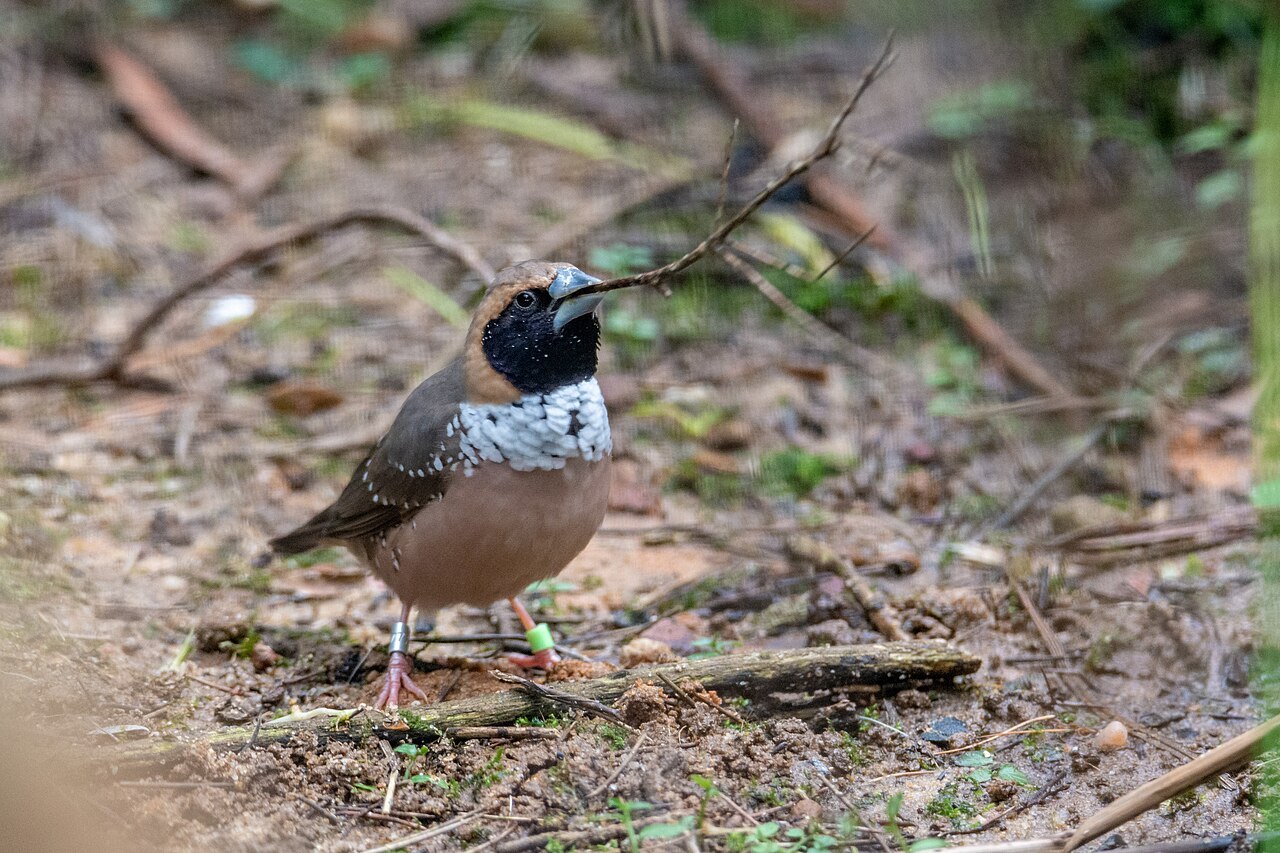
A grey-brown northern Australian mannikin with a patterned pale-and-dark breast, darker face and buff underparts. The accepted name used here is Heteromunia pectoralis; older avicultural sources use Lonchura pectoralis.
Male & female
ABSA describes adult males with a black mask and broader pale breast-feather tips; hens have a browner mask and more scalloped breast. Juveniles lack the full pattern, and adult plumage can take several months to develop.
Nature & behaviour
A northern Australian grass-seed specialist with an especially gentle captive reputation. NFSS recommends experienced keepers and notes sensitivity to temperature; that warning does not establish a single universally safe room-temperature number.
Cages & aviaries
Use a calm, sheltered flight with secure low foraging, suitable perches and refuge from more assertive birds. Check conditions at the birds’ own resting sites and avoid abrupt AC changes. A small standard cage is not automatically adequate.
Diet & feeding
NFSS recommends a suitable finch mixture including Japanese millet, with some live food while breeding; soaked or sprouted seed may be accepted. Establish a dependable hygienic ration and rearing supply before offering nesting opportunities.
Breeding
Both sexes incubate, but dependable clutch and developmental figures were not verified here. Keep the calendar observation-led, documenting sustained incubation, hatch and feeding. Parent-rearing should be assessed directly; Society Finch fostering is not guaranteed merely by shared family classification.
Compatibility
Although sometimes housed with peaceful finches, a separate pair flight makes monitoring easier and protects a docile bird from competition. Inspect both partners for exclusion from food, water or favoured cover, and intervene if persistent pursuit develops.
Breeding timeline
Follow the bird, not just the calendar. Published ranges are observation windows; actual parental care and feeding decide the next step.
Clutch size
Not establishedNo dependable species-specific number was verified in the sources reviewed. Observe the birds and obtain an experienced breeder or avian veterinarian’s assessment before intervening.
Incubation
Not establishedNo dependable species-specific number was verified in the sources reviewed. Observe the birds and obtain an experienced breeder or avian veterinarian’s assessment before intervening.
Fledging
Not establishedNo dependable species-specific number was verified in the sources reviewed. Observe the birds and obtain an experienced breeder or avian veterinarian’s assessment before intervening.
Independent feeding
Not establishedNo universal separation age is established. Confirm repeated independent eating and drinking and stable condition while monitoring parental support.
Reference observations are not captive guarantees. Record actual hatch and feeding; never separate a chick solely because a date has arrived.
Sources & image credits