Identification
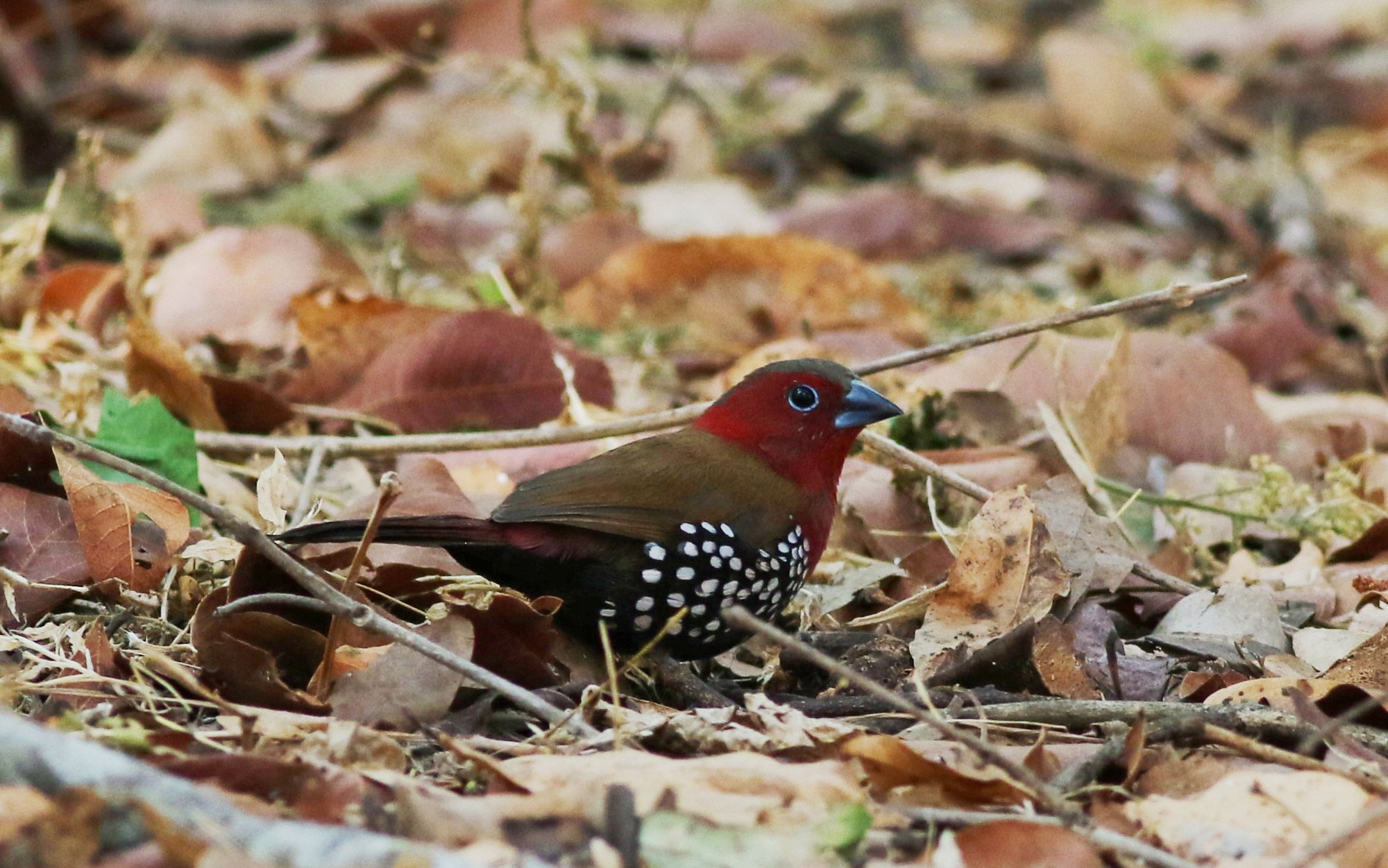
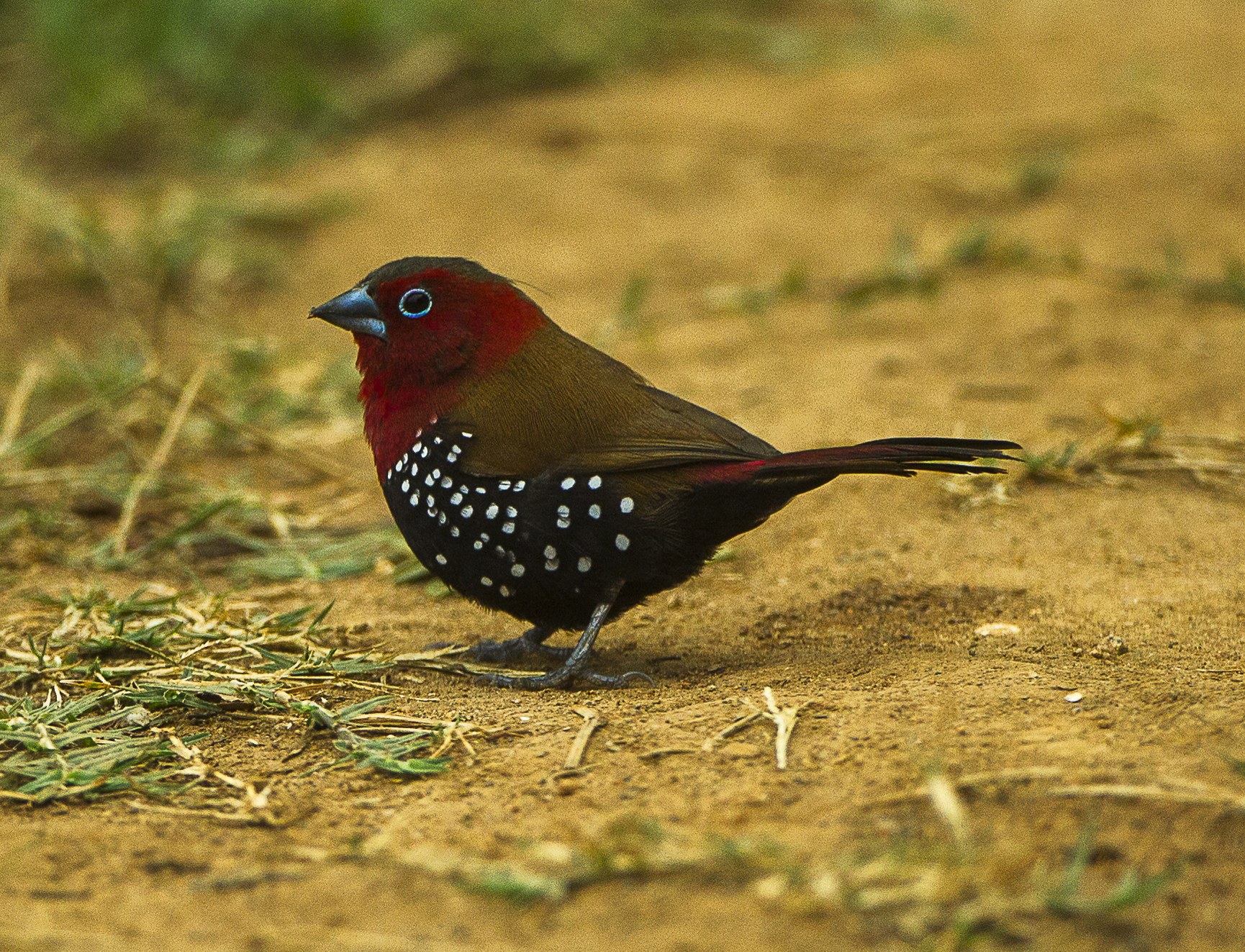
The adult male has a crimson face, throat and breast, a grey crown, brown upperparts and black underparts with conspicuous white spots. The bill is grey-blue. This red-throated Hypargos is distinct from your Green-backed Twinspot, Mandingoa nitidula, and from the Pink-throated Twinspot, Hypargos margaritatus.
Male & female
The adult hen has a paler grey-buff face, throat and breast in place of the male's strong crimson. Assess fully developed adult plumage, age and behaviour together. Keep juvenile or unclear photo-based assessments provisional; a red-coloured bird in a reference image does not establish the sex of your bird.
Nature & behaviour
A finch of African thickets, forest edges and dense vegetation near water. It feeds mainly close to the ground. A useful captive layout therefore combines a protected low foraging area with cover and clear routes to food, water and elevated resting places.
Cages & aviaries
Plan a quiet, screened pair flight with dry, easily cleaned ground-level feeding stations and secluded low nest supports. Keep food and bath water away from droppings and damp litter. Your typical 60 × 40 × 35 cm cage should not be treated as proof of adequate breeding space for this specialist. Assess movement, escape routes and actual pair behaviour. Measure temperature where the birds sit and avoid abrupt AC changes; this guide does not establish a safe species-specific temperature limit.
Diet & feeding
Provide a varied small-seed ration, including accepted millets and clean seeding grasses, alongside suitable rearing food. Museum Koenig notes insects particularly for chicks; the Waxbill Finch Society warns that live food is probably needed to rear young. Secure and test suitable cultured insects before setting a pair to breed. Acceptance of egg food or a Gouldian seed mixture is not evidence of a complete rearing ration. Use clean dishes, renew drinking water daily and remove perishable food promptly.
Breeding
Ground-level or low sheltered nest sites may be preferred over a high standard box. Both parents construct a covered nest with an entrance passage and share care. Offer safe clean fibres rather than long loops or loose thread. Watch courtship and mutual acceptance, then log sustained incubation and hatch. Keep checks brief and directed at welfare. After fledging, continue to verify parental feeding and the youngster's own intake. Do not assume your Society foster pairs can raise this species simply because they incubate its eggs; arrange a species-informed contingency before transferring a clutch.
Compatibility
A separate breeding flight is the clearest starting point. WFS reports aggression in breeding condition towards other pairs and related or similarly coloured birds. Do not assume it can share with Green-backed Twinspots, other red finches or Gouldians. A partition should prevent chasing and food exclusion while each side retains flight room, cover and full access to its own resources.
Breeding timeline
Follow the bird, not just the calendar. Published ranges are observation windows; actual parental care and feeding decide the next step.
Clutch size
3–6 Eggseggs; upper end uncommonIncubation
12–13 daysdays after sustained incubation; sometimes longerFledging
18–23 daysdays after hatch; captive observationsIndependent feeding
Not establishedBiodiversity Explorer describes independence roughly 18 days after nest departure, but this is not a universal separation date. Confirm sustained independent feeding, drinking and stable condition.
The natural-history reference gives 3 eggs with occasional larger clutches up to 6, incubation around 12–13 days and captive fledging observations of 18–23 days. WFS gives approximately 21 days to fledging. Treat these as observation windows, not automatic intervention dates.
Sources & image credits