Identification
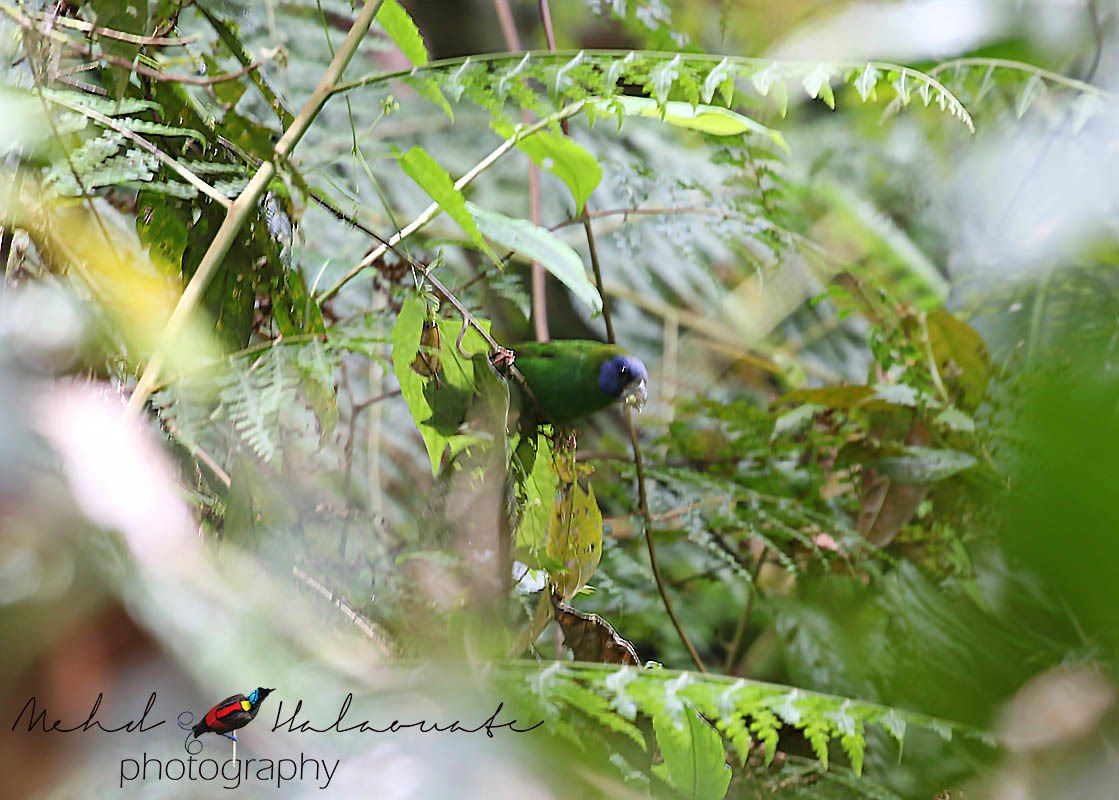
A green bird with blue face and red rump/tail, especially distinguished from Blue-faced by its more massive bill. Primary museum research documents the bill-size distinction while discussing unresolved species limits.
Male & female
Do not use bill size alone to assign sex: it is also central to species identification. Keep sex, age and species-confidence records separate.
Nature & behaviour
Native to New Guinea’s moist montane forest. It is not simply a large captive Blue-faced mutation; the taxonomic question requires provenance and expert review.
Cages & aviaries
This specialist guide supplies no validated small-cage or thermal prescription. Design accommodation only from documented keeping experience, preserving flight space, shelter and calm access to resources.
Diet & feeding
A large bill does not prove that a general parrotfinch mix is a complete ration. Obtain a species-specific feeding history and verify actual consumption before introducing breeding stimuli.
Breeding
Reliable captive developmental ranges were not established from the consulted research. Keep all stages observation-led; do not apply Blue-faced incubation or weaning dates by resemblance.
Compatibility
Separate from Blue-faced and other parrotfinches to preserve identity and evaluate behaviour. Taxonomic uncertainty is a reason to keep detailed records, not to mix breeding groups.
Breeding timeline
Follow the bird, not just the calendar. Published ranges are observation windows; actual parental care and feeding decide the next step.
Clutch size
Not establishedIncubation
Not establishedFledging
Not establishedIndependent feeding
Not establishedNo automatic separation age is established. Confirm repeated independent eating and drinking, stable condition and continued parental care.
Reference figures describe the cited observations, not guaranteed captive deadlines. Unverified stages are deliberately left unset; use the care library and a species-informed breeding plan.
Sources & image credits