Identification
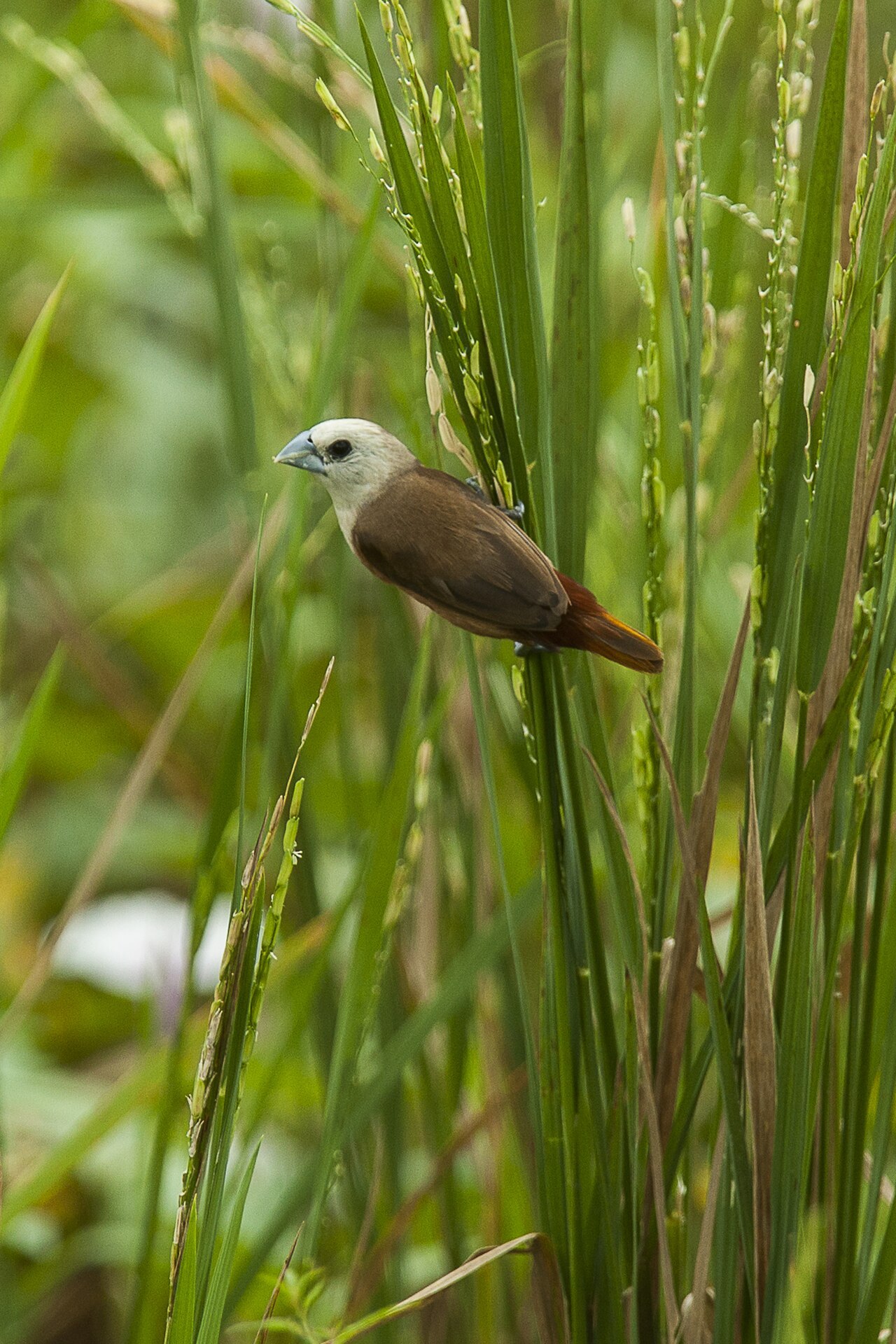
Pale-headed Munia is Lonchura pallida. A pale buff head contrasts with the brown wings and body; check the whole flank and belly pattern rather than identifying a bird simply as a white-headed nun. Keep it distinct from Lonchura maja.
Male & female
No dependable photo-only sexing rule was established in the primary material reviewed. Record sex as unknown unless supported by reliable adult behaviour or validated testing; do not invent male–female differences from reference image lighting.
Nature & behaviour
An island munia of eastern Indonesia. A museum specimen account records it in the Lesser Sundas, and Cornell recognises it as a separate species. Distribution evidence is useful for identity but is not a captive management manual.
Cages & aviaries
Use the general finch-care framework with a quiet flight, protected resting cover and clean feeding positions, then seek experienced species-specific input before breeding. No universal cage minimum, temperature setting or artificial-incubation programme is established in these reviewed sources.
Diet & feeding
Plan a diverse appropriate munia ration and document actual acceptance of small seeds, seeding grasses and rearing food. A ration copied unchanged from a different Lonchura is not proven complete; assess condition and intake with specialist support.
Breeding
Clutch, incubation, fledging and separation numbers are deliberately left unverified here. Establish parent identity and reliable feeding observations before attempting a clutch; do not substitute another munia’s timetable just to fill the calendar.
Compatibility
Keep breeding separate from similar munias to preserve ancestry and avoid unnoticed mixed pairing. Retain acquisition and individual identification records; this reference page does not mean the species has been added to the owner’s flock.
Breeding timeline
Follow the bird, not just the calendar. Published ranges are observation windows; actual parental care and feeding decide the next step.
Clutch size
Not establishedNo dependable species-specific number was verified in the sources reviewed. Observe the birds and obtain an experienced breeder or avian veterinarian’s assessment before intervening.
Incubation
Not establishedNo dependable species-specific number was verified in the sources reviewed. Observe the birds and obtain an experienced breeder or avian veterinarian’s assessment before intervening.
Fledging
Not establishedNo dependable species-specific number was verified in the sources reviewed. Observe the birds and obtain an experienced breeder or avian veterinarian’s assessment before intervening.
Independent feeding
Not establishedNo universal separation age is established. Confirm repeated independent eating and drinking and stable condition while monitoring parental support.
Reference observations are not captive guarantees. Record actual hatch and feeding; never separate a chick solely because a date has arrived.
Sources & image credits