Identification
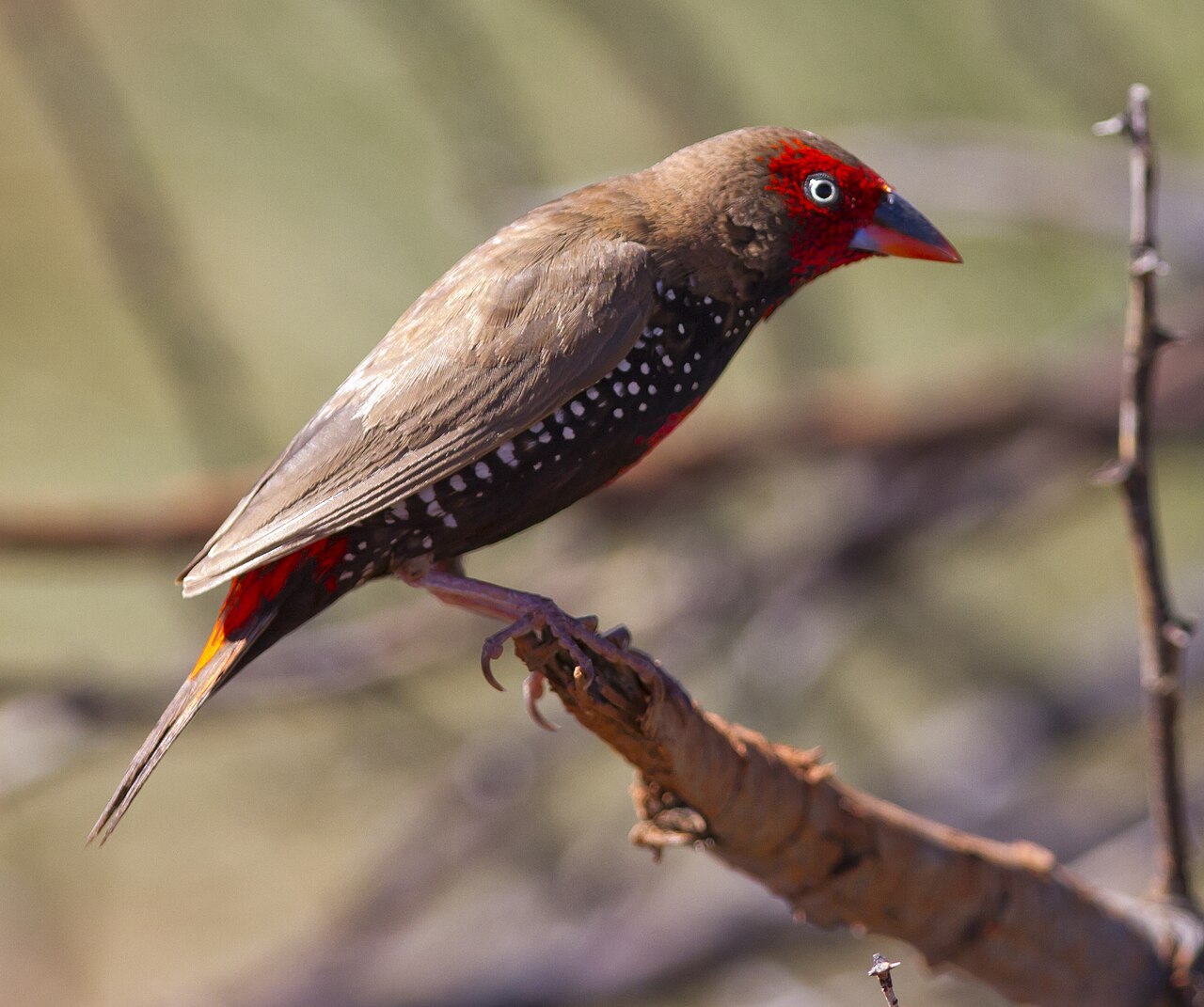
Brown upperparts, red facial and rump markings, and white-spotted dark underparts identify the Painted Finch. It is Emblema pictum, not a Star Finch or Green-backed Twinspot despite the shared red-and-spotted appearance.
Male & female
Males usually show more red on the face and central breast or belly, while hens are more restrained. A historical breeder documents substantial variation in both sexes, so judge adult plumage as a pattern rather than a fixed red-patch measurement.
Nature & behaviour
An arid Australian finch associated with spinifex country. Low foraging and nest-building opportunities matter, but a dry natural range does not mean drinking water can be withheld or seed dishes left contaminated.
Cages & aviaries
Provide a sheltered flight with safe low cover and clear walking routes. Fledglings may crouch quietly near the ground; inspect carefully before stepping into an aviary or moving a tray, especially immediately after nest departure.
Diet & feeding
Suitable millets and canary seed should be supported by seeding grasses, greens and an accepted rearing ration. NFSS includes sprouted seed, insect food and egg food during breeding; maintain strict hygiene for moist foods.
Breeding
Painted Finches can build a supporting platform beneath their nest. Offer safe clean structural material rather than copying every material in older breeder accounts. Record egg laying, incubation, hatch and fledging separately; preserve original genetic parents if fostering becomes necessary.
Compatibility
Historical breeders disagree about colony versus separate-pair results. A dedicated pair flight makes parentage and feeding easier to monitor; a reputation as a good mixer does not eliminate individual nest disputes.
Breeding timeline
Follow the bird, not just the calendar. Published ranges are observation windows; actual parental care and feeding decide the next step.
Clutch size
3–4 Eggseggs; reference onlyIncubation
14 daysdays after sustained incubation; reference onlyFledging
21 daysdays after hatch; reference onlyIndependent feeding
Not establishedNo universal separation age is established. Confirm repeated independent eating and drinking and stable condition while monitoring parental support.
Reference observations are not captive guarantees. Record actual hatch and feeding; never separate a chick solely because a date has arrived. The fledging figure is a captive breeder observation, not a deadline for nest checks or separation.
Sources & image credits