Identification
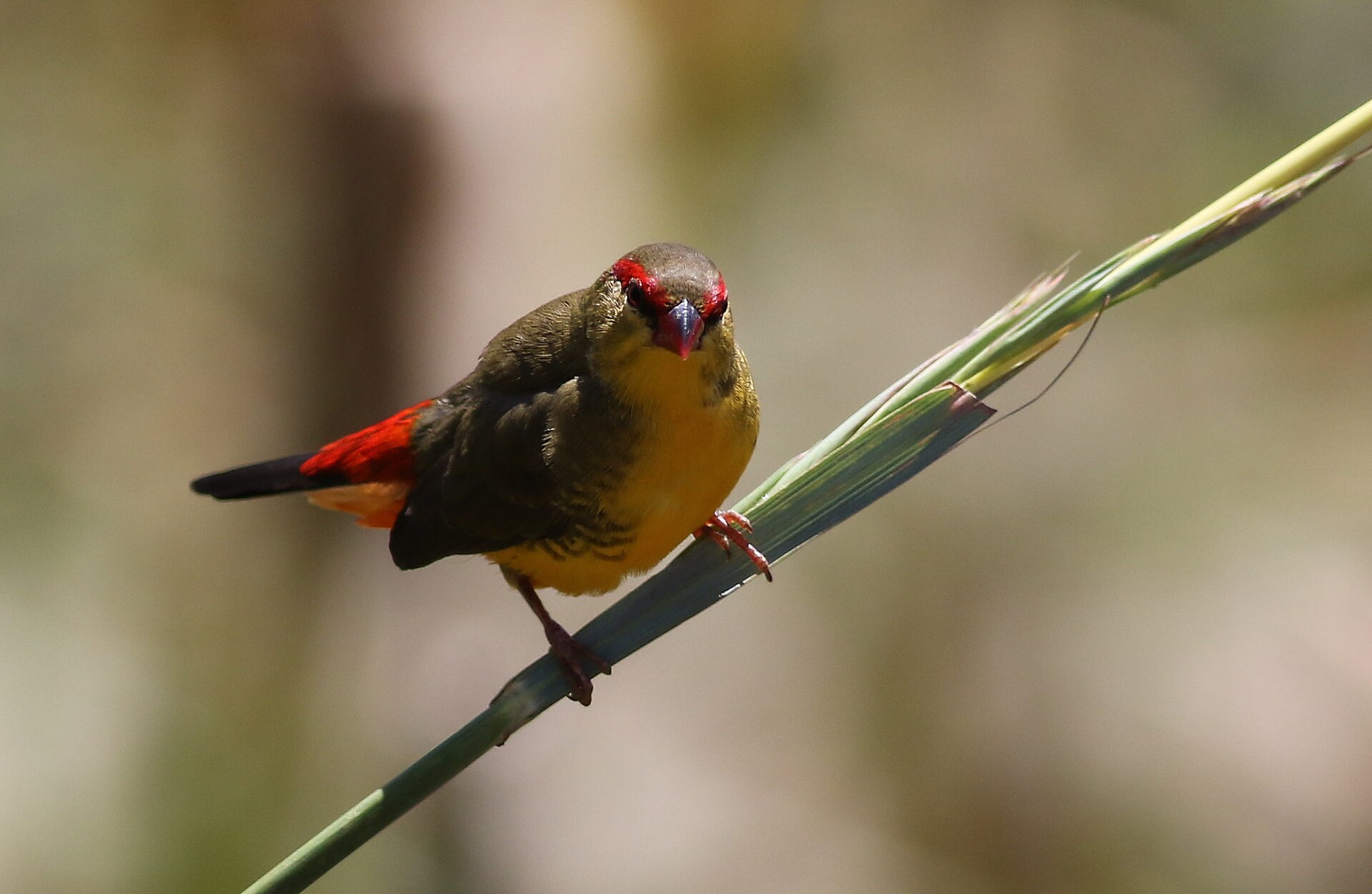
A tiny waxbill with yellow/orange underparts. In typical adults the male has a red eyebrow stripe absent in the female. Do not substitute the Orange-cheeked Waxbill, Estrilda melpoda, or a Zebra Finch.
Male & female
Adult eyebrow and colour differences help, but juvenile plumage and subspecies variation need context. Use a labelled age and a confidence field.
Nature & behaviour
A grassland and wetland-edge finch. Provide finely scaled feeding and landing opportunities, shelter and space to escape disturbance.
Cages & aviaries
Use mesh and fittings suitable for a very small finch, safe landing points and protected nesting cover. Size alone does not make a bird suitable for a cramped mixed breeding cage. Monitor access to small food items and water.
Diet & feeding
A firsthand ASNSW report stresses the importance of suitably small seed and rearing food acceptance. Offer clean seeding grasses when safely identified and appropriate cultured small insects where accepted. Track parental feeding, not just whether insect dishes are present.
Breeding
The ASNSW breeder reports 4–6 eggs and young leaving at about three weeks, with dependence continuing afterward. Use these as observations from a particular breeding system; they do not guarantee this pair's timing or success.
Compatibility
Peaceful appearance does not prove equal food access. Tiny birds may be displaced without an obvious fight; inspect each bird's feeding and resting opportunities. Keep breeding pairs separately if competition appears.
Breeding timeline
Follow the bird, not just the calendar. Published ranges are observation windows; actual parental care and feeding decide the next step.
Clutch size
4–6 Eggseggs; reported captive clutchesIncubation
12 daysdays after sustained incubation; approximatelyFledging
21 daysdays after hatch; approximate breeder reportIndependent feeding
Not establishedThe ASNSW author reports self-sufficiency about three weeks after fledging. Treat this as a report, not an automatic separation date.
WFS reports4–6eggs and about12days incubation, with young sometimes staying in the nest beyond3weeks. ASNSW reports fledging near21days and dependence for roughly3weeks afterward. Confirm feeding independence; do not separate on a date alone.
Sources & image credits