Identification
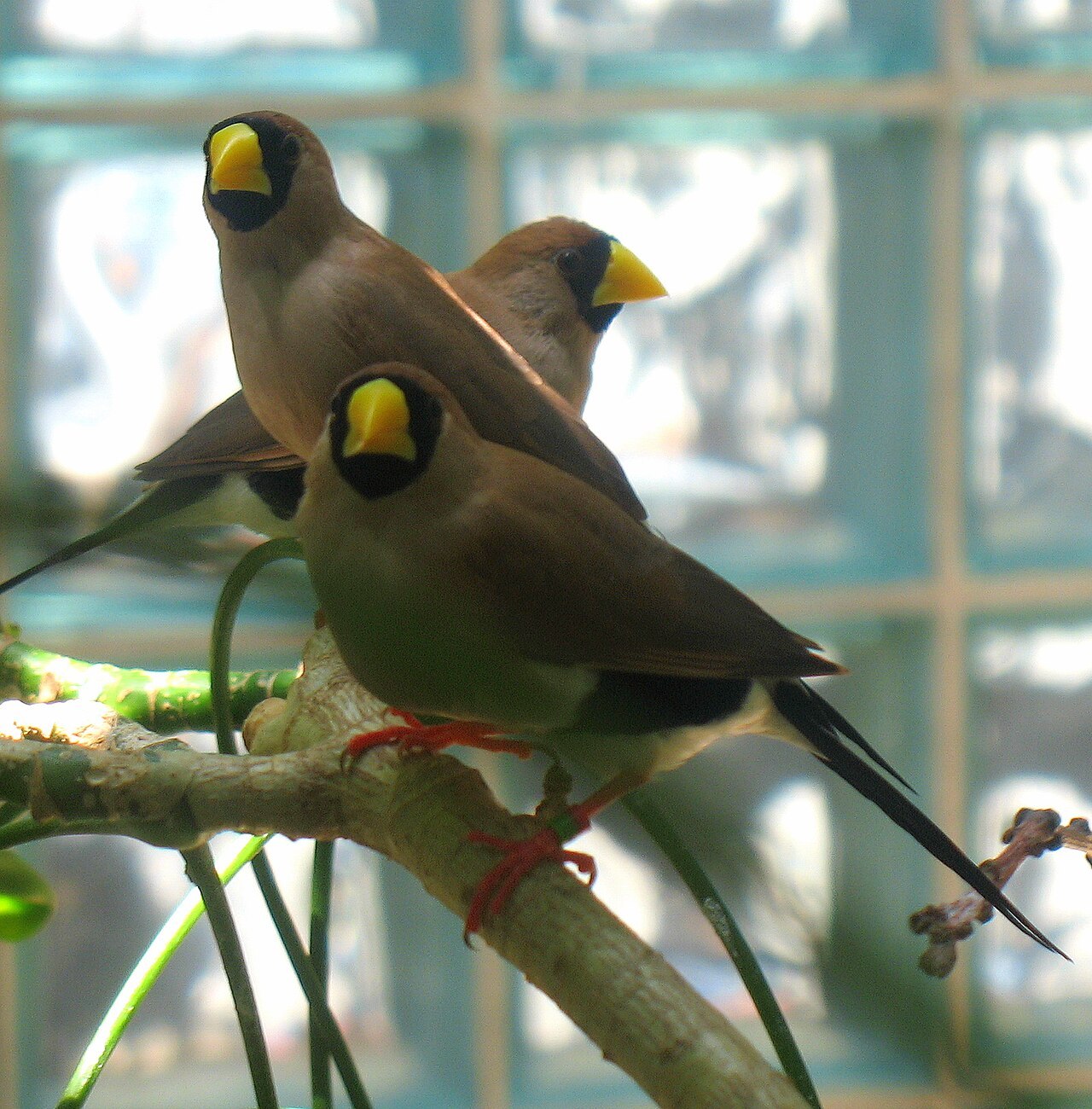
A warm brown finch with a black facial mask and flank marks, white rump and yellow bill. It is distinct from the longer-tailed, bibbed Poephila acuticauda; record the white-eared geographical form separately when known.
Male & female
ABSA cautions that male and female plumage is similar. Slightly larger dark areas or warmer bill colour are only comparative clues; do not certify sex from one posed photograph.
Nature & behaviour
A northern Australian grassfinch. Plan around grass-seed foraging, paired social contact and room for rapid flight. A reference addition to the library is not evidence that the owner already holds this species.
Cages & aviaries
Provide a sheltered flight with clear horizontal routes and more than one feeding position. Retain cover without packing the enclosure with branches. Assess actual usable space instead of treating small external cage dimensions as sufficient.
Diet & feeding
A varied small-seed ration and clean seeding grasses are the starting point. Establish acceptance of appropriate rearing food before breeding; avoid adding multiple fortified products simply because the bird belongs to an Australian finch group.
Breeding
NFSS reports four to six eggs, incubation of thirteen to sixteen days and fledging near three weeks. Juveniles emerge duller with dark bills. Observe continued feeding after nest departure and keep a calm route to low food dishes.
Compatibility
Keep breeding separate from the related Black-throated and Long-tailed Finches, with reliable genetic-parent records. Introductions require observation for pursuit or food exclusion even when birds appear quiet on adjacent perches.
Breeding timeline
Follow the bird, not just the calendar. Published ranges are observation windows; actual parental care and feeding decide the next step.
Clutch size
4–6 Eggseggs; reference onlyIncubation
13–16 daysdays after sustained incubation; reference onlyFledging
21 daysdays after hatch; reference onlyIndependent feeding
Not establishedNo universal separation age is established. Confirm repeated independent eating and drinking and stable condition while monitoring parental support.
Reference observations are not captive guarantees. Record actual hatch and feeding; never separate a chick solely because a date has arrived.
Sources & image credits