Identification
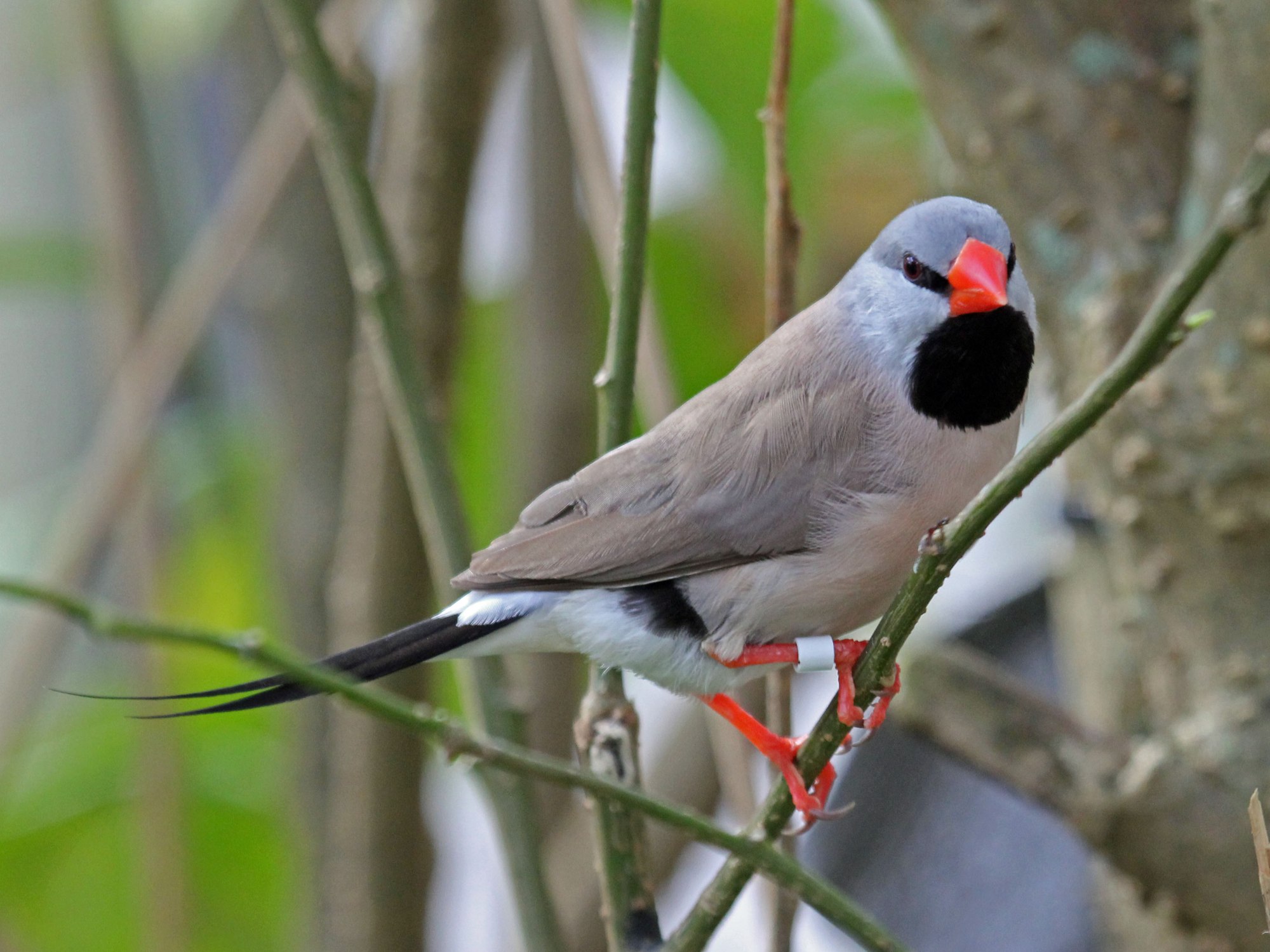
A grey-headed, brown-bodied finch with a black bib and long pointed central tail feathers. Shaft-tail, Shaft-tailed Finch and Heck’s Finch are alternative names, not extra species. Red- and yellow-billed forms require separate ancestry notes.
Male & female
Both sexes can bob their heads. Bib size and tail length overlap, so sustained male song and validated sexing are more useful than one visual clue. Compare mature birds and record the evidence used.
Nature & behaviour
A northern Australian grassfinch with strong pair bonds. A pair can be closely attached while still requiring independent access to food, bathing and flight; pair bonding is not a reason for continuous reproductive pressure.
Cages & aviaries
Offer a long flight route, firm landing perches and sheltered cover. Arrange nesting and feeding so long tail feathers are not constantly bent against cage fittings. Keep damp food away from nesting fibres and the floor.
Diet & feeding
Use a varied finch ration with suitable small seeds, clean greens and seeding grasses. An accepted rearing diet must be in place before hatch. Daily fresh water and cleaned dishes remain necessary when any water additive is used.
Breeding
Pairs construct their own nest lining and both incubate. NFSS gives a captive reference of four to seven eggs, about two weeks’ incubation and fledging near three weeks. Its independence figure is an observation, never automatic permission to separate.
Compatibility
Separate breeding from other Poephila, especially Black-throated and Masked Finches. Watch for nest-site disputes with smaller birds even if a mixed aviary has previously seemed peaceful outside breeding condition.
Breeding timeline
Follow the bird, not just the calendar. Published ranges are observation windows; actual parental care and feeding decide the next step.
Clutch size
4–7 Eggseggs; reference onlyIncubation
14 daysdays after sustained incubation; reference onlyFledging
21 daysdays after hatch; reference onlyIndependent feeding
42 daysdays after hatch; reference onlyReference observations are not captive guarantees. Record actual hatch and feeding; never separate a chick solely because a date has arrived.
Sources & image credits