Identification
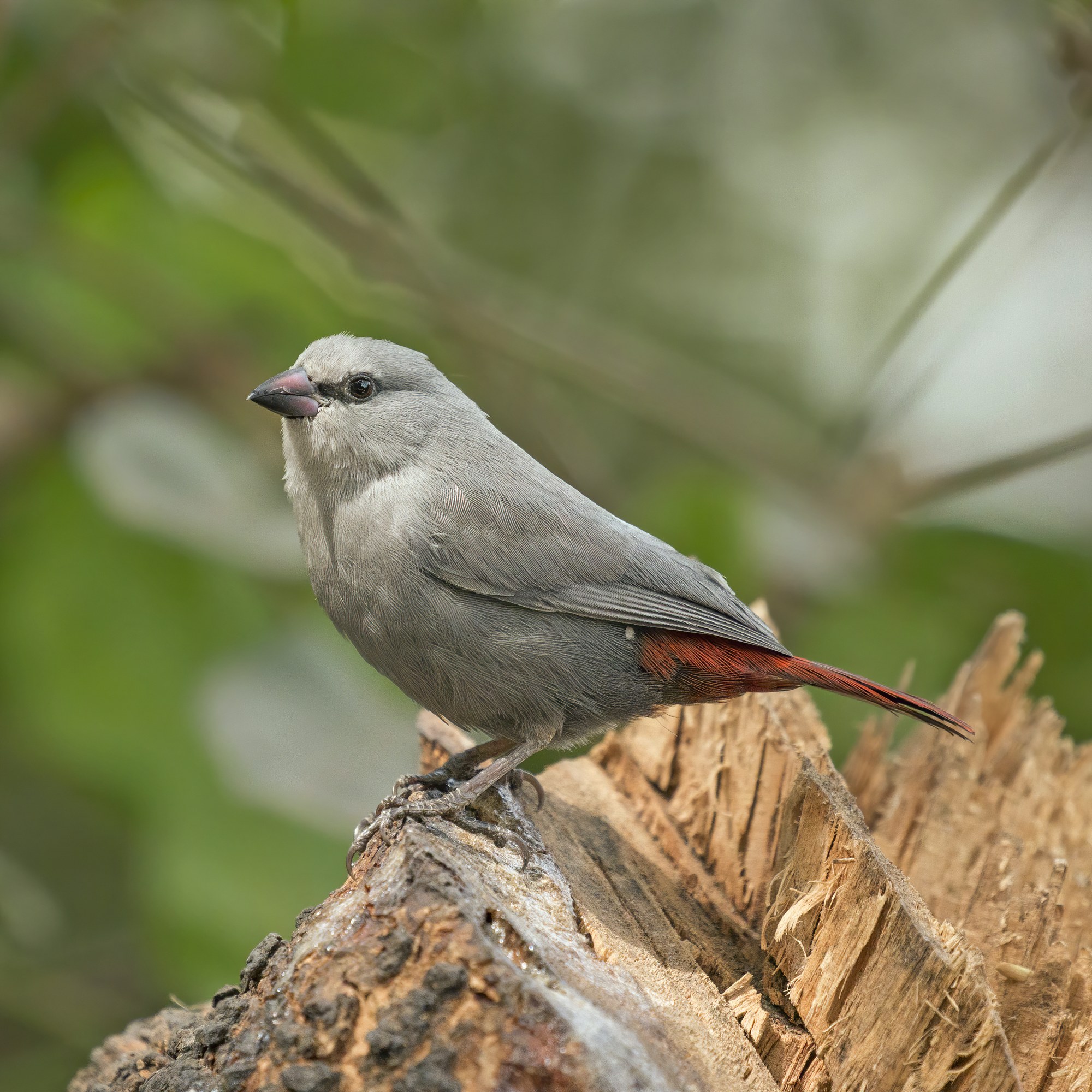
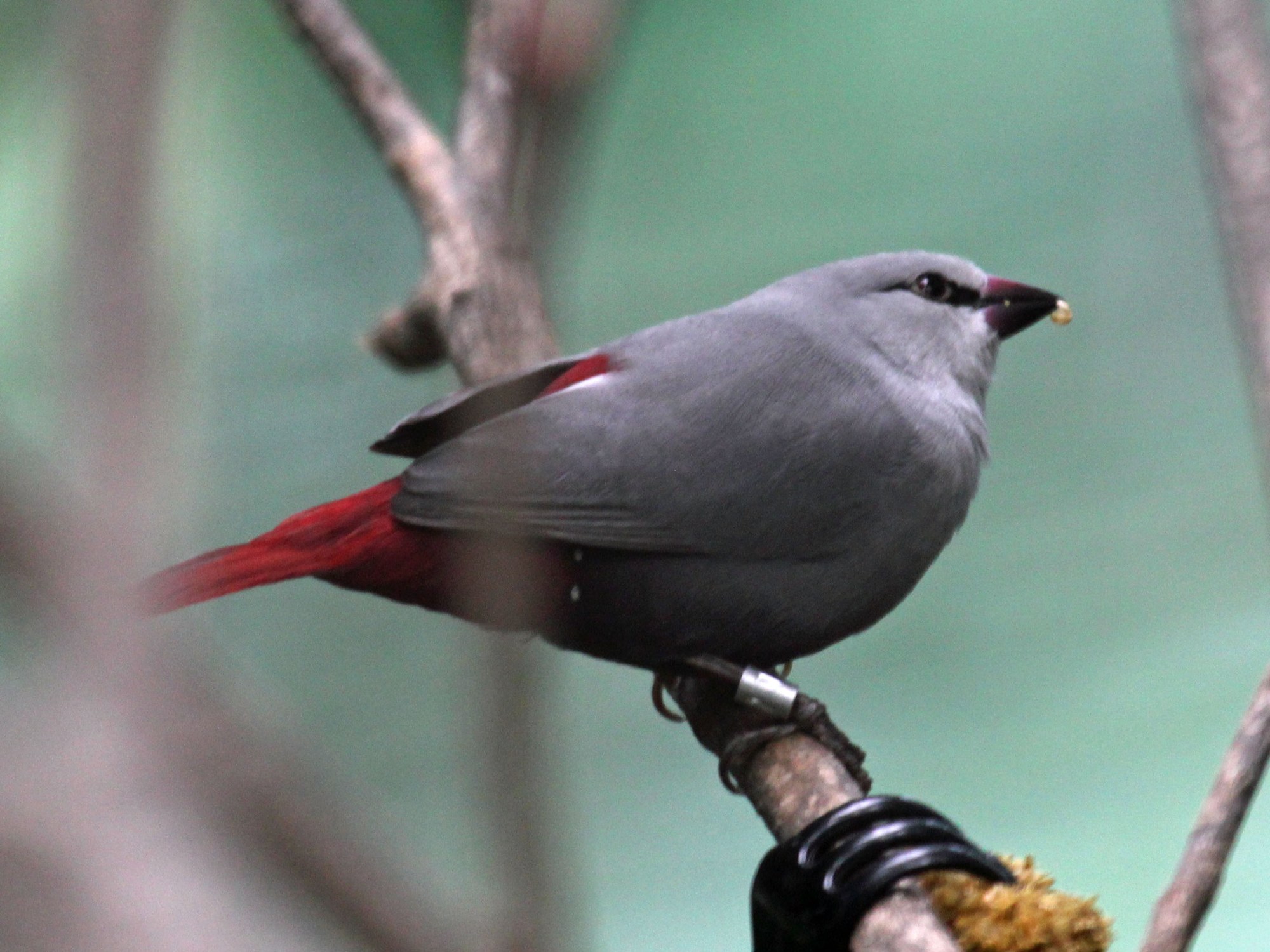
A tiny blue-grey finch with a narrow black eye stripe, purplish bill and striking red rump, tail and undertail coverts. The grey body and extensive red tail help distinguish it from the Common Waxbill and other small African finches. Older avicultural sources call this species Estrilda caerulescens; the current name used here is Glaucestrilda caerulescens.
Male & female
The sexes look very similar. Small differences in belly shade are not a dependable photograph-only test. Captive accounts describe the male's characteristic two-note call as helpful supporting evidence. Record calls, age and behaviour over time, and keep uncertain sex assignments provisional. Mutual bowing is a greeting performed by birds of either sex, so it does not prove a male–female pair. If a breeding decision requires certainty, obtain validated sexing.
Nature & behaviour
An active western African finch of grassy areas with shrubs, thickets and scattered trees. Seeds are gathered both near the ground and in vegetation. Pairs and small flocks occur naturally, but wild sociability does not guarantee safety in a shared breeding cage. Build the indoor routine around movement, retreat and predictable undisturbed rest.
Cages & aviaries
Offer a sheltered, spacious flight with natural perches, screening around nest sites and an unobstructed flight route. A dated successful breeder account emphasises roomy accommodation and privacy. Your typical 60 × 40 × 35 cm cage and room reading near 24°C are context, not proof of suitable long-term breeding housing. Measure where birds perch, prevent direct AC draughts and abrupt changes, and keep feeding stations dry and accessible. No universal species-specific safe temperature threshold is established here.
Diet & feeding
Provide a varied small-seed ration, clean seeding grasses, accepted greens and appropriate rearing food. NFSS recommends varied live food in addition to seed; have a reliable supply of suitable hygienically cultured small insects before breeding. Check actual consumption and parental feeding instead of assuming egg food or supplements replace insect intake. Renew drinking water daily and clean drinkers; discard perishable food before it spoils. Use supplement labels together so fortified foods and multiple products do not create an unplanned stack.
Breeding
Observe a compatible pair before offering a private nest site. This species builds a covered grass nest with an entrance tunnel and may add a separate upper structure. Both parents normally share incubation and chick care. Keep welfare checks brief and record first egg, sustained incubation, hatch and actual feeding separately. A 1994 NFSS breeder reported successful Society Finch fostering after parent abandonment; this is a specific historical observation, not a guarantee for your foster pairs. Prepare the foster diet and verify chick feeding promptly. Continue parental support after fledging until the young demonstrate sustained independent eating and drinking with stable condition.
Compatibility
A dedicated breeding pair flight is the default planning choice. WFS warns that nesting pairs can attack other Lavender Waxbills. Introduce birds under observation with a safe means of separation, and monitor food access, persistent pursuit and injuries. Do not combine a pair with your territorial Violet-eared Waxbills or Peters’s Twinspots merely because all are small finches. Reassess housing when juveniles develop and when adults return to breeding condition.
Breeding timeline
Follow the bird, not just the calendar. Published ranges are observation windows; actual parental care and feeding decide the next step.
Clutch size
4–6 Eggseggs; reference clutchIncubation
12–15 daysdays after sustained incubation; zoo accountFledging
16–19 daysdays after hatch; natural-history referenceIndependent feeding
Not establishedCornell describes about 14 days of parental feeding after nest departure; WFS describes self-sufficiency around 20 days after fledging. Neither is an automatic separation date. Confirm sustained eating, drinking and stable condition for each youngster.
Figures are observation windows, not deadlines. The incubation range comes from San Diego Zoo's Lavender Waxbill paragraph; its generic multi-species summary is not substituted here. Cornell gives fledging at 16–19 days, while WFS reports 16–18 days. Record the events of your own birds and do not disturb or separate chicks to fit the calendar.
Sources & image credits