Identification
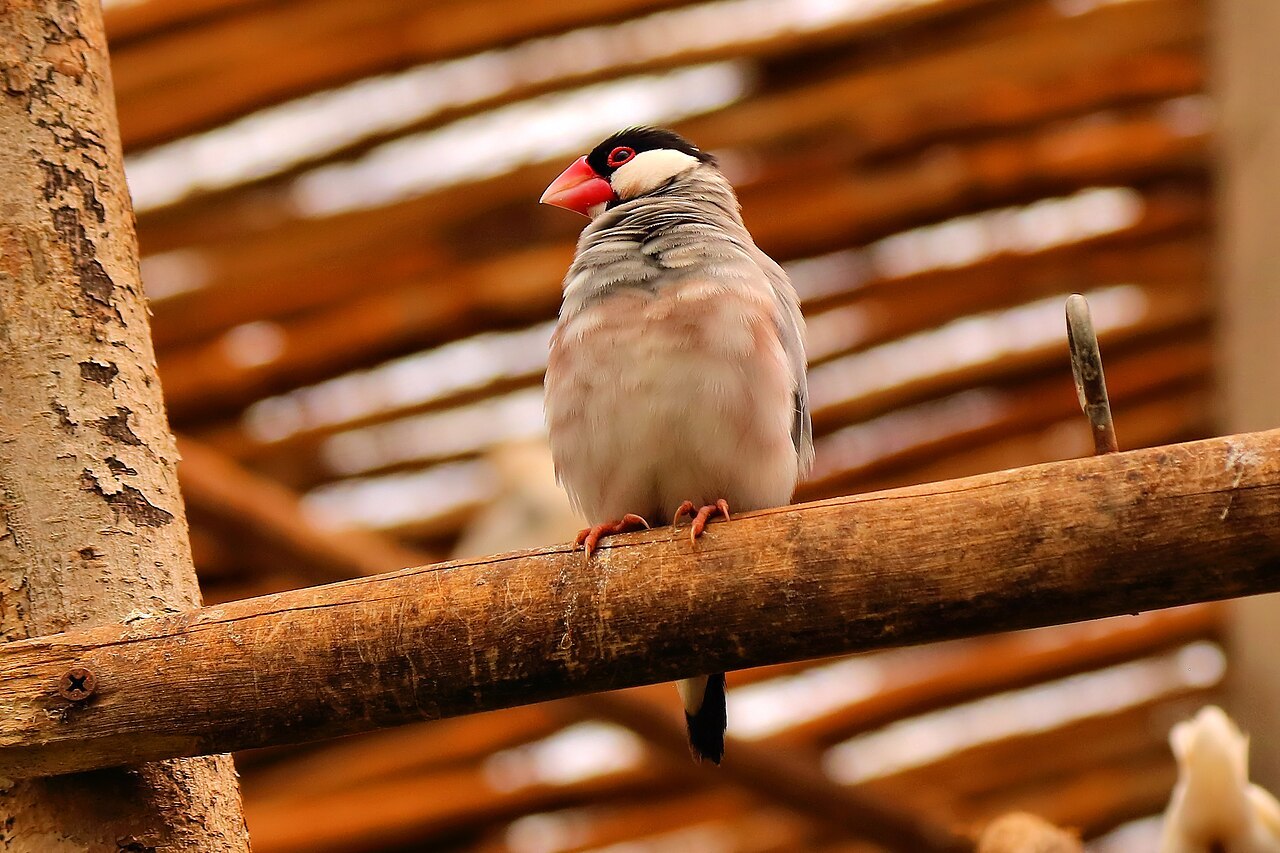
Normal adults have a black cap, white cheeks, grey body and a strong pink bill. Captive white, fawn and other forms alter colour. Padda oryzivora and Lonchura oryzivora name this same species.
Male & female
Normal male and female plumages are very similar. Bill and eye-ring impressions can mislead; use age, repeated song/behaviour and validated sexing when certainty matters.
Nature & behaviour
Native to Indonesian islands including Java and Bali; introduced flocks occur elsewhere. A social grain feeder of open cultivated areas, not a wild Australian finch.
Cages & aviaries
Give this relatively robust bird ample flight room and suitable spacious nest accommodation. Keep smaller species’ feeding and escape routes protected; sociality does not remove competition.
Diet & feeding
Cornell describes weed/grass seeds, grains, insects and fruit. Provide a balanced varied ration with accepted rearing food rather than rice alone, and record what the pair actually eats.
Breeding
Cornell gives 3–8 white eggs in natural or artificial cavities. WFS captive references give about 13 days incubation and 21 days to fledging. Continue support until independent intake is proven.
Compatibility
For controlled breeding, separate pairs simplify parentage and reduce interference. Do not infer compatibility with tiny waxbills from the species’ flocking behaviour.
Breeding timeline
Follow the bird, not just the calendar. Published ranges are observation windows; actual parental care and feeding decide the next step.
Clutch size
3–8 Eggseggs; reference onlyIncubation
13 daysdays from sustained incubation; reference onlyFledging
21 daysdays after hatch; reference onlyIndependent feeding
Not establishedNo automatic separation age is established. Confirm repeated independent eating and drinking, stable condition and continued parental care.
Reference figures describe the cited observations, not guaranteed captive deadlines. Unverified stages are deliberately left unset; use the care library and a species-informed breeding plan.
Sources & image credits