Identification
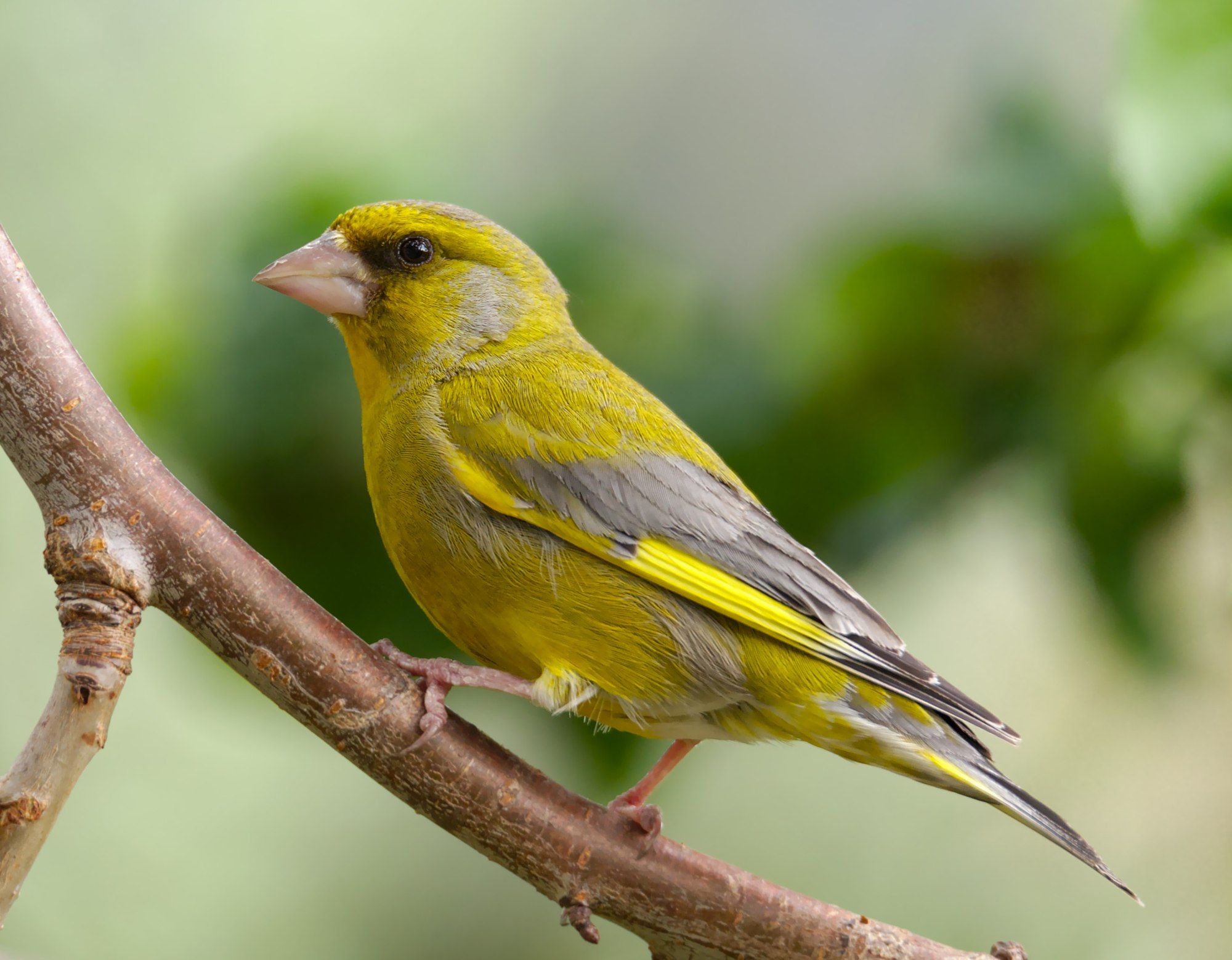
A stocky true finch with a strong bill and yellow panels in wings and tail. Adult males are greener; females and juveniles are duller. Chloris chloris differs from small green parrotfinches.
Male & female
Assess age and adult plumage together. Dull colour in a juvenile is not proof of female sex, and song should be interpreted with other observations.
Nature & behaviour
A European and western Asian/north African bird of woodland edges, farmland and gardens; some populations are introduced elsewhere. Its seasonal cycle differs from tropical estrildids.
Cages & aviaries
Plan an active flight with natural branches and protected cup-nest cover. Base temperature and seasonal lighting on the birds and specialist guidance, not the existing tropical room schedule alone.
Diet & feeding
Seeds are central, with other plant foods and some invertebrates. Provide a balanced species-informed ration and monitor condition; large oily seeds should not become the entire diet.
Breeding
BTO reports typical wild clutches of 4–5, about 14 days incubation and fledging at 13.5–16 days. These UK observations are not an indoor breeding protocol.
Compatibility
Assess each pair separately in breeding condition; bold feeders can exclude smaller finches. Clean feeding and drinking equipment consistently, especially when any bird shows illness.
Breeding timeline
Follow the bird, not just the calendar. Published ranges are observation windows; actual parental care and feeding decide the next step.
Clutch size
4–5 Eggseggs; reference onlyIncubation
14 daysdays from sustained incubation; reference onlyFledging
13.5–16 daysdays after hatch; reference onlyIndependent feeding
Not establishedNo automatic separation age is established. Confirm repeated independent eating and drinking, stable condition and continued parental care.
Reference figures describe the cited observations, not guaranteed captive deadlines. Unverified stages are deliberately left unset; use the care library and a species-informed breeding plan.
Sources & image credits