Identification
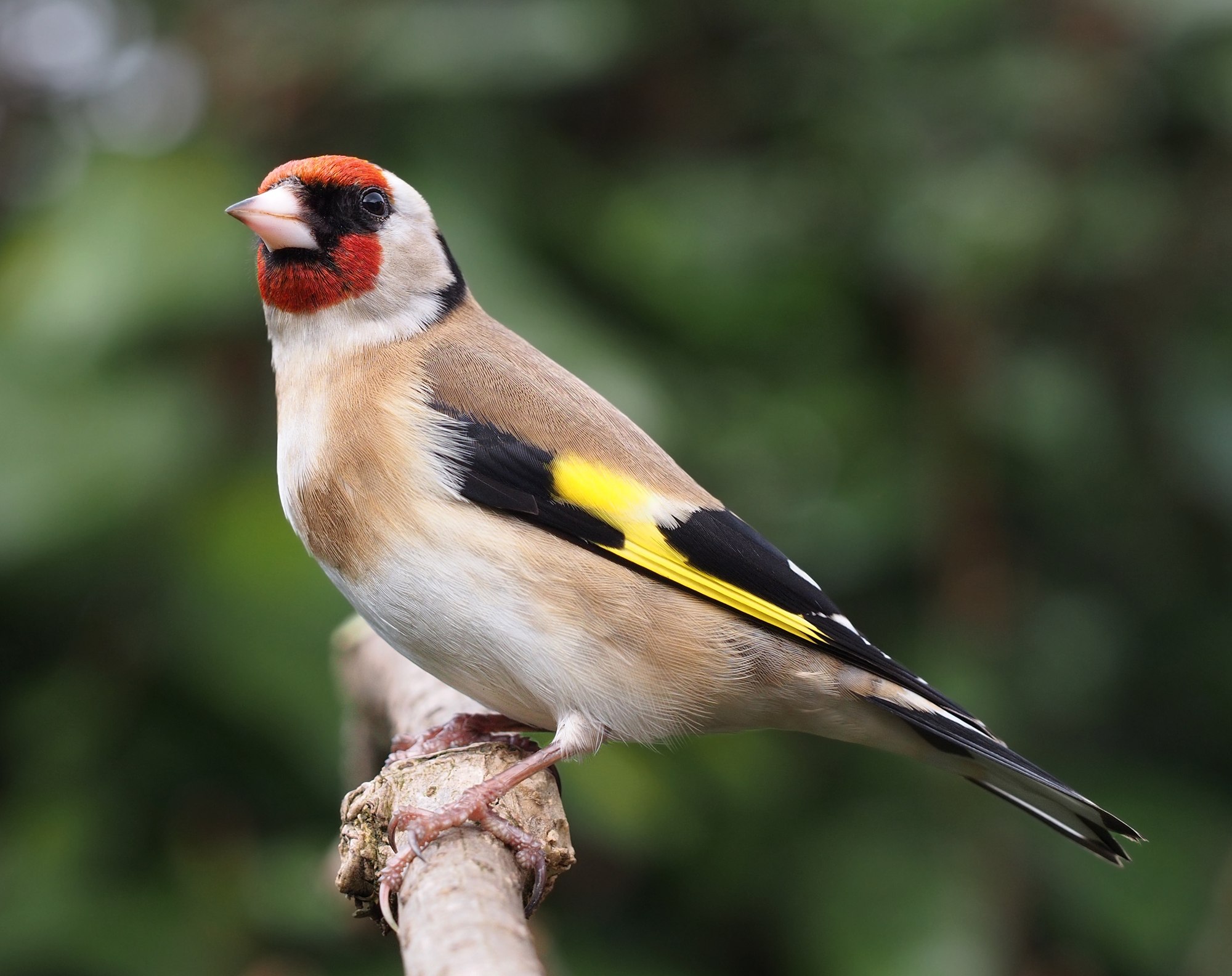
A true finch with a red adult face, black-and-white head and broad yellow wing band. Newly fledged birds lack the adult red mask; this alone does not indicate illness or a different species.
Male & female
Adult sexes look alike. Subtle mask differences are not a reliable single-photo test; retain age, form and evidence with every sex assignment.
Nature & behaviour
Associated with European and adjacent regions’ open woodland, gardens and seed-rich vegetation. A seasonal temperate bird should not automatically follow a tropical breeding-light programme.
Cages & aviaries
Offer generous flight room, fine natural perches and discreet cup-nest support. Protect calm feeding positions and measure conditions where birds actually rest.
Diet & feeding
A small-seed specialist naturally exploiting seed heads. Use a varied suitable ration, clean seeding plants and verified rearing foods; do not make one oily seed the whole diet.
Breeding
BTO lists a typical clutch of 5 eggs, incubation of 12–14 days and fledging at 13.5–16.5 days. These wild UK reference figures do not authorise disturbing a nest or separating fledglings.
Compatibility
Nonbreeding flocking does not guarantee pair compatibility during nesting. Start with a dedicated breeding area and watch persistent chasing, nest interference and food exclusion.
Breeding timeline
Follow the bird, not just the calendar. Published ranges are observation windows; actual parental care and feeding decide the next step.
Clutch size
5 Eggseggs; reference onlyIncubation
12–14 daysdays from sustained incubation; reference onlyFledging
13.5–16.5 daysdays after hatch; reference onlyIndependent feeding
Not establishedNo automatic separation age is established. Confirm repeated independent eating and drinking, stable condition and continued parental care.
Reference figures describe the cited observations, not guaranteed captive deadlines. Unverified stages are deliberately left unset; use the care library and a species-informed breeding plan.
Sources & image credits