Identification
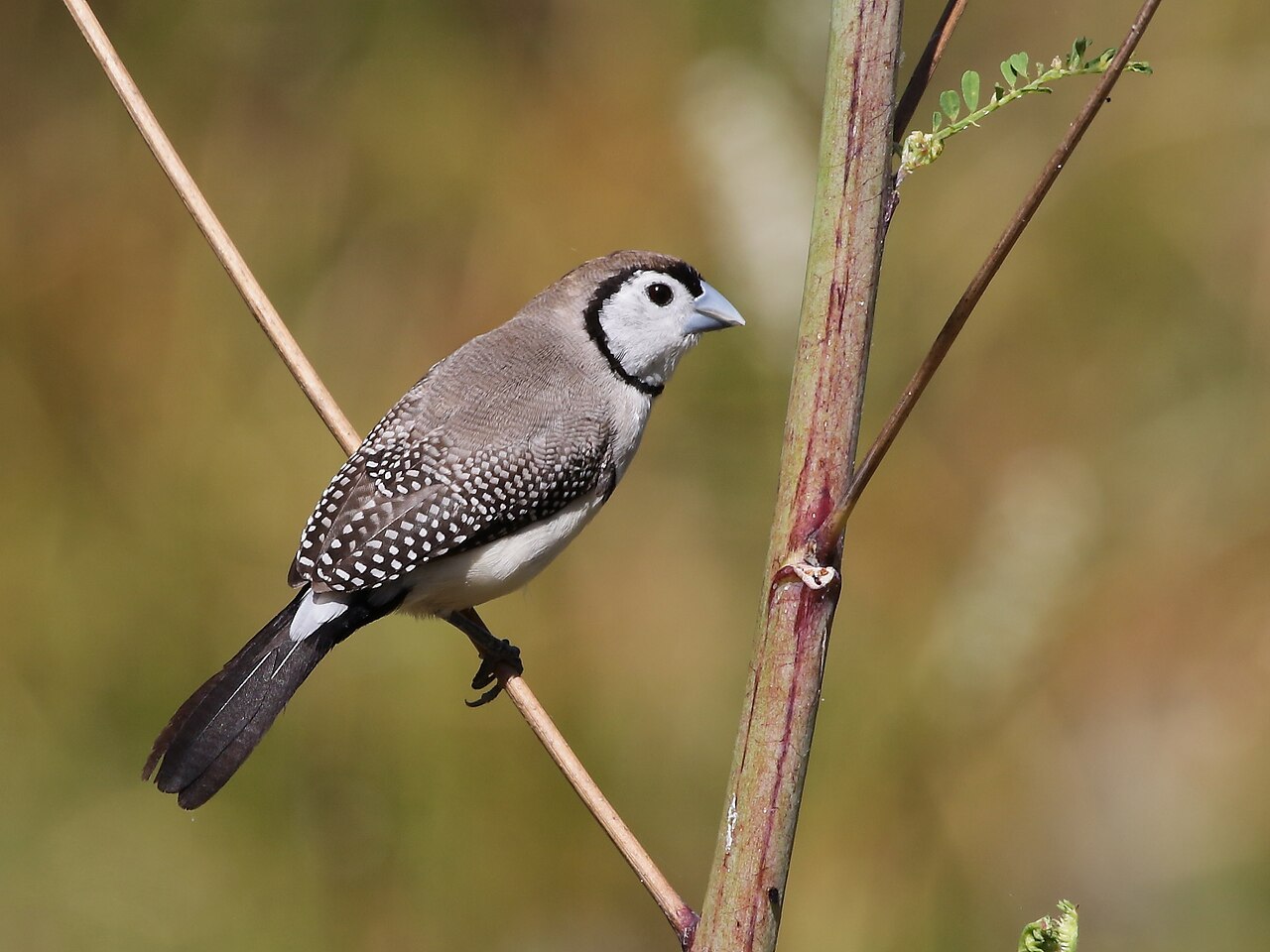
A white face outlined in black, two dark chest bands and finely patterned brown-grey upperparts identify the Owl or Double-barred Finch. Stizoptera bichenovii is also published as Taeniopygia bichenovii.
Male & female
Sexes are closely similar. Do not base a confident assignment on chest-band width or a single photograph; retain age and behavioural evidence.
Nature & behaviour
Native to northern and eastern Australia, especially grassy woodland and shrub cover. The common name Owl Finch refers to its facial pattern, not its family.
Cages & aviaries
Provide a sheltered flight with protected resting cover and open flight routes. Keep food and bathing dishes accessible without forcing a timid bird past a dominant neighbour.
Diet & feeding
A grass-seed feeder: offer varied suitable small seeds, clean seeding grasses and accepted rearing food. Observe intake and keep moist additions fresh; the website does not establish a product dose for this species.
Breeding
Prepare a compatible pair and discreet nest supports before encouraging breeding. Dahlem’s natural-history account gives 4–6 eggs, 12–14 days incubation and fledging around day 21. These field reference figures are not a captive protocol or separation date.
Compatibility
A quiet pair enclosure is the simplest breeding starting point. Flocking behaviour in nature does not prove that a crowded mixed breeding cage is safe.
Breeding timeline
Follow the bird, not just the calendar. Published ranges are observation windows; actual parental care and feeding decide the next step.
Clutch size
4–6 Eggseggs; reference onlyIncubation
12–14 daysdays from sustained incubation; reference onlyFledging
21 daysdays after hatch; reference onlyIndependent feeding
Not establishedNo automatic separation age is established. Confirm repeated independent eating and drinking, stable condition and continued parental care.
Reference figures describe the cited observations, not guaranteed captive deadlines. Unverified stages are deliberately left unset; use the care library and a species-informed breeding plan.
Sources & image credits