Identification
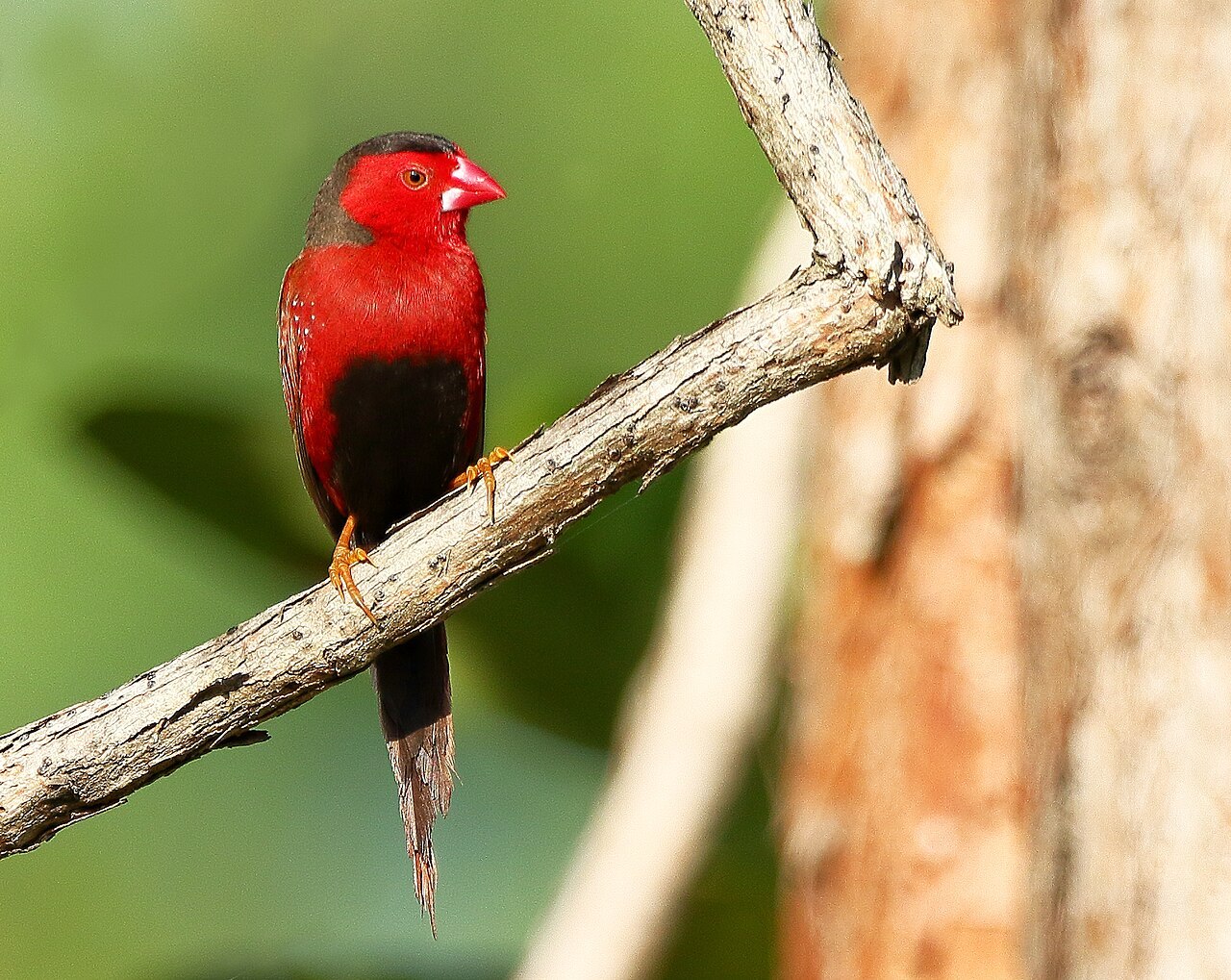
A slender red-and-grey finch with a long tapering red tail and red bill. The crown and back are greyer, and belly colour differs between geographical forms. The name refers to Neochmia phaeton, not a red colour mutation of another finch.
Male & female
Adult males are generally much redder beneath; hens have more fawn or grey underparts. Record the geographical form before comparing belly colour, and leave a young brown bird’s sex uncertain until stronger evidence develops.
Nature & behaviour
A northern Australian finch closely associated with tall grasses and watercourses. The university account describes its regular tail flicking. Preserve grass-like cover and secure routes between low feeding areas and elevated refuge.
Cages & aviaries
Plan a dedicated, well-screened pair flight with safe separation available. Arrange vegetation so it cannot create a blind corner where another bird is trapped, and provide accessible food and water on each side of any partition.
Diet & feeding
A varied grassfinch seed ration, seeding grasses and an accepted rearing food are practical starting points. Establish species-informed insect-food provision before breeding rather than assuming supplements alone meet the needs of growing chicks.
Breeding
Historical museum field observations describe a grass nest in pandanus or other cover and four or five eggs. A captive breeder reports about fourteen days of incubation. These separate observations do not establish a universal captive protocol; fledging and independence remain unverified here.
Compatibility
The Avicultural Society of Australia specifically excludes Crimson Finches from its broad statement that Australian finches generally mix tolerantly. Treat this warning seriously: do not add a breeding pair to the existing mixed collection by default.
Breeding timeline
Follow the bird, not just the calendar. Published ranges are observation windows; actual parental care and feeding decide the next step.
Clutch size
4–5 Eggseggs; reference onlyIncubation
14 daysdays after sustained incubation; reference onlyFledging
Not establishedNo dependable species-specific number was verified in the sources reviewed. Observe the birds and obtain an experienced breeder or avian veterinarian’s assessment before intervening.
Independent feeding
Not establishedNo universal separation age is established. Confirm repeated independent eating and drinking and stable condition while monitoring parental support.
Reference observations are not captive guarantees. Record actual hatch and feeding; never separate a chick solely because a date has arrived.
Sources & image credits