Identification
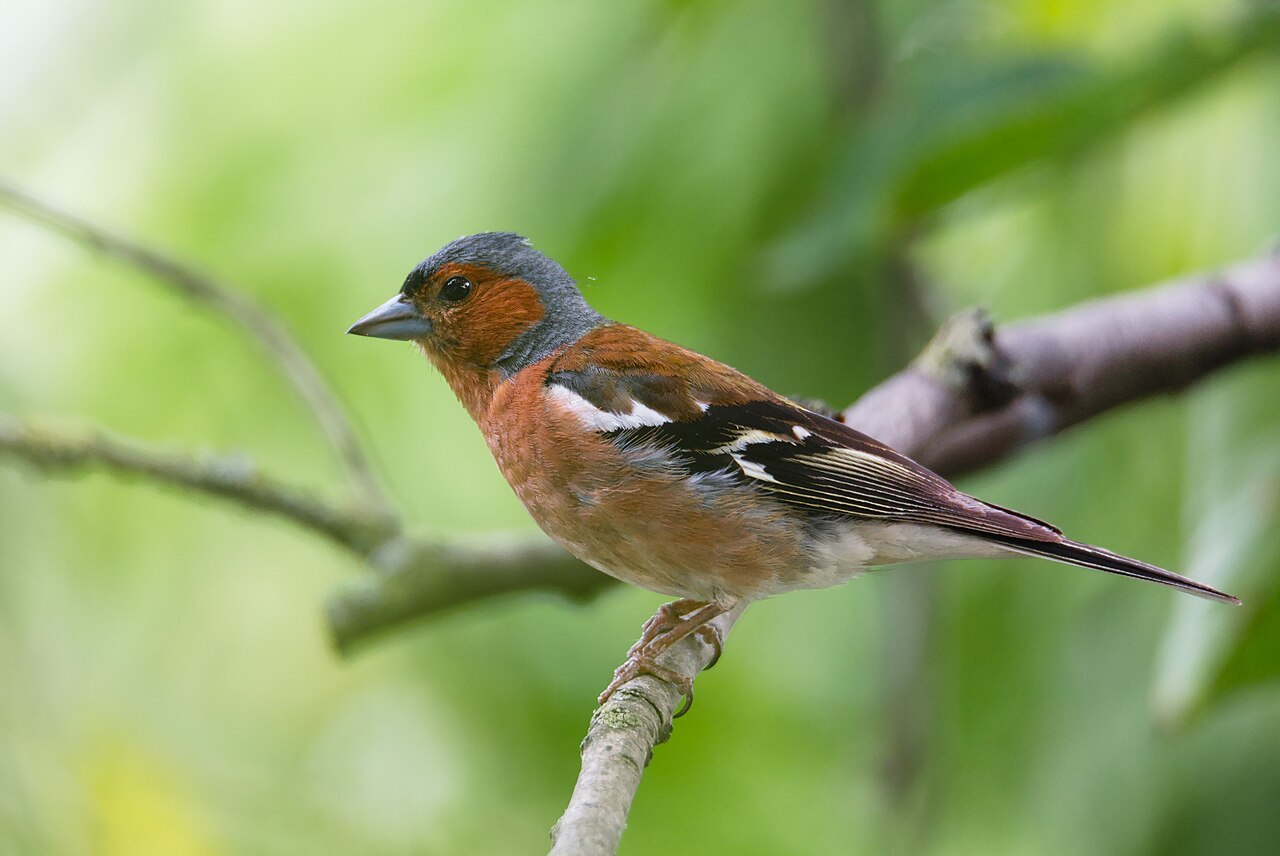
Adult males show pinkish underparts, a blue-grey cap and white wing bars; females are subdued brown. Fringilla coelebs is a true finch, not a munia or parrotfinch.
Male & female
Use adult plumage with age and seasonal context. Juveniles resemble dull females, so a brown youngster cannot be sexed confidently from colour alone.
Nature & behaviour
A temperate bird of woodland, gardens and farmland across much of Europe and neighbouring regions. Wild seasonal changes are not equivalent to a permanent tropical breeding cycle.
Cages & aviaries
Plan a spacious flight with sheltered branches and concealed cup-nest supports. Evaluate acclimation, movement and seasonal light deliberately; no universal indoor temperature threshold is supplied.
Diet & feeding
Seeds and invertebrates both matter; summer feeding can be strongly insect-based. Secure appropriate rearing foods before nesting, rather than transferring a dry-seed-only estrildid plan.
Breeding
BTO reports typical clutches of 4–5, incubation of 12–13 days and fledging of 13–15.5 days. These wild UK records support observation windows, not forced intervention dates.
Compatibility
Breeding territories and individual temperament need assessment. Start with a dedicated pair area; do not treat winter mixed-flock behaviour as permission for crowded mixed nesting.
Breeding timeline
Follow the bird, not just the calendar. Published ranges are observation windows; actual parental care and feeding decide the next step.
Clutch size
4–5 Eggseggs; reference onlyIncubation
12–13 daysdays from sustained incubation; reference onlyFledging
13–15.5 daysdays after hatch; reference onlyIndependent feeding
Not establishedNo automatic separation age is established. Confirm repeated independent eating and drinking, stable condition and continued parental care.
Reference figures describe the cited observations, not guaranteed captive deadlines. Unverified stages are deliberately left unset; use the care library and a species-informed breeding plan.
Sources & image credits