Identification
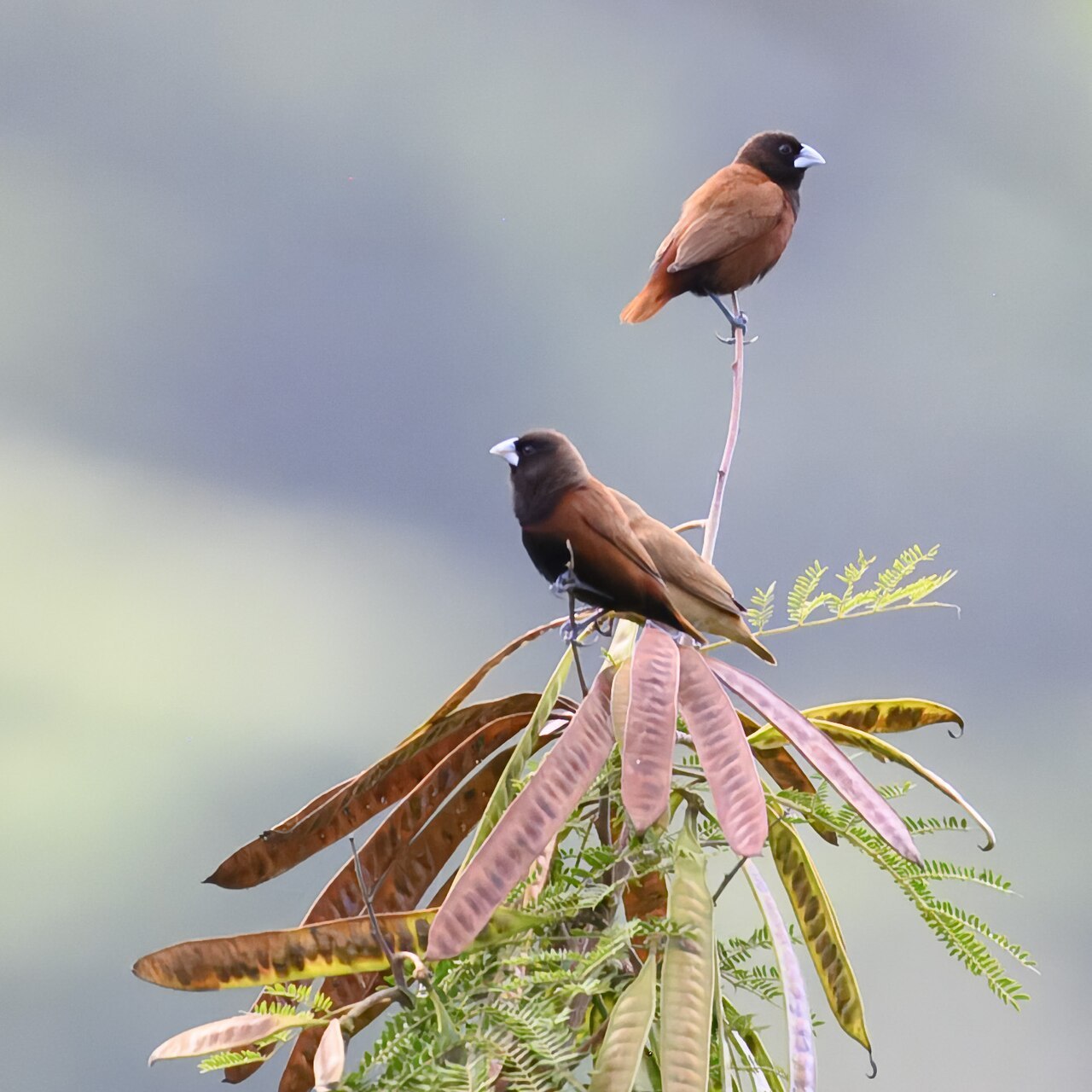
Most adult populations have a black hood and upper breast, chestnut body and stout blue-grey bill. The formosana form has a browner head. Plain brown juveniles should not be mistaken for an adult female or another species.
Male & female
Adult sexes are very similar. Treat bill or colour impressions as provisional; record song, observed pairing and validated sexing where required. Identify the form before comparing colour and do not infer sex from juvenile plumage.
Nature & behaviour
A social Asian grass-seed finch associated with grasslands, marshes and rice-growing areas. It can forage in large flocks, including during breeding, but flock behaviour outdoors does not establish a safe cage stocking density.
Cages & aviaries
Provide flight room, sturdy grass-stem foraging supports, sheltered nest cover and feeding access for every bird. Keep wet plant material separate from dry substrate so a habitat reference does not become a hygiene problem.
Diet & feeding
Rice and other grass seeds are natural foods. Use a varied, appropriate small-seed and rearing ration with clean seeding grasses; monitor how much is eaten rather than counting full seed husks as food.
Breeding
The nest is a grass-and-leaf ball with a side opening, placed in low vegetation. Both parents care for the young. Cornell’s developmental figures are natural-history observations; actual independent feeding decides any separation.
Compatibility
Avoid uncontrolled breeding with other Lonchura species. Keep ancestry records and separate breeding pairs if parentage is uncertain; peaceful communal roosting does not prevent hybridisation or nest interference.
Breeding timeline
Follow the bird, not just the calendar. Published ranges are observation windows; actual parental care and feeding decide the next step.
Clutch size
4–7 Eggseggs; reference onlyIncubation
12–13 daysdays after sustained incubation; reference onlyFledging
21 daysdays after hatch; reference onlyIndependent feeding
Not establishedNo universal separation age is established. Confirm repeated independent eating and drinking and stable condition while monitoring parental support.
Reference observations are not captive guarantees. Record actual hatch and feeding; never separate a chick solely because a date has arrived.
Sources & image credits