Identification
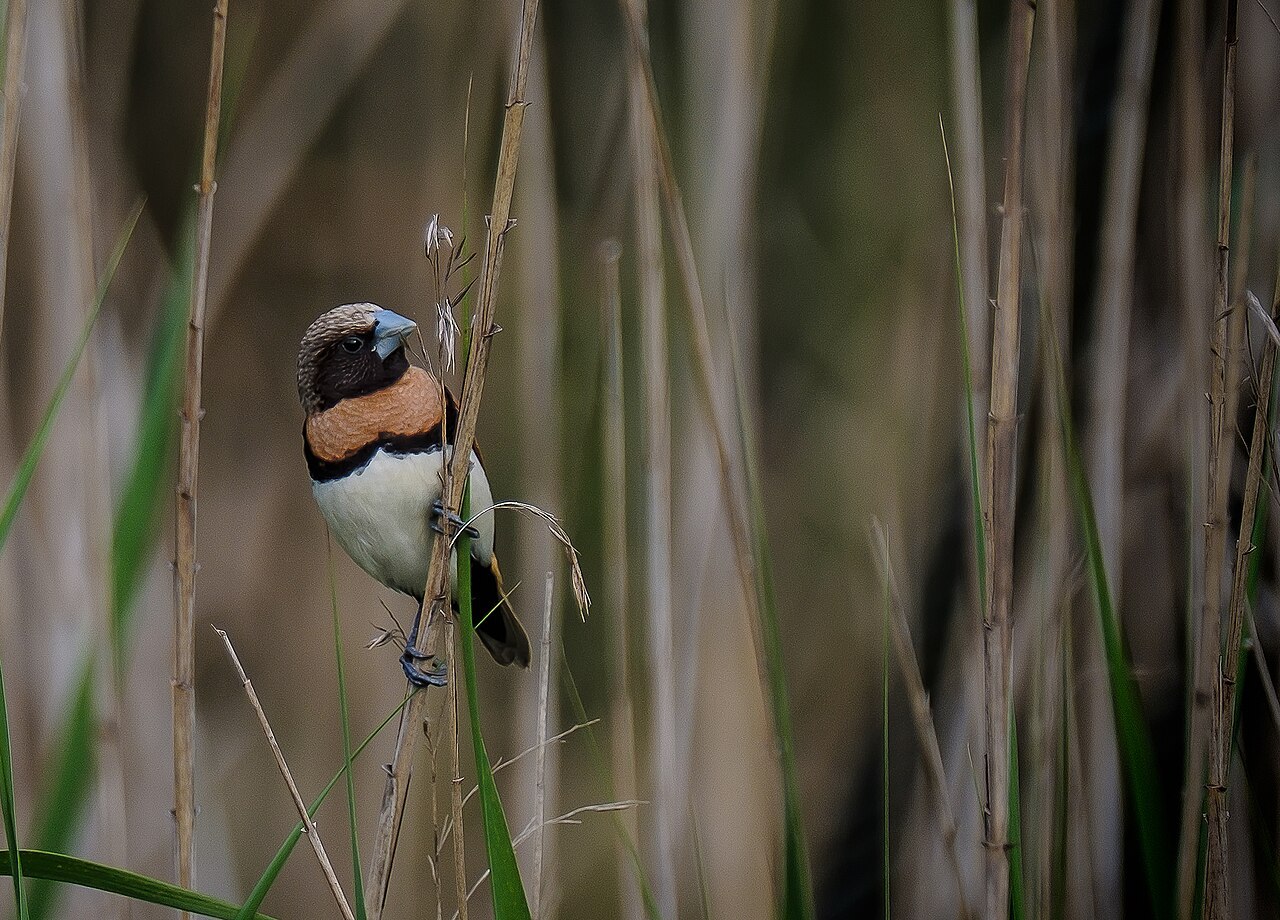
A greyish crown and bill, dark face and throat, chestnut breast and pale belly distinguish this mannikin from the mostly chestnut-bodied Black-headed Munia. Several geographical forms exist; retain their identity in records.
Male & female
The sexes are similar and subtle crown or breast-band differences are not dependable alone. Do not call a dull juvenile a hen: young birds lack much of the strong adult pattern.
Nature & behaviour
Occurs in northern and eastern Australia and New Guinea, using long grass, swamps and other dense grassy cover. It often takes seeds while clinging to stems and can gather in conspicuous groups.
Cages & aviaries
Include flexible seeding-grass supports, clear flight space and screened nesting areas. A bare perch-to-perch cage does not reproduce its feeding opportunities; feeding trays and bath sites should remain easy to clean.
Diet & feeding
Grass seeds form the basis of natural feeding and winged termites are also recorded. Offer suitable millets, seeding grasses and an accepted rearing food; verify any insect and soft-food supply before breeding starts.
Breeding
A pair may build within heavy grasses or other cover, usually relatively low. Society accounts give a small clutch and approximately three weeks to fledging; count from sustained incubation and actual hatch, not the first egg.
Compatibility
Separate breeding from Yellow-rumped Mannikins and other Lonchura to protect ancestry. Avicultural guidance also notes vegetation damage during nesting, so inspect plants, supports and escape gaps without repeatedly disturbing the nest.
Breeding timeline
Follow the bird, not just the calendar. Published ranges are observation windows; actual parental care and feeding decide the next step.
Clutch size
5–6 Eggseggs; reference onlyIncubation
12–13 daysdays after sustained incubation; reference onlyFledging
20–21 daysdays after hatch; reference onlyIndependent feeding
Not establishedNo universal separation age is established. Confirm repeated independent eating and drinking and stable condition while monitoring parental support.
Reference observations are not captive guarantees. Record actual hatch and feeding; never separate a chick solely because a date has arrived.
Sources & image credits