Identification
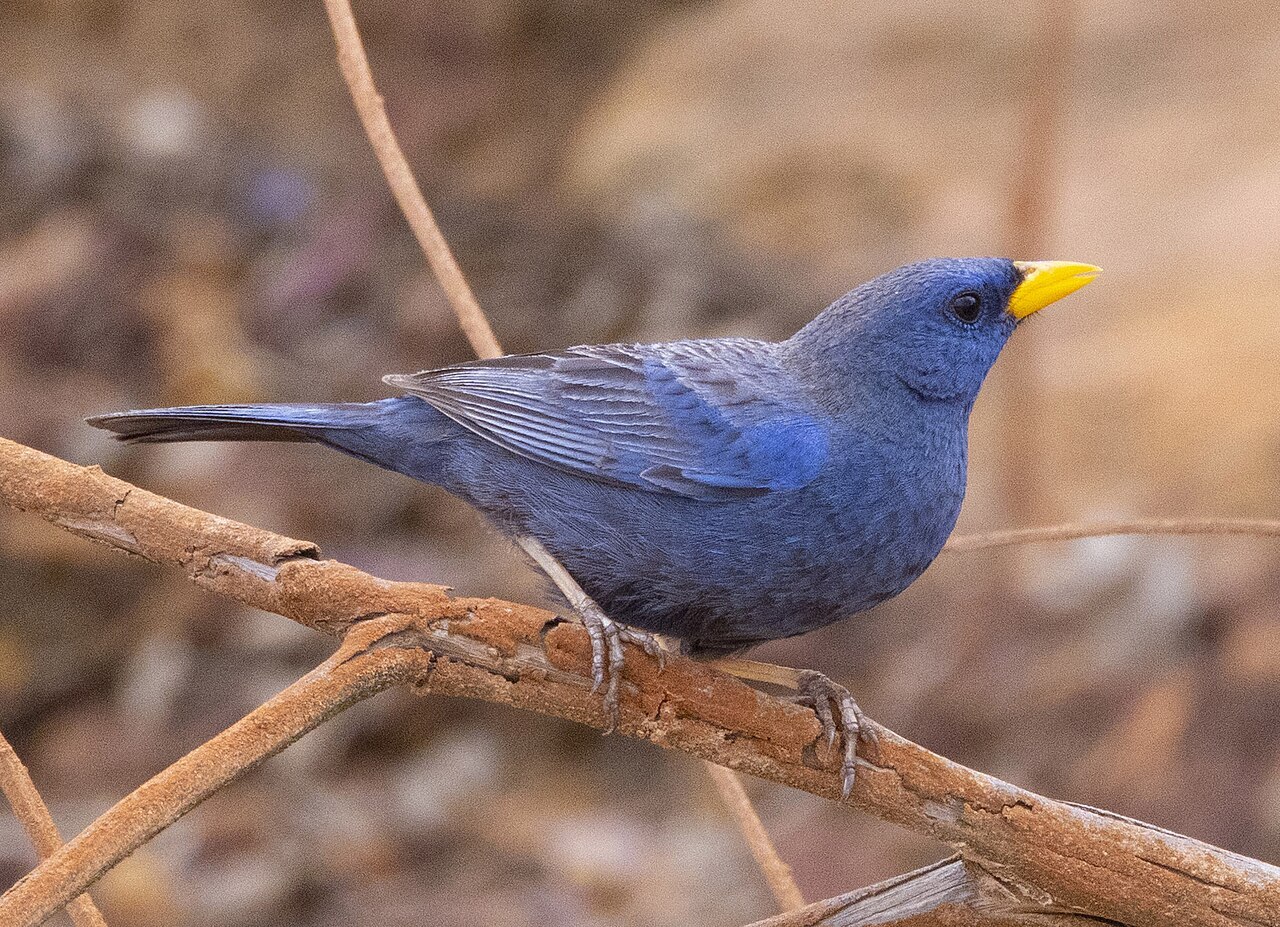
An adult male is blue with a conspicuous yellow bill; females and immatures are brownish and streaked. This South American bird belongs to Thraupidae, the tanagers, despite its common name. Rhopospina caerulescens is an alternative generic combination.
Male & female
Use fully developed plumage and documented age. A brown juvenile is not automatically female; colour alone does not establish ancestry or breeding readiness.
Nature & behaviour
A bird of Brazilian and Bolivian cerrado and rocky grassland. It is not an Australian grassfinch, and its habitat should not be inferred from the poster heading.
Cages & aviaries
A specialist flight with quiet cover and open movement space is the cautious planning direction. No validated cage dimension or thermal threshold is established here.
Diet & feeding
Natural-history references describe seed and invertebrate feeding. Establish a species-informed ration with experienced keepers; do not transfer a Gouldian supplement or insect schedule unchanged.
Breeding
Reliable captive clutch, incubation and independence figures were not established in the consulted sources. Retain observations instead of generating hatch dates from another species.
Compatibility
Keep any proposed breeding pair separately while assessing behaviour and food access. Small size and the word finch do not demonstrate compatibility with estrildids.
Breeding timeline
Follow the bird, not just the calendar. Published ranges are observation windows; actual parental care and feeding decide the next step.
Clutch size
Not establishedIncubation
Not establishedFledging
Not establishedIndependent feeding
Not establishedNo automatic separation age is established. Confirm repeated independent eating and drinking, stable condition and continued parental care.
Reference figures describe the cited observations, not guaranteed captive deadlines. Unverified stages are deliberately left unset; use the care library and a species-informed breeding plan.
Sources & image credits