Identification
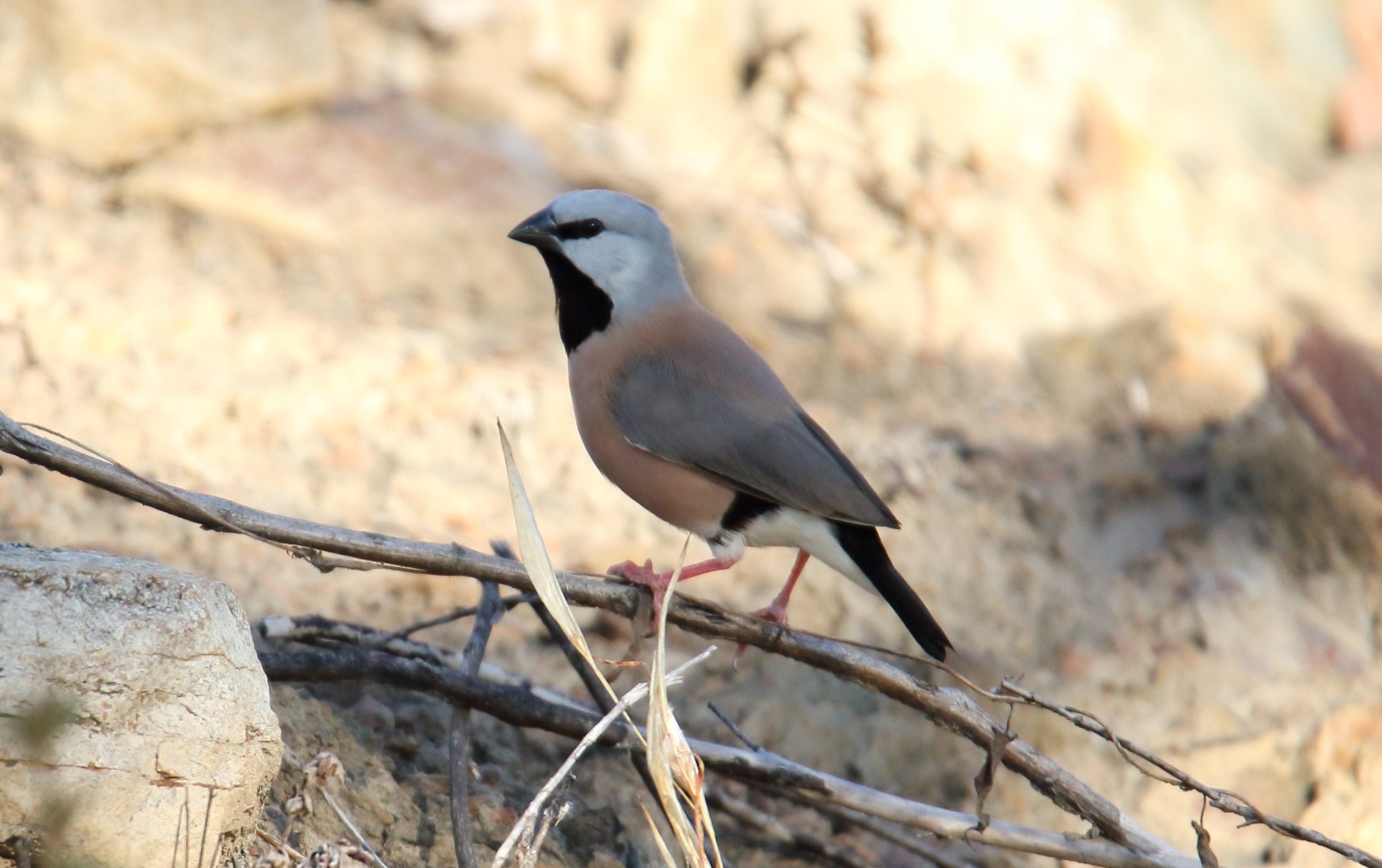
Also called the Parson Finch: a grey head, black throat bib, brown body and dark bill distinguish it from yellow- or red-billed Long-tailed Finches. Rump markings vary between the northern and southern forms.
Male & female
Bib breadth overlaps and changes with posture. NFSS recommends observing the male’s whistled song instead of assigning sex from a bib photograph alone. Preserve form and sex confidence separately.
Nature & behaviour
A north-eastern Australian grassland and open-woodland finch, often social at water. Natural seed availability and retained grass cover are central to its ecology, not constant indoor breeding stimulation.
Cages & aviaries
Allow substantial horizontal flight, sheltered resting places and more than one accessible feeding position. A strongly bonded pair still needs room to move independently; your standard small cage is not automatically a breeding recommendation.
Diet & feeding
Natural food is mainly grass seed with occasional insects, particularly during breeding. Offer varied small seeds and clean seeding grasses, plus an accepted rearing ration; confirm consumption before eggs hatch.
Breeding
A woven domed grass nest has a side entrance. Both sexes incubate and feed chicks. Published wild clutch figures differ from a breeder’s larger captive clutches, so count and record the actual eggs rather than expecting a set yield.
Compatibility
Keep away from closely related Long-tailed and Masked Finches when breeding to reduce conflict and uncertain parentage. A breeder reports peaceful behaviour with some unrelated finches, but that is not a universal compatibility guarantee.
Breeding timeline
Follow the bird, not just the calendar. Published ranges are observation windows; actual parental care and feeding decide the next step.
Clutch size
5–6 Eggseggs; reference onlyIncubation
12 daysdays after sustained incubation; reference onlyFledging
21 daysdays after hatch; reference onlyIndependent feeding
Not establishedNo universal separation age is established. Confirm repeated independent eating and drinking and stable condition while monitoring parental support.
Reference observations are not captive guarantees. Record actual hatch and feeding; never separate a chick solely because a date has arrived.
Sources & image credits