NutriBird C15 · Maintenance Pellets
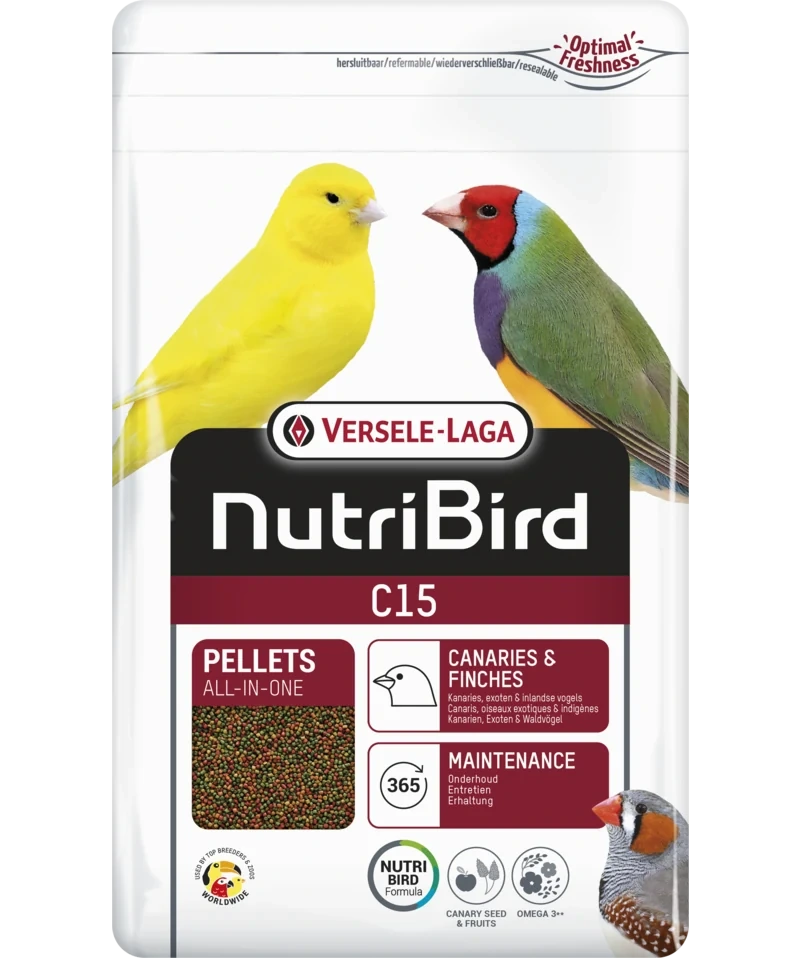
Extruded maintenance pellets for canaries and tropical/European finches, confirmed from the owner’s actual bag. The manufacturer markets a complete formulated ration that reduces selective feeding; this is food, not a vitamin powder or chick hand-feeding formula.
Owner photo confirms C15; current manufacturer maintenance specification checkedUse, quantities & practical tips
Quantity / label reference
Manufacturer instruction: provide freely. No fixed grams-per-finch amount is published on the checked page; monitor actual consumption and body condition.
Confirm pellet eating before reducing familiar food
- 01
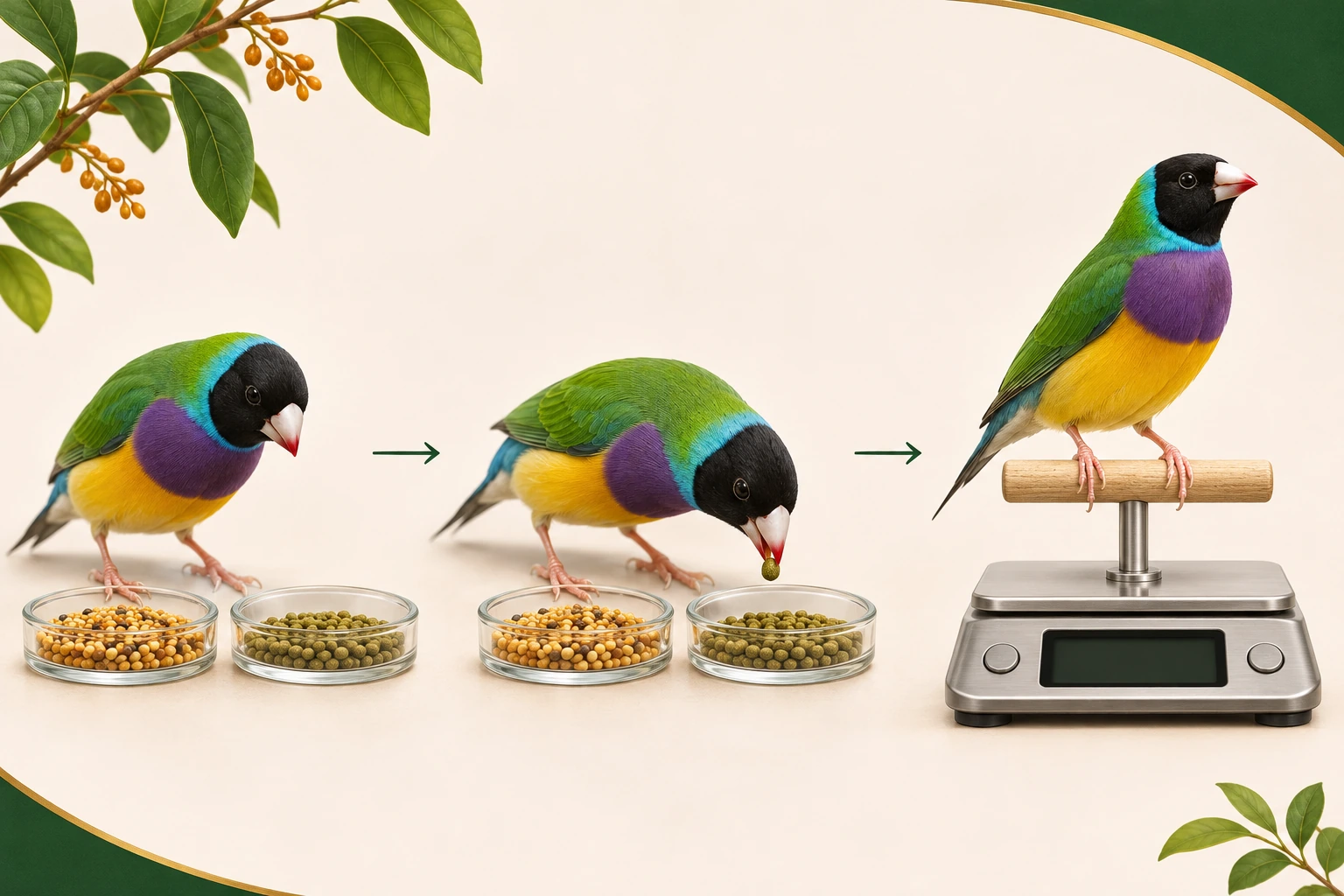
Introduce
Offer the matching pellets alongside familiar food. Do not abruptly remove the food a bird reliably eats.
- 02
Observe
Watch for swallowing and sustained intake. Provide enough feeding access for every bird, including quieter cage mates.
- 03
Monitor
Track body weight and droppings during a diet change. If intake is uncertain or condition declines, stop reducing familiar food and seek avian advice.
Gouldian finch illustration. A maintenance pellet’s role does not establish every species’ breeding, chick-rearing or live-food requirements.
- What it provides
- Extruded maintenance pellets for canaries and tropical/European finches, confirmed from the owner’s actual bag. The manufacturer markets a complete formulated ration that reduces selective feeding; this is food, not a vitamin powder or chick hand-feeding formula.
- When to consider it
- Consider as an accepted maintenance ration after a gradual monitored transition. Review laying/rearing requirements separately; retain species-specific animal-food needs where relevant.
- Intended birds / scope
- Canaries, tropical and European finches; maintenance scope.
- How it is given
- Offer pellets in a clean food dish with fresh drinking water available.
- Frequency / duration
- Daily maintenance feeding once the birds reliably recognise and eat the pellets; transition pace depends on acceptance.
- Preparation
- Introduce alongside familiar food and verify eating, not merely crumbling. Use daily weights and droppings to guide progress; pause reduction of familiar food if intake is uncertain.
- Combining products
- Already fortified. Do not automatically add multivitamins, calcium/D3 premixes or human greens powders; assess the final whole diet.
- Storage & handling
- Keep the bag well closed, cool and dry; follow its expiry and storage label and discard damp or spoiled food.
- Breeder tips
- A dish that looks disturbed is not proof of food intake. Several birds need enough feeding access that a subordinate bird can also eat.
The manufacturer specifies 50% canary seed within the extruded C15 formulation, plus 5% linseed; these are ingredients of a pellet, not permission to add those percentages as loose seeds. It also notes that minor pellet-colour variation can occur without affecting taste or quality. C15 is a maintenance formula for canaries and tropical/European finches; acceptance and gradual conversion still need monitoring.
Ingredients & analysis
Seeds including canary seed 50% and linseed 5%; cereals; oils/fats; vegetables and plant derivatives; minerals; apple 5% (equivalent before drying); sugars; MOS; tagetes; yucca. Added vitamins, trace elements, bentonite, preservatives, tocopherol antioxidants, colourants and flavours.
Manufacturer fortification · per kg of product
| Vitamin A | 15000 IU |
|---|---|
| Vitamin D3 | 1650 IU |
| Vitamin E | 90 mg |
| Vitamin B1 | 7.5 mg |
| Vitamin B2 | 17.5 mg |
| Calcium D-pantothenate | 22 mg |
| Vitamin B6 | 6.5 mg |
| Vitamin B12 | 0.03 mg |
| Vitamin C | 55 mg |
| Niacin | 90 mg |
| Folic acid | 1.65 mg |
| Biotin | 0.29 mg |
| Choline chloride | 770 mg |
| Iodine | 2.3 mg |
| Copper | 11 mg |
| Manganese | 110 mg |
| Zinc | 105 mg |
| Selenium · inorganic | 0.11 mg |
| Selenium · organic | 0.11 mg |
Use & compatibility notes
Never remove familiar food simply because pellets are present. Confirm swallowing and sustained intake; weigh birds daily during conversion and monitor droppings. Maintenance food does not automatically meet every breeding, growing-chick or live-food requirement.
Current manufacturer analysis is recorded below. The owner’s front identifies C15 maintenance but does not verify the unseen rear-label recipe; the actual current bag controls. MOS is a prebiotic, not proof of a live probiotic.
Manufacturer product image; packaging and pack size may differ. Match the current label.
Image source