56 · Foreign Finches Super
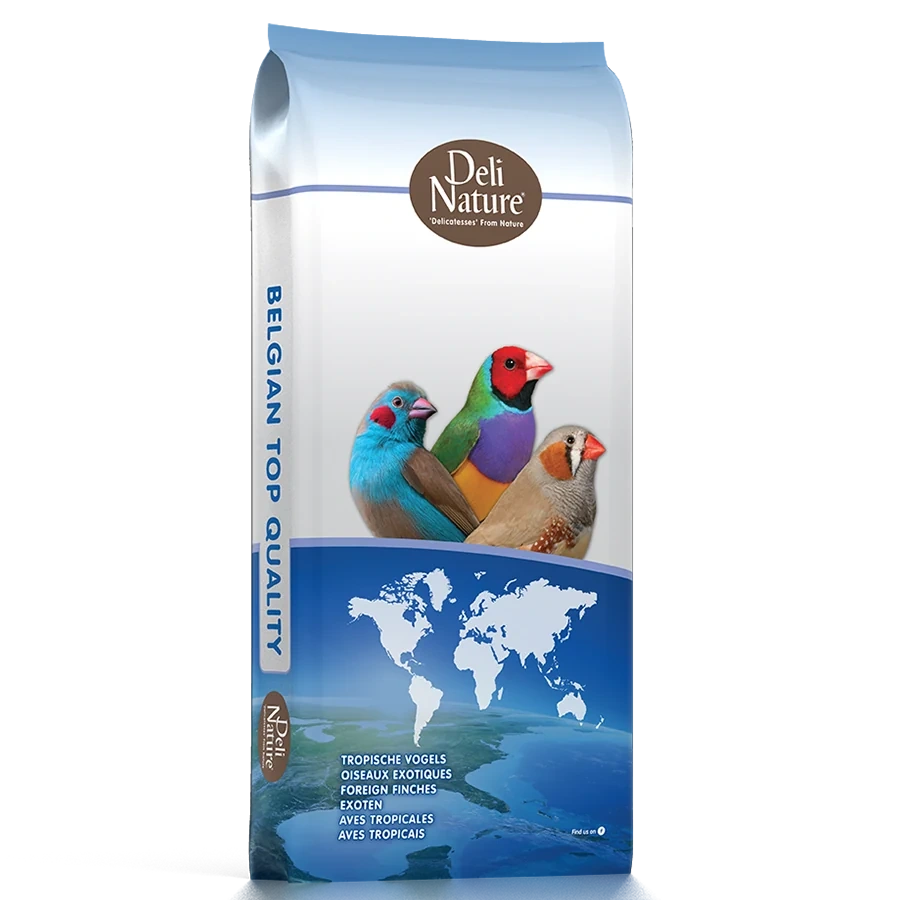
Manufacturer-listed foreign-finch seed mixture, now supported by the owner’s supplied seed reference photograph.
Product identity checked against supplied reference; current pack to matchUse, quantities & practical tips
Quantity / label reference
No verified universal grams per bird for this collection. Weigh clean seed offered and edible leftovers; record species, number of birds and life stage.
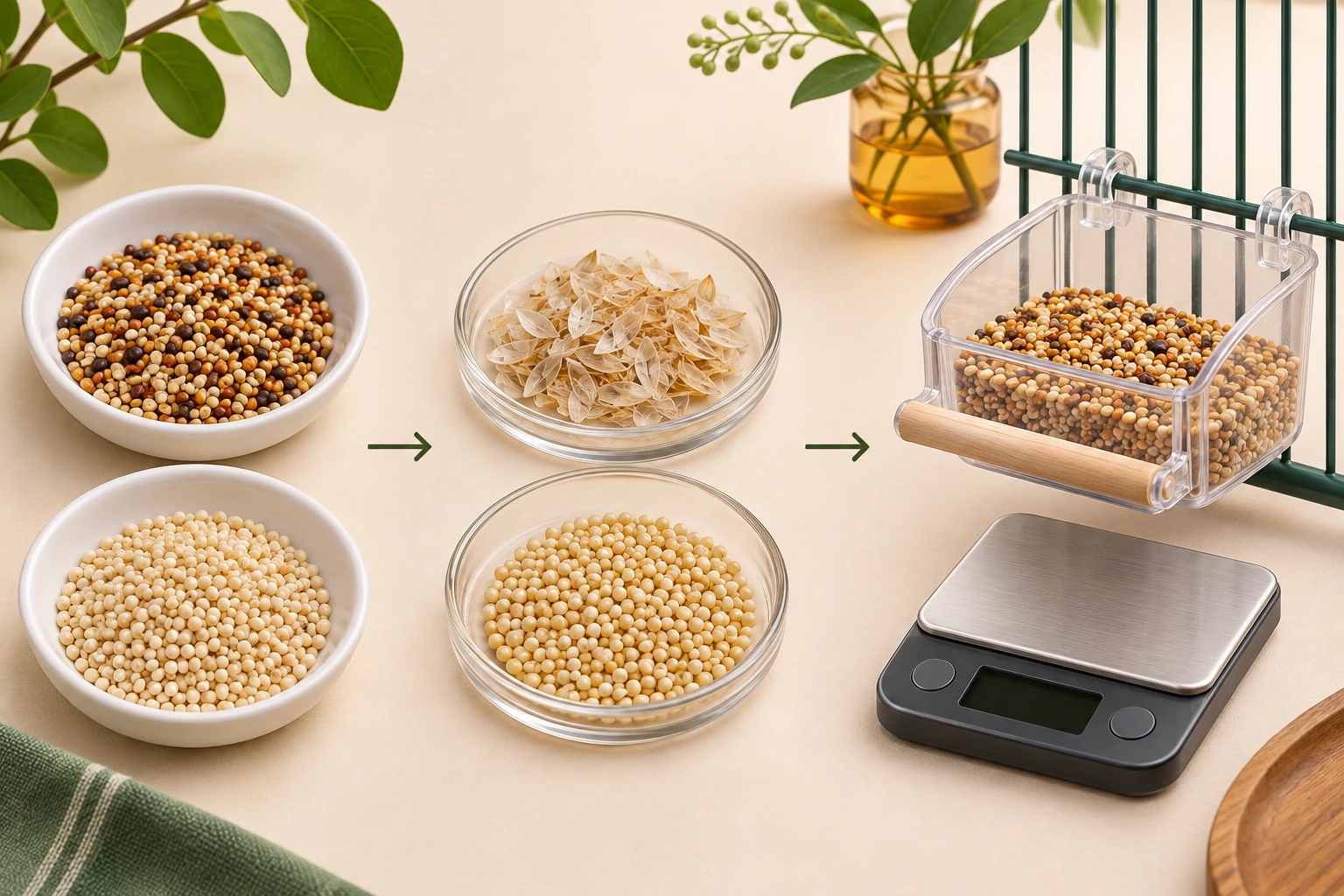
Look beneath the empty hulls
- 01
Know the mix
Identify the seed mixture and additional straight seeds. Record weighed additions so the final ration remains understandable.
- 02
Check leftovers
Distinguish empty hulls from intact edible grains. Watch what each bird actually eats rather than judging only the surface of the dish.
- 03
Refresh
Replace soiled food and clean the feeder. Seed mixtures and single seeds have different roles within a complete feeding plan.
Conceptual seed and hull reference; grain appearance does not independently establish a brand or batch.
- What it provides
- A seed-mixture component for granivorous finches, providing energy and opportunities to forage.
- When to consider it
- Use within a balanced species-specific ration, not as the sole diet. Confirm the current bag’s composition before blending extra seeds.
- Intended birds / scope
- Granivorous ornamental birds; species and life stage determine how it fits the whole ration.
- How it is given
- In a clean feeding dish; oral feeding by the birds.
- Frequency / duration
- Check and replenish daily according to measured intake; keep access to accepted food during gradual diet changes.
- Preparation
- Serve clean, dry seed in a clean dish. Germination is a separate hygiene-controlled process, not simply leaving wet seed in the cage.
- Combining products
- Record the final mixture by weight; extra millet changes the original recipe and nutrient balance. Powder on seed hulls is an unreliable delivery method.
- Storage & handling
- Keep sealed, cool and dry, away from pests. Use a dry scoop, retain batch/expiry, and reject damp, mouldy or rancid material.
- Breeder tips
- Remove empty hulls before judging food level; inspect kernels for selective feeding. Provide more feeding points if birds exclude cage-mates.
Ingredients & analysis
Yellow panicum, white millet, canary seed, red panicum, red millet, Japanese millet and niger seed.
Use & compatibility notes
Seed mixtures require a complete ration assessment; the manufacturer page gives no universal grams per bird.
Official product page and supplied seed photograph support identity; do not infer ingredient percentages from a photograph.
Manufacturer product image; packaging and pack size may differ. Match the current label.
Image source