Record the actual product
For each product, save the exact name and variant, current label photograph, expiry, route, reason for use and intended birds. Populate a dose only from that verified current label for the appropriate birds or an avian veterinary plan. Record start, stop and review dates. Never infer a finch dose from a pigeon dose or a product name.
- 01
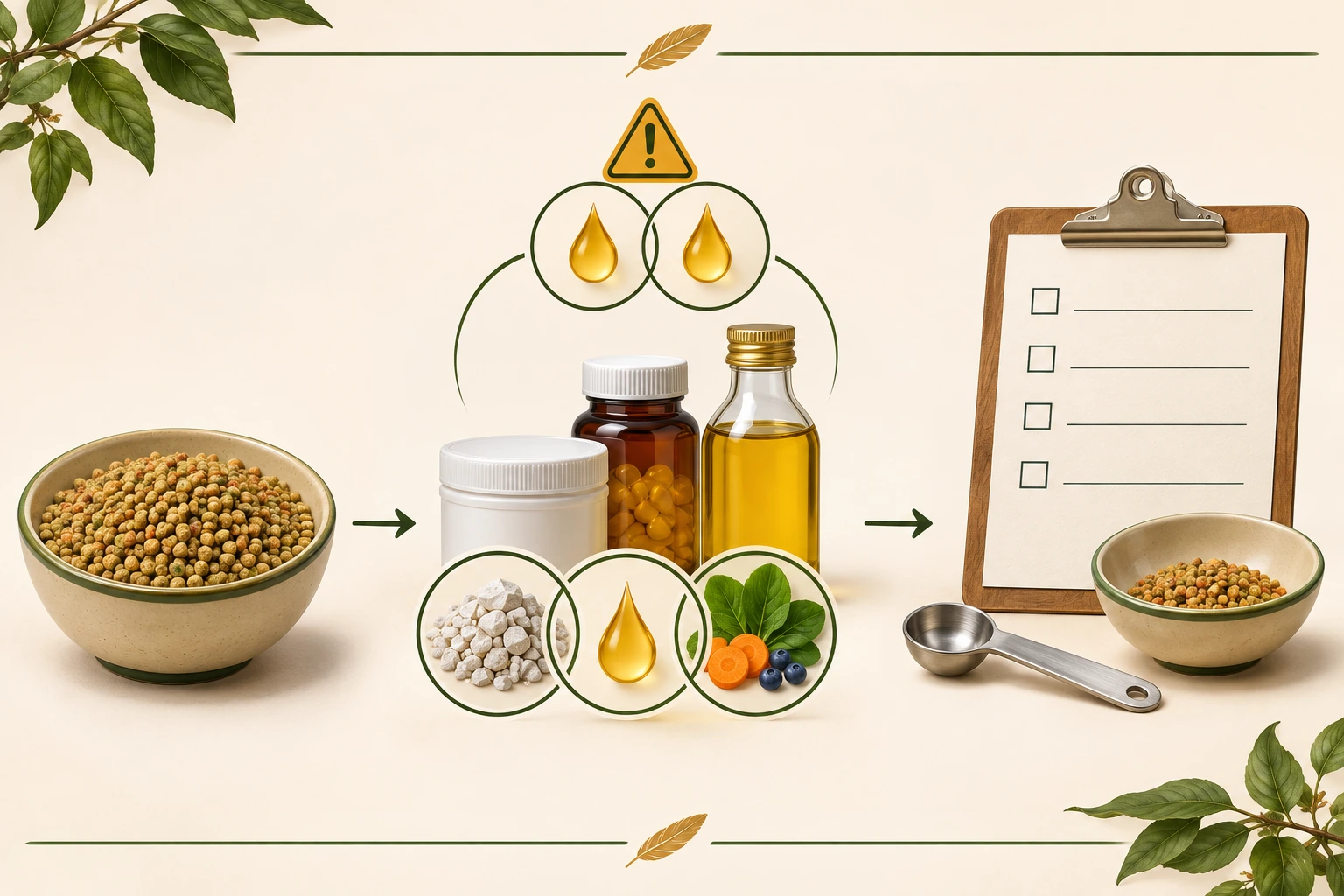
List the base diet
Record pellets, seeds, egg food and insect foods, including their existing vitamin and mineral additions.
- 02
Find overlap
Compare vitamin A, D3, E, calcium and trace elements across products. More products do not automatically make a better ration.
- 03
Choose a reason
Give every addition a clear purpose and a matching label or nutritional plan. Keep composition figures separate from actual feeding doses.
Human spirulina, chlorella and greens serving sizes are not finch doses. A kelp-containing blend needs particular review of iodine exposure.
Check the complete mixture
List the base seeds, egg food, concentrates and every additive before calculating the final mix. Added millet and perilla change the seed balance; rich concentrates change energy and protein. Fortified egg food, Breeder-Mix, multivitamins and calcium products may duplicate calcium, vitamin D3, vitamin A or trace elements. A list of several brands is not a validated mixing plan.
Separate functions and monitor
An apparently full seed dish may contain mostly hulls: confirm edible food and intake. Soluble shell/calcium ingredients differ from insoluble grit; seed-hulling finches do not require indigestible grit to grind their food. Keep medicines separate from routine nutrition. Do not combine acidifiers automatically: Avidress instructions exclude other acidifying products. Monitor drinking, appetite, droppings and condition after any change.