Secure a reliable supply
Specialist waxbills can need a feeding approach very different from a Gouldian pair. For Green Twinspots, the NFSS account emphasizes diverse small insects. Test suitable cultured insects while adults are settled, and maintain a backup supplier or culture before breeding. Waiting for a new larvae batch is a supply constraint to resolve before dependent chicks need it.
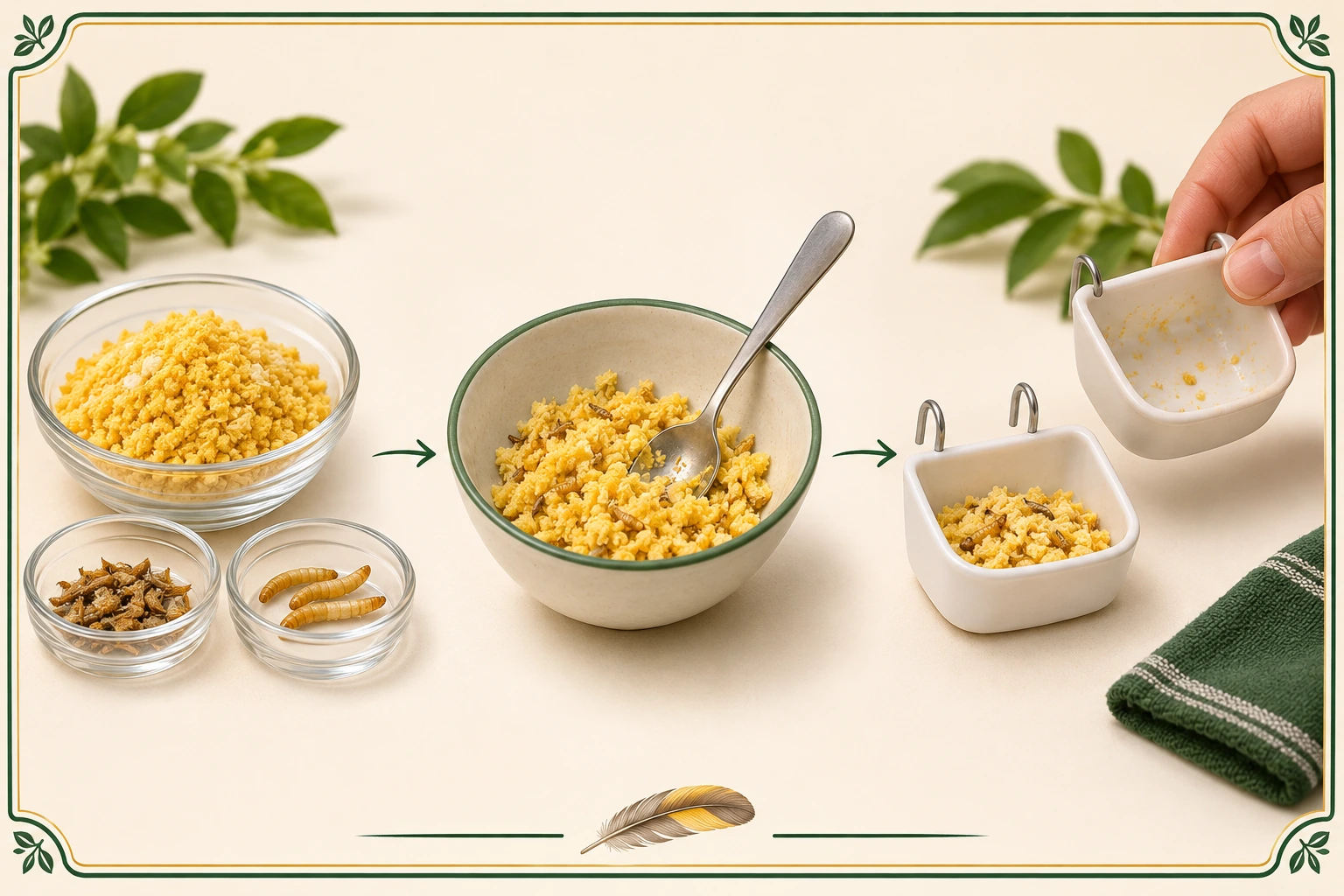
- 01
Choose
Match the species, breeding stage and exact food. A complete-food claim for insectivorous birds is not automatically a complete-finch-food claim.
- 02
Prepare
Follow the product’s dry, moistening or hydration instructions. Use clean tools and avoid leaving wet food standing for long periods.
- 03
Replace
Offer manageable fresh portions and remove leftovers before spoilage. Keep live-food cultures and feeding tools hygienic.
The illustration shows food types, not a universal recipe, fixed insect count or hand-feeding instruction.
Egg food is a food category
An egg-food brand, a high-protein concentrate and an insect-rearing feed are not interchangeable merely because the packets mention breeding. Check preparation, ingredients, intended species and accepted texture. Follow package storage and discard instructions; never top up a dirty bowl with a fresh portion.
Record feeding evidence
For each pair, note the prey or soft food offered, whether the adults eat it, whether chicks are being fed, and the observed outcome. A foster team needs its own acceptance history. A chick that is weak, cold or repeatedly unfed needs urgent experienced help; extra supplements are not a substitute for feeding and brooding.