Two parent records
A fostered clutch needs both genetic parentage and foster-care history. Keep donor species, pair IDs, original dates, transfer reason and date, recipient team and every subsequent outcome. Foster identity must never replace genetic parentage in pedigree or mutation records.
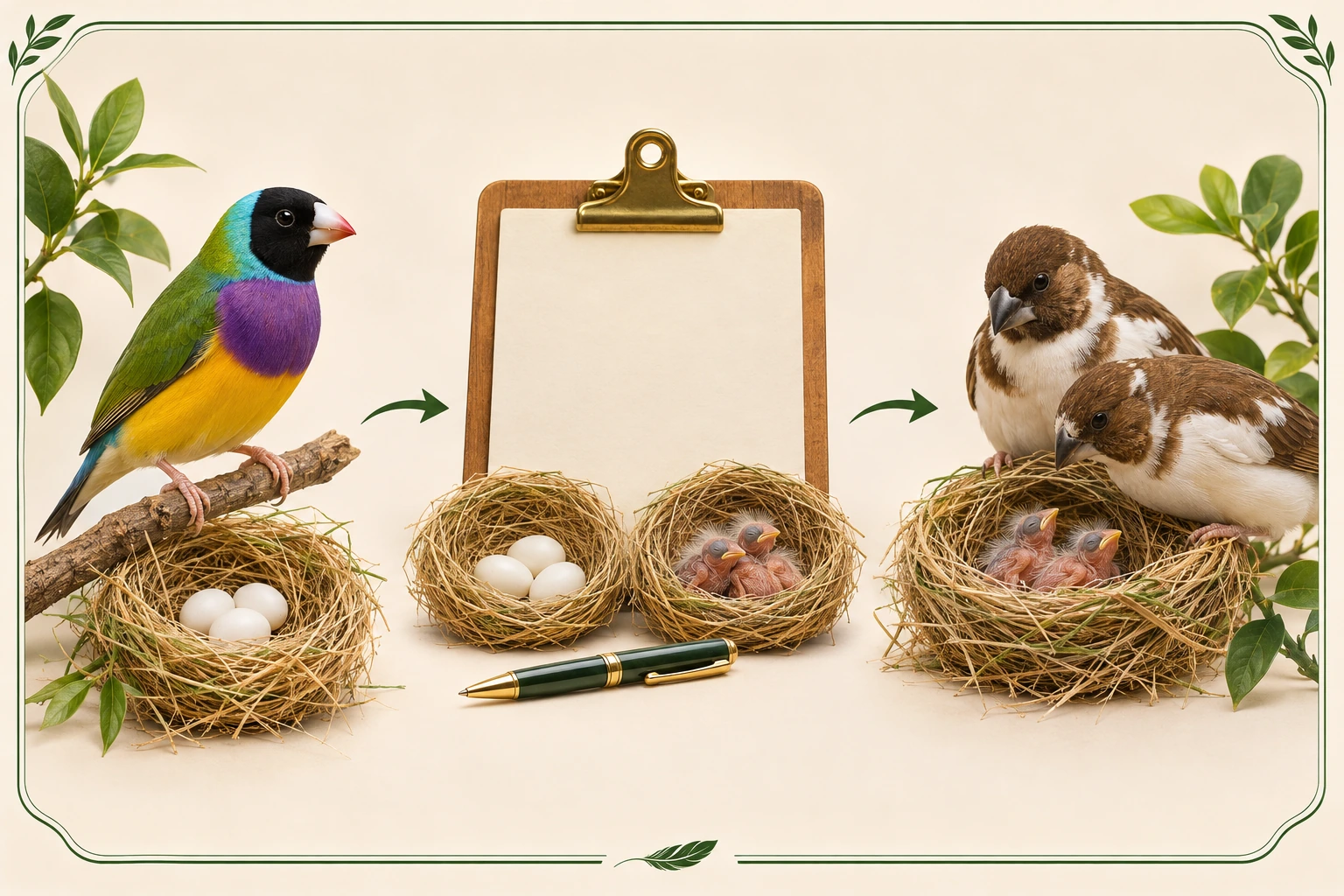
- 01
Record origin
Identify the genetic pair, clutch and dates before considering a transfer.
- 02
Assess suitability
Consider health status, compatible timing and the foster pair’s proven care. Fostering is a management decision, not an automatic step for every clutch.
- 03
Track care
Record each transfer and monitor feeding and development without unnecessary nest disturbance. Retain genetic parentage in the chick record.
Concept illustration of Gouldian and Society finches; nest shapes and visible stages are schematic, not a nest-box design or transfer-timing instruction.
Match the care task
Use healthy experienced caregivers with an appropriate stage and food acceptance. Historical NFSS reports document uneven success across chick species. A foster that incubates eggs may still reject or inadequately feed the chicks. Do not assume success with Gouldians establishes success with Twinspots, Pytilias or Cordon-bleus.
Assess health before hatch
Veterinary literature describes asymptomatic Society Finch carriers transmitting Cochlosoma to susceptible fostered finches. An outwardly healthy adult is not proof of freedom from infection. Arrange appropriate screening and veterinary decisions before transfer. This evidence does not validate mixing routine antiprotazoal and antifungal products for every clutch.