Keep the base diet visible
Record the named base mixture, additional seeds, accepted soft or formulated foods and greens separately. A shared egg-food bowl may contain several fortified products; the combined ration matters. An all-seed ration may leave nutritional gaps, while adding every available powder is not a measured correction.
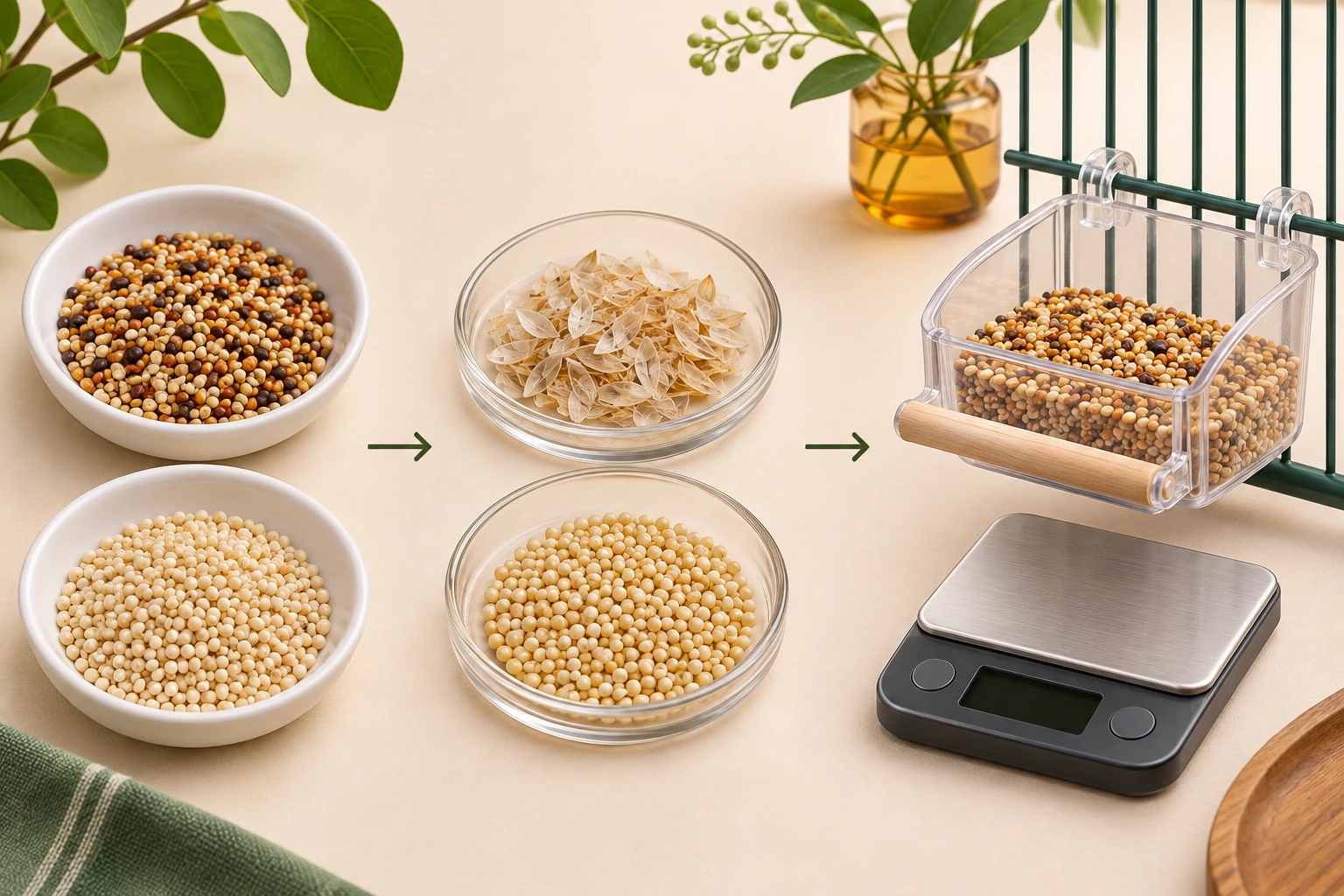
- 01
Know the mix
Identify the seed mixture and additional straight seeds. Record weighed additions so the final ration remains understandable.
- 02
Check leftovers
Distinguish empty hulls from intact edible grains. Watch what each bird actually eats rather than judging only the surface of the dish.
- 03
Refresh
Replace soiled food and clean the feeder. Seed mixtures and single seeds have different roles within a complete feeding plan.
Conceptual seed and hull reference; grain appearance does not independently establish a brand or batch.
Introduce changes without losing intake
Preserve familiar food while offering a new item separately. Watch swallowing and repeated feeding, not just pecking. A breeding pair or newly moved bird is a poor candidate for several simultaneous diet experiments. Arrange veterinary help for a structured conversion if intake or body condition is uncertain.
Make supplements traceable
Store exact product, manufacturer, formulation, batch or expiry, route and written label instructions. Distinguish foods, complementary supplements and medicines. Record what was actually administered. Do not publish a mixed-brand dose based on the owner's product collection.