Use separate date fields
Record each egg's laying date when known, first regular sitting, any transfer, and hatch date. If the incubation start is uncertain, label the estimate uncertain. Do not automatically calculate hatch from the first egg: some finches begin sustained incubation later in the clutch.
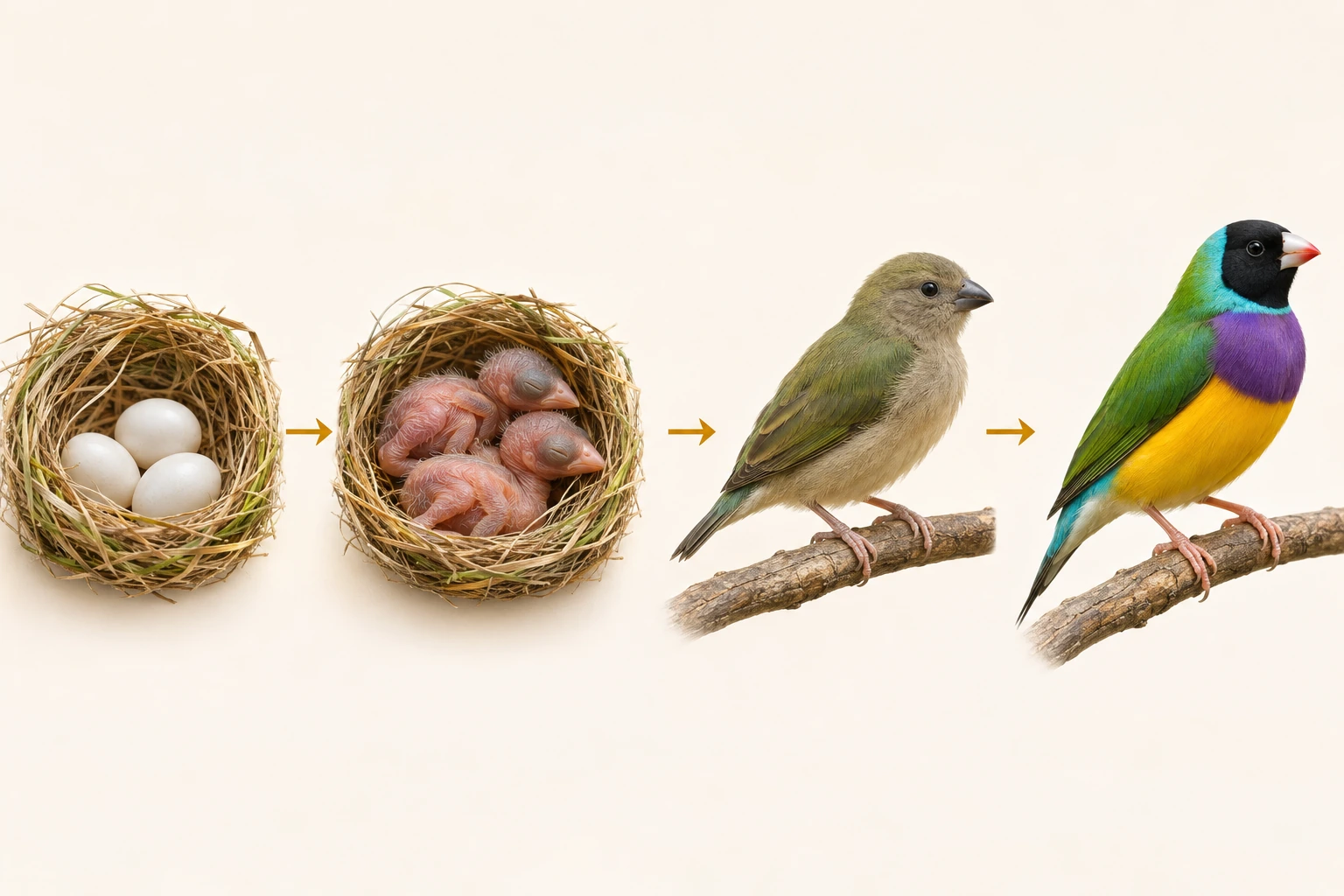
- 01
Egg
Record laying and regular incubation dates; use the species-specific guide when estimating hatch windows.
- 02
Nestling
Monitor parent or foster care and normal development with minimal disturbance. Feeding problems need prompt expert assessment.
- 03
Juvenile
A fledged bird is not necessarily weaned. Confirm reliable independent feeding before changing its support.
- 04
Adult
Review maintenance, breeding and moult separately. Adult colours develop after the plain juvenile plumage.
Gouldian finch concept illustration. Other species retain their own photographs, care guidance and developmental ranges.
Protect continuity
Observe parental attendance without repeatedly opening the nest. An empty nest during a brief observation is not proof of abandonment. Agree on a limited check routine with an experienced breeder; a check should answer a welfare question. Mark candling findings as observed, doubtful or not checked instead of treating an early clear egg as a final diagnosis.
Show a range
Published species values belong in a reference window with the source visible. Keep estimated dates apart from confirmed events. A late hatch estimate requires review of dates, incubation continuity and egg status; this website does not prescribe generic artificial-incubator temperature, humidity or shell-assistance instructions.