Nestling checks
Record hatch identity, brooding and feeding evidence, activity and any concern. Keep checks short and purposeful. Photographs must be dated and labelled with the actual species: normal appearance and growth differ between finches. A photograph is not a diagnosis and should not delay help for a cold, weak or persistently unfed chick.
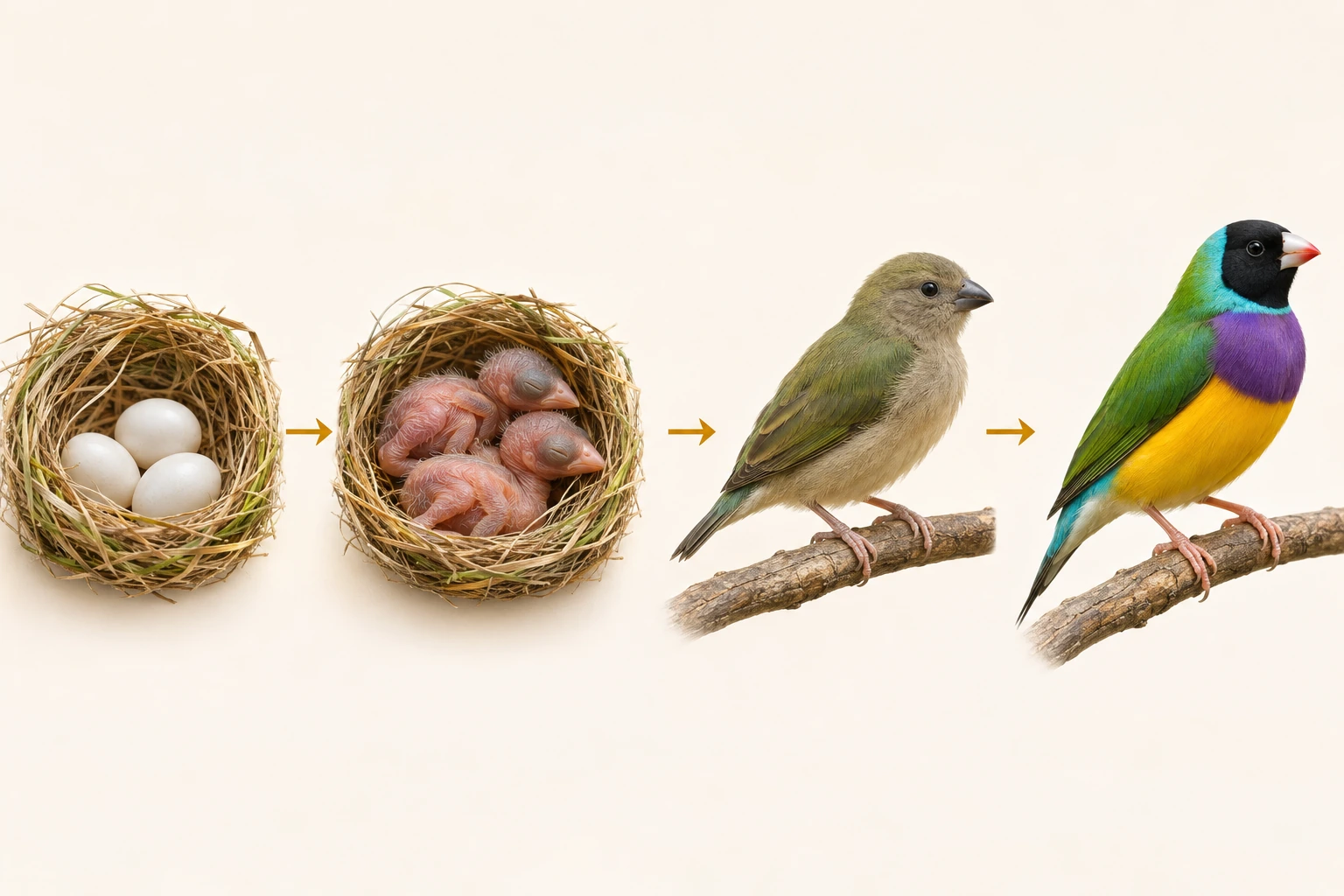
- 01
Egg
Record laying and regular incubation dates; use the species-specific guide when estimating hatch windows.
- 02
Nestling
Monitor parent or foster care and normal development with minimal disturbance. Feeding problems need prompt expert assessment.
- 03
Juvenile
A fledged bird is not necessarily weaned. Confirm reliable independent feeding before changing its support.
- 04
Adult
Review maintenance, breeding and moult separately. Adult colours develop after the plain juvenile plumage.
Gouldian finch concept illustration. Other species retain their own photographs, care guidance and developmental ranges.
Fledging is a transition
Leaving the nest does not mean a youngster is independent. Keep familiar food and drinking points easy to reach, preserve safe landing places and continue to observe caregiver feeding. Do not provoke premature fledging for a photograph or routine inspection.
Confirm weaning
Before separation, observe repeated independent eating and drinking, normal activity and stable condition over consecutive days. A youngster pecking seed may still depend on parents. If the adults begin another nest, inspect the risk of chasing and food competition and protect the dependent young. Prepare a familiar grow-out layout and monitor carefully after the move.